
More Information
Submitted: September 08, 2026 | Accepted: September 28, 2026 | Published: September 29, 2026
Citation: Das L, Mishra RK. Determination of Sexual Dimorphism Among the South Indian and North Indian Populations Using Nasal Index – an Anthropometric Analysis. J Forensic Sci Res. 2026; 10(2): 141-150. Available from:
https://dx.doi.org/10.29328/journal.jfsr.1001123
DOI: 10.29328/journal.jfsr.1001123
Copyright license: © 2026 Das L, et al. This is an open access article distributed under the Creative Commons Attribution License, which permits unrestricted use, distribution, and reproduction in any medium, provided the original work is properly cited.
Keywords: Anthropometry; Nasal index, Nasal measurements; Sexual dimorphism; Regional variation

Determination of Sexual Dimorphism Among the South Indian and North Indian Populations Using Nasal Index – an Anthropometric Analysis
Lekshmi Das1 and Rajneesh Kumar Mishra2*
1Assistant Professor, Department of Forensic Science, AVS College of Arts and Science, Salem, Tamil Nadu, India
2Senior Scientific Assistant, Chemistry Division, Regional Forensic Science Laboratory, Bikaner, Rajasthan, India
*Corresponding author: Senior Scientific Assistant, Chemistry Division, Regional Forensic Science Laboratory, Bikaner, Rajasthan, India
Anthropometry provides quantitative measurements of human body structures and can be used to describe variation within defined study populations. This study evaluated nasal height, nasal breadth, and nasal index among 200 participants, comprising 100 South Indian participants and 100 North Indian participants, with 50 males and 50 females in each regional group. Participants were aged 18–90 years. Nasal breadth and nasal height were measured using a digital vernier caliper, and nasal index (NI) was calculated as nasal breadth/nasal height × 100. Descriptive statistics and independent-samples comparisons were used to examine differences between sexes within each regional group and between the regional groups. The reported nasal-index means were 74.588 ± 8.86 for South Indian males and 70.912 ± 9.41 for South Indian females; the corresponding North Indian means were 70.098 ± 8.78 and 69.08 ± 8.61. Based on the reported summary statistics, the sex difference in nasal index was statistically significant in the South Indian group but not in the North Indian group. The regional difference in mean nasal index should therefore be interpreted as population-level or regional variation rather than as evidence of sexual dimorphism. The pooled descriptive means were approximately 72.75 for South India and 69.59 for North India. Mesorrhine was the most frequent nasal-index category in South India, whereas Leptorrhine was the most frequent category in North India. These findings provide descriptive baseline information for the study populations and may be relevant to clinical, anthropological, and forensic research; however, the nasal index alone should not be interpreted as sufficient to determine an individual's sex, race, ethnicity, or geographic origin.
Forensic anthropologists constitute the implementation of physical anthropology knowledge and methodology for forensic cases. The target is generally to help to identify the unidentified human remains. It also requires the implementation of anthropometries to the determination of cadavers in certain cases. Somatometric measurement is part of anthropometry it can be explained as systematic. It is a technique for estimating living organisms such as the head and face. The measurement is of various types such as length estimation, subcutaneous fat estimation, and weight estimation. Most measurements are constructed from one landmark to another. Somatometric measurements are utilized to differentiate various materials and populations in different regions of the world. The correlation between the shape and function of different parts of the human body can also be analyzed with the support of somatometry.
Somatometry produces an idea of the general anatomy of the population. These help to identify certain physiological functions, vital capacity, basal metabolism, etc. Somatometry is also very famous in the field of industry valuable contributions to distributing the fundamental facts required for various designs such as Clothing, shoes, personal belongings, etc. The Bertillon system was innovated by the French Criminal Scholar Alphonse Bertillon in 1879; the Bertillon system is utilized to determine standing height, sitting height, the distance between enlarged fingertips and arms, a head, right ear, left foot, finger, and forearm. In addition, normal personal traits such as eye color, scars, and malformations were noted. This framework was utilized to recognize offenders in the late 19th century but soon became more dependable and uncomplicated to document fingerprints.
In the 20th century, the importance of anthropometry to the study of various races was restored by various highly developed techniques for identifying racial disparities. Nowadays anthropometry has admission in medical sciences, especially in Forensic Medicine. Some studies documented that bio-geographical, topographical as well and botanical components, nationality, sex, and age have effects on body proportions mostly in the head and neck region. Anthropometry gives a well-organized method and strategy for taking several dimensions in different geographic regions and races. Regional and environmental circumstances help identify the shape of the nose which may differ across distinct races and environments. Human physical variability has been a domain of significant fascination for scientists for a very long time and anthropometry developed as an excellent technological method for measuring human body proportions. The nose is a strobilae structure situated in the midline of the mid-face and connected to the facial skeleton. Morphometric differences in facial features are always present among different races in world geographic collections, and differences in nose type are remarkable in classification between races. The face and the nose are the main physiognomic appearances in humans. The face and nose arise from front nasal prominences, nasal prominences, and maxillary and mandibular prominences and the final features of the face rely on particularly the differences in the measurement and posture of these facial parts. The growth and enlargement of humans are altered by many elements containing geographical, geological, biological factors, etc.
Anthropometry is defined as the dimension of the human body. The term “Anthropometry” is derived from the Greek word “Anthropos” which means human and “Metron” means measure. It is explained as the part of morphometry that agrees with the study of several characteristics of the human body parts. It is an ancient technique of physical anthropology. It is utilized for recognition and for the motivation of grasping human physical dissimilarities in paleoanthropology and in various efforts to coordinate physical with racial characteristics. Anthropometry involves the organized proportions of the human body parts, at first the proportional illustration of body size and shape. The anthropometric record became very helpful for professors as frequently utilized techniques and living standards were not helpful or sufficient for dealing with questions that focused on them. Anthropometry gives systematic procedures and techniques for recording several dimensions and attention to the living man and the skeleton. Anthropometric studies are a fundamental part of craniofacial surgery and syndromology.
Sexual dimorphism defines the difference between males and females of the same species. They show differences in their color, shape, structure, etc. It mainly happens by the reason of inheritance of the same or any other sexual pattern in the form of genetic material. The difference may be due to adaptation for sexual selection, protection, etc. This happens not only in animals or birds but also in humans also, every species in the world can happen sexual dimorphism. They exhibit different morphological structures. Humans show sexual dimorphism by changes in color, shape, size, weight, height, etc.
The nose is an important facial structure whose dimensions may vary with age, sex, environmental conditions, and population background. Nasal anthropometry provides quantitative measurements that can be used to describe such variation. Differences in-group means may be useful for population-level anthropometric comparisons, but they do not by themselves establish an individual's race, ethnicity, sex, or geographic origin.
The branch of anthropometry that agrees with the shape and size of the human nose across various populations is defined as “Nasal Anthropometry”. Nasal Anthropometry is the dimensions of size, proportion, and shape of the human nose. In living individuals, the height is the distance from the nasion to the sub nasal and the width of the nose is estimated from the right ala or nasal wing to the left ala or nasal wing in anatomical position. On a living body nasal index is taken as width in coordination to the height of the nose. On the skeleton, height is calculated from the nasion to a level just at the bottom of the nasal spine. The width of the skull is the maximum distance on the nasal sinuses. Nasal index is the most frequent nasal variable which alters based on regional and climatic conditions. Nasal parameters generally the shape and size become critical as the nose occupies a central position in facial architecture. The nasal profile and anatomy are therefore one of the establishing facts that distinguish various races. The anatomical difference in nasal anatomy between genders cannot be over-high lightened particularly in cosmetic rhinoplasty because feminization of maturation of the opposite sex nose might not give the desired beautiful impacts.
The Nasal Index is also helpful in the examination and categorization of fossil residues as well as the study of living populations. A rhino plastic surgeon takes to alter the size or shape of the nose for a desired attractive effect. The nasal Index dimension in healthy individuals is also helpful for dysmorphologists in the ancient detection of some dysmorphic disorders like cleft lip and palate, which are interconnected with nose ailment. Generally, the Nasal Index of living humans and the skeleton never correlate with each other. A large part of Caucasians has the Leptorrhine type of nose distinguished as long and narrow. The Indo – Aryans are like European people with a fine nose. Jingo people of China have Messorhine noses. Indo – Africans as well as Afro – America have Platyrrhine.
Nasal anthropometric traits can provide useful descriptive information for comparing defined study populations and may have applications in clinical and reconstructive contexts. The nasal index represents nasal breadth relative to nasal height and is commonly used to classify nasal proportions. Because nasal dimensions may vary across populations and environmental settings, interpretation should remain specific to the populations and sampling framework examined in a study.
The present study focuses on regional variation between the sampled North Indian and South Indian groups rather than attempting to assign individuals to racial or ethnic categories. The Indian population is heterogeneous, and regional samples may differ in anthropometric characteristics. Accordingly, any differences observed in the present sample are interpreted as variation between the study populations and should not be generalized as definitive markers of race, ethnicity, or geographic origin.
The nasal index is calculated with the support of a digital vernier caliper. It is an accurate apparatus that can be utilized to calculate internal and external distances exceedingly perfectly. Ancient sorts of these types of estimating apparatus had to read by glancing precisely at the royal or metric scale and there was a necessity for very good eyesight to read the small sliding scale. Non-mechanically operated vernier calipers can still be bought and remain famous become they are much inexpensive than the digital version. The digital version needs a small battery as the non-mechanical type does not want any power source. Digital calipers are peaceful to realize the exact calculation, which distinctly exhibits and can be held on the inch/mm button the measurement can be read as metric or imperial. A vernier caliper is a certain kind of caliper with two scales consisting of a vernier scale. A vernier scale is an auxiliary scale that is present alongside the instrument’s principle scale that provides you with the possibility of a higher intention. Some vernier scales permit a calculation resolution as accurate as 0.01mm. Digital vernier calipers take linear measurements comparably to analog–style vernier calipers. The only dissimilarity is the insertion of an LCD screen that exhibits calculations mechanically – no user explanation is needed. Digital vernier-type calipers allow high–intention dimensions for the width or diameter of objects. Final calculations are exhibited on easy–to–read LCD screens.
The French Mathematician Pierre Vernier innovated the Digital Vernier Caliper in the 17th century. The scale generally pointed in millimeters or inches runs parallel to the length of the apparatus. Each of the scale’s smaller addition is called a “division”. The moveable jaw is pointed with additional divisions and it slides along a scale that has a little elongation called the vernier scale. A more accurate reading of the calculation can be acquired by employing the vernier scale. Vernier caliper’s role is established on the sliding action of two scales one of which is predetermined and the other of which is movable.
The samples chosen for the study included participants from the North Indian group (Punjab, Uttar Pradesh, Madhya Pradesh, Jharkhand, Bihar, Rajasthan, Odisha, and Chhattisgarh) and the South Indian group (Tamil Nadu, Andhra Pradesh, and Kerala). A total of 200 samples were collected, comprising 100 from South India and 100 from North India, with 50 males and 50 females in each regional group. Participants were aged 18–90 years. The study was cross-sectional and observational. Participants were healthy individuals without facial deformities or relevant congenital anomalies. Individuals with congenital anomalies, a history of facial surgery, or age below 18 years were excluded. Data were collected after informed consent. A digital vernier caliper with an accuracy of 0.01 mm was used to measure nasal parameters. Measurements were taken with participants seated in a relaxed position and the head maintained in anatomical position.
Nasal parameters:
• Nasal height – measured from nasion to nasospinale
• Nasal breadth – measured from right ala to left ala
• Nasal index – measured by the formula NB/NH × 100
The nasal index can be calculated as follows:
Landmarks:
• Nasion: Middle point of the nasofrontal suture
• Nasospinale: The point where a line touching the lower margin of the nasal aperture crosses the mid-sagittal plane
• Ala: The expanded outer wall of cartilage on each side of the nose
Nasal index category:
Hyperleptorrhine (40-54.9), Leptorrhine (˂70), Mesorrhine (70-85), Platyrrhine (˃85) and Hyper platyrrhine (100 or more).
• Hyperleptorrhine – long narrow nose
• Leptorrhine – moderately narrow nose
• Messorhine - moderately or medium size nose
• Platyrrhine – moderately wide nose
• Hyper Platyrrhine – very wide nose
Based on nasal index the human nose can be classified mainly into three types. Because of ethnic differences human noses appear in different sizes and shapes which are dependent upon the environmental climatic conditions. Narrow noses are naturally present in dry and cold climates while broad noses thrive in moist and warm regions as a result of natural selection in human evolution. The human nose is grouped into six as a result of morphological appearance, the straight or Greek nose without curves, the hawk nose which is very sharp, t6hin and complex, the turn-up nose or celestial which extends continuously from the eyes to the lips, the aquiline or Roman nose which is like a hook and convex in shape, the Nubian nose with wide nostrils, thick and broad at the middle, wide at the end but a little bit narrow at the top and the snub nose which is short and not sharp.
The primary data collection method was used and it is a quantitative analysis. Primary data collection is the process of gathering data directly from a first-hand source. In other words, data collected by the organization that expects to use it. Methods include surveys, interviews, observation, and focus groups. Primary data include two categories quantitative data and qualitative data. Quantitative data is data that can be measured. Qualitative data that cannot be measured or quantified. Mean, standard deviation, minimum, and maximum range of nasal height, nasal breadth, and nasal index of males and females from both populations separately were to be calculated for both populations. Statistical significance has to be measured to cross-verify the alternate hypothesis.
Statistical analysis was performed using Microsoft Excel. Mean, standard deviation, minimum, and maximum values were summarized for nasal height, nasal breadth, and nasal index. For comparisons between males and females within each regional group, independent-samples t-tests were used. For comparisons between the North Indian and South Indian groups, independent-samples t-tests were used. Statistical significance was assessed at α = 0.05, with two-sided p-values below 0.05 considered statistically significant. The values 1.83 and 3.08 in the original manuscript were not p-values; because p-values cannot exceed 1, these entries were treated as incorrectly labelled test statistics and were removed from the p-value table. Given the balanced 2 × 2 design (sex × region), a two-way factorial analysis is also appropriate for testing the main effects of sex and region and their interaction. Such an analysis should preferably be performed on the individual-level observations; the present revision therefore avoids claiming an interaction effect that was not reported from the original dataset (Tables 1,2).
| Table 1: Nasal parameters of the North Indian population. | ||
| S.NO | NASAL PARAMETERS | North Indian pooled mean* (n=100) |
| 1 | Nasal height (mm) | 49.435 |
| 2 | Nasal breadth (mm) | 34.235 |
| 3 | Nasal index | 69.5891 |
| Table 2: Nasal parameters of the South Indian population. | ||
| S.NO | NASAL PARAMETERS | South Indian pooled mean* (n=100) |
| 1 | Nasal height (mm) | 47.426 |
| 2 | Nasal breadth (mm) | 34.309 |
| 3 | Nasal index | 72.7500 |
The objective of the study was to examine sex-related and regional variation in nasal measurements among the sampled South Indian and North Indian groups. Nasal height, nasal breadth, and nasal index were measured, and the nasal index was calculated as nasal breadth/nasal height × 100. The analysis focused on differences between males and females within each region and differences between the two regional groups.
The nasal parameters such as nasal height, nasal breadth, and nasal index were measured. The nasal height is measured from nasion to nasospinale and nasal breadth is measured from right ala to left ala. The nasal index is measured by using the formula NB/NH × 100. The nasal height and nasal breadth are taken with the help of a digital vernier caliper with an accuracy of 0.01mm. All the data have already been tabulated above.
The descriptive results for males and females in both populations are presented below. Male participants generally showed higher mean nasal height, nasal breadth, and nasal index values than female participants; however, statistical significance differed by parameter and region. In particular, the nasal-index difference was statistically significant in the South Indian group but not in the North Indian group (Tables 3,4).
| Table 3: Statistical analysis of nasal parameters of males and females among South India and North Indian population. | |||||
| S.NO | NASAL PARAMETERS AND STATISTICAL ANALYSIS | SOUTH MALE | SOUTH FEMALE | NORTH MALE | NORTH FEMALE |
| NASAL HEIGHT (mm) | |||||
| 1 | MEAN | 48.222 | 46.63 | 51.078 | 47.792 |
| 2 | STANDARD DEVAITION | 4.36 | 3.11 | 4.74 | 3.47 |
| 3 | MIN | 34.2 | 36.1 | 43.4 | 36.3 |
| 4 | MAX | 58.7 | 53.7 | 70 | 53.7 |
| NASAL BREADTH (mm) | |||||
| 1 | MEAN | 35.712 | 32.906 | 35.65 | 32.82 |
| 2 | STANDARD DEVIATION | 2.76 | 3.28 | 3.54 | 2.75 |
| 3 | MIN | 31.1 | 26.8 | 28 | 27.6 |
| 4 | MAX | 42.4 | 39.8 | 43.3 | 41.7 |
| NASAL INDEX (mm) | |||||
| 1 | MEAN | 74.588 | 70.912 | 70.0982 | 69.08 |
| 2 | NASAL INDEX (dimensionless) | 8.86 | 9.41 | 8.78 | 8.61 |
| 3 | MIN | 61.2 | 52.6 | 52.7 | 52.3 |
| 4 | MAX | 104.9 | 105.8 | 95.8 | 93.6 |
| Table 4: Statistical analysis of nasal parameters of South India and North Indian population. | |||
| S.NO | NASAL PARAMETERS AND STATISTICAL ANALYSIS | NORTH INDIA | SOUTH INDIA |
| NASAL HEIGHT (mm) | |||
| 1 | MEAN | 49.435 | 47.426 |
| 2 | STANDARD DEVIATION | 4.45 | 3.86 |
| 3 | MIN | 36.3 | 34.2 |
| 4 | MAX | 70 | 58.7 |
| NASAL BREADTH (mm) | |||
| 1 | MEAN | 34.23 | 34.309 |
| 2 | STANDARD DEVIATION | 3.46 | 3.33 |
| 3 | MIN | 27.6 | 26.8 |
| 4 | MAX | 43.3 | 42.4 |
| NASAL INDEX (mm) | |||
| 1 | MEAN | 69.58 | 72.75 |
| 2 | NASAL INDEX (dimensionless) | 8.67 | 9.282 |
| 3 | MIN | 52.3 | 52.6 |
| 4 | MAX | 95.8 | 105.8 |
The mean value of nasal height for males and females of the South Indian population was found to be 48.222 +/ - 4.36 mm and 46.63 +/- 3.11 mm respectively. The mean value of nasal breadth for males and females of the South Indian population was found to be 35.712 +/- 2.76 mm and 32.906 +/- 3.28 mm respectively and the mean value of the nasal index for males and females of the South Indian population was found to be 74.588 +/- 8.86 mm and 70.912 +/- 9.41 mm respectively. The mean value of nasal height for males and females of the North Indian population was found to be 51.078 +/- 4.74 mm and 47.792 +/- 3.47 mm respectively. The mean value of nasal breadth for males and females of the North Indian population was found to be 35.65 +/- 3.54 mm and 32.82 +/- 2.75 mm respectively. The mean nasal index for males and females of the North Indian population was found to be 70.0982 +/- 8.78 mm and 69.08 +/- 8.61 mm respectively. The mean value of nasal height for the North Indian and South Indian populations was found to be 49.435 +/- 4.45 mm and 47.426 +/- 3.86 mm respectively. The mean value of nasal breadth for the North Indian and South Indian populations was found to be 34.23 +/- 3.46 mm and 34.309 +/- 3.33 mm respectively. The mean value of the nasal index for the North Indian and South Indian populations was found to be 69.58 +/- 8.67 mm and 72.75 +/- 9.282 mm respectively (Figures 1-3).
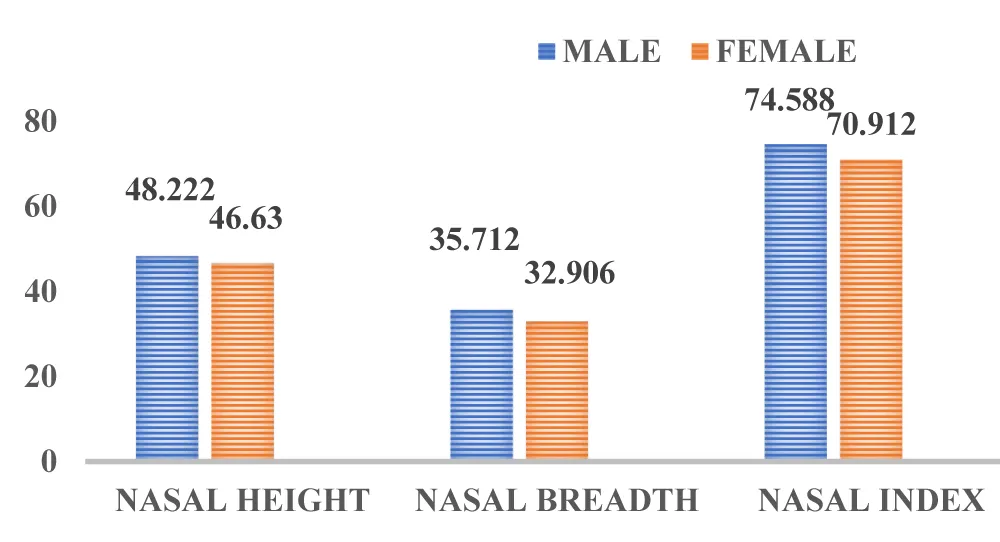
Figure 1: Showing the mean value of Nasal Height, Nasal Breadth, and Nasal Index of Males and Females in South India.
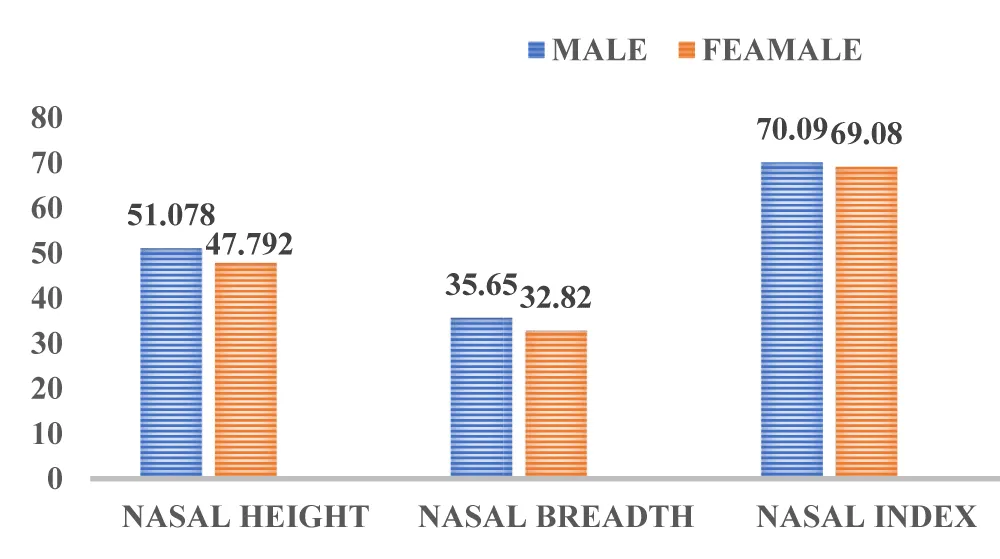
Figure 2: Showing the mean value of Nasal Height, Nasal Breadth, and Nasal Index of Males and Females in North India.
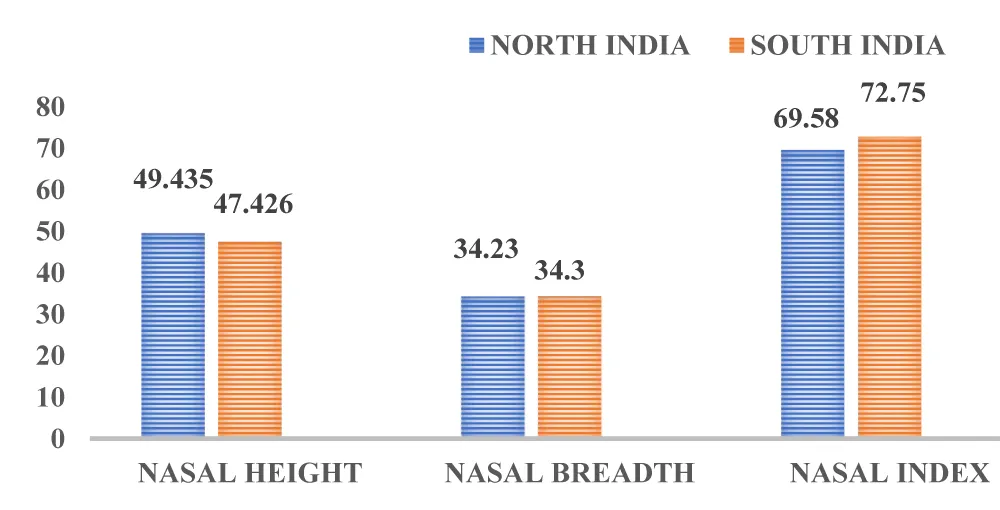
Figure 3: Showing the mean value of Nasal Height, Nasal Breadth, and Nasal Index of South Indian and North Indian population.
The mean value of nasal parameters in South India is higher in males compared to females and in North India. The nasal parameters are higher in males as compared to females. The mean value of nasal height is higher in the North Indian population as compared to the South Indian population and the mean value of nasal breadth and nasal index are higher in South India as compared to the North Indian population (Tables 5,6).
| Table 5: P value of nasal parameters of males and females population from North India and South India. | |||
| Comparison | Nasal height | Nasal breadth | Nasal index |
| North India: male vs female | t = 3.96; p = 0.00015 | t = 4.46; p < 0.0001 | t = 0.59; p = 0.560 |
| South India: male vs female | t = 2.10; p = 0.038 | t = 4.63; p < 0.0001 | t = 2.01; p = 0.047 |
| Table 6: P value of nasal parameters from the total population. | |||
| Comparison | Nasal height | Nasal breadth | Nasal index |
| North vs South India | t = 2.41; p = 0.018 | t = -0.12; p = 0.908 | t = -1.76; p = 0.081 |
Using the reported group means and standard deviations with 50 participants in each sex-by-region cell, the nasal-index comparison between South Indian males and females was statistically significant (two-sided independent-samples t-test, t ≈ 2.01, p ≈ 0.047), whereas the corresponding North Indian comparison was not statistically significant (t ≈ 0.59, p ≈ 0.560). Thus, the present results support evidence of sex-related difference in nasal index within the South Indian sample, but they do not provide sufficient statistical evidence for sexual dimorphism in the North Indian sample. The difference between the South and North Indian groups should be interpreted as regional or population-level variation. The nasal-index categories also differed descriptively: Mesorrhine was most frequent in the South Indian group (51%), whereas Leptorrhine was most frequent in the North Indian group (48%). An exploratory 2 × 2 factorial analysis reconstructed from the reported cell means and standard deviations (sex × region) gave no statistically significant overall main effect of sex (F ≈ 3.46, p ≈ 0.064) and no statistically significant sex-by-region interaction (F ≈ 1.11, p ≈ 0.293), while the regional main effect was statistically significant (F ≈ 6.28, p ≈ 0.013). These factorial results should be confirmed using the original individual-level dataset before publication (Tables 7-9).
| Table 7: Percentage distribution of nasal characteristics among males and females in the South Indian population. | ||||||
| S.NO | NASAL INDEX TYPES | RANGE | MALE | FEMALE | ||
| FREQUENCY | % | FREQUENCY | % | |||
| 1 | HYPERLEPTORRHINE | 40 – 54.9 | 0 | 0% | 1 | 2% |
| 2 | LEPTORRHINE | 55 – 69.9 | 17 | 34% | 24 | 48% |
| 3 | MESORRHINE | 70 – 84.9 | 29 | 58% | 22 | 44% |
| 4 | PLATYRRHINE | 85 – 99.9 | 3 | 6% | 2 | 4% |
| 5 | HYPERPLATYRRHINE | ≥ 100 | 1 | 2% | 1 | 2% |
| Table 8: Percentage distribution of nasal characteristics among males and females in the North Indian population. | ||||||
| S.NO | NASAL INDEX TYPES | RANGE | MALE | FEMALE | ||
| FREQUENCY | % | FREQUENCY | % | |||
| 1 | HYPERLEPTORRHINE | 40 – 54.9 | 1 | 2% | 1 | 2% |
| 2 | LEPTORRHINE | 55 – 69.9 | 21 | 42% | 27 | 54% |
| 3 | MESORRHINE | 70 – 84.9 | 25 | 50% | 20 | 40% |
| 4 | PLATYRRHINE | 85 – 99.9 | 3 | 6% | 2 | 4% |
| 5 | HYPERPLATYRRHINE | 100 | 0 | 0% | 0 | 0% |
| Table 9: Percentage distribution of nasal characteristics among males and females in the total North Indian and South Indian population. | ||||||
| S.NO | NASAL INDEX TYPES | RANGE | SOUTH INDIA | NORTH INDIA | ||
| FREQUENCY | % | FREQUENCY | % | |||
| 1 | HYPERLEPTORRHINE | 40 – 54.9 | 1 | 1% | 2 | 2% |
| 2 | LEPTORRHINE | 55 – 69.9 | 41 | 41% | 48 | 48% |
| 3 | MESORRHINE | 70 – 84.9 | 51 | 51% | 45 | 45% |
| 4 | PLATYRRHINE | 85 – 99.9 | 5 | 5% | 5 | 5% |
| 5 | HYPERPLATYRRHINE | ≥ 100 | 2 | 2% | 0 | 0% |
The nasal index types for the South Indian and North Indian population based on the characteristics and its distribution were as follows: In South India male population have 29 Mesorrhine(58%), 17 Leptorrhine(34%), 3 Platyrrhine(6%) and in female population have 24 Leptorrhine(48%), 22 Mesorrhine(44%), 2 platyrrhine(4%) and in North India male population have 25 Mesorrhine(50%), 21 Leptorrhine, 3 Platyrrhine(6%) and female population have 27 Leptorrhine(54%), 20 Mesorrhine(40%), 2 Platyrrhine(4%). The percentage distribution of nasal characteristics in the total South Indian population is 51 Mesorrhine (51%) and in North Indian population has 48 Leptorrhine (48%). The percentage distribution of nasal types is mentioned in the below chart.
The common occurrence of nasal type in both population for the females was found to be Leptorrhine and for males was Mesorrhine type. The Mesorrhine type of nose is most predominant in the South Indian population followed by the Leptorrhine type of nose and the Leptorrhine type of nose is most predominant in the North Indian population followed by Mesorrhine. This shows that the South Indian population has a higher chance of occurrence of Mesorrhine nose shape, while North Indians have Leptorrhine nose shape. The main purpose of the study was to analyze the presence or absence of sexual dimorphism and also to provide baseline data for anthropologists, and aesthetic and reconstruction surgeons. The results of the study showed that sexual dimorphism was present in males and females of both populations. Males have a higher nasal index than females in both populations. The most common type of nose is Mesorrhine in the South Indian population and the Leptorrhine type of nose is in the North Indian population. The knowledge of nasal anthropometry is useful in forensic medicine and physical anthropology as one of the tools used in the identification of different races, ethnicities, and genders of an individual.
In this study, the dominant nasal type for North Indian males was Mesorrhine, 25 individuals while 21 people were Leptorrhine. North Indian females are also dominantly Leptorrhine 27 individuals while 20 people were Mesorrhine and had traces of Platyrrhine. So, it can be concluded that the dominant nose type in the North Indian population is Leptorrhine. On the other hand, the dominant nose type in South Indian males is Mesorrhine, 29 individuals and females are Leptorrhine, 24 individuals. So, it can be concluded that the dominant nose type in the South Indian population is Mesorrhine. This research agrees with different studies on the relevance of nasal and facial dimensions in the analysis of gender-based variation among different groups and races of the human population. The present study estimated the predominant nose type to be Mesorrhine in the South Indian population (72.75mm) and Leptorrhine in the North Indian population (69.58mm). The nasal index of the South Indian population is significantly higher than the North Indian population, which confirms the existence of sexual differences in nasal parameters possibly due to genetic, hormonal, nutritional, and other related factors. This study should be subjected to further investigation because of its relevance to forensic science and clinical anthropometry. This will provide baseline data among South Indian and North Indian populations, which will be valuable in nasal anthropometry for clinical practice, reconstructive surgery and rhinoplasty, and forensic science and therefore needs further investigation.
The present study examined nasal height, nasal breadth, and nasal index in sampled South Indian and North Indian participants. The results demonstrate that nasal measurements vary between individuals and between the two regional groups. Such variation can be described anthropometrically, but group-level differences should not be interpreted as definitive evidence of racial or ethnic classification. The sex-specific nasal-index findings require particular attention. South Indian males had a higher mean nasal index than South Indian females, and the difference was statistically significant based on the reported summary statistics. In contrast, the North Indian male and female means differed only slightly and the difference was not statistically significant. Therefore, the evidence for sexual dimorphism in the present study is supported for the South Indian sample but not for the North Indian sample.
The mean nasal index was higher in the South Indian group than in the North Indian group (approximately 72.75 versus 69.59). This comparison represents a regional or population-level difference within the sampled groups. It should not be described as evidence of sexual dimorphism because both sexes contribute to each regional estimate. Similarly, differences in nasal-index categories describe the distribution of nasal proportions in the sampled populations and do not establish an individual's geographic or ethnic origin.
Nasal anthropometry may have applications in clinical and reconstructive settings because quantitative measurements can assist in describing facial morphology. In forensic anthropology, such measurements may contribute to a broader biological profile when used with other evidence. However, the present study does not establish diagnostic accuracy, classification accuracy, sensitivity, specificity, or predictive performance for individual identification. The present results should also be interpreted in light of the cross-sectional sampling design and the geographic composition of the two groups. The participants were drawn from selected states rather than from a probability sample representing all North Indian or South Indian populations. Consequently, the findings are most appropriately regarded as descriptive data for the sampled groups.
Previous studies cited in the manuscript have reported sex- and population-related differences in nasal measurements. The present findings are broadly comparable in showing variation in nasal dimensions, but the current results differ in the strength of evidence between regions. Comparisons with other studies should therefore consider differences in sample composition, age range, geographic coverage, measurement procedures, and statistical methods.
In this study, the mean nasal height for North Indian males is 51.078mm and females is 47.792mm, whereas the mean nasal height of South Indian males is 48.22mm and females is 46.63mm. The mean nasal height value is higher in North Indian males and females as compared to South Indian males and females. The mean nasal breadth for North Indian males is 35.65mm and females is 32.82mm, whereas the mean nasal breadth of South Indian males is 35.712mm and females is 32.906mm. The mean nasal breadth value is higher in South Indian males and females as compared to North Indian males and females. The mean nasal index for North Indian males is 70.0982mm and for females is 69.08mm, whereas the mean nasal index of South Indian males is 74.588mm and females is 70.912mm. The mean nasal index value is higher in South Indian males and females as compared to North Indian males and females. The mean nasal height for the total North Indian population is 47.426mm, the mean nasal breadth is 34.30mm and mean nasal index is 72.75mm and the mean nasal height of the total South Indian population is 49.435mm, the mean nasal breadth is 34.23 and mean nasal index is 69.58mm. The mean nasal height value is higher in the total North Indian population as compared to the South Indian population, and the mean nasal breadth and nasal index value is higher in the total South Indian population as compared to the North Indian population.
In the present data, North Indian males most frequently showed the Mesorrhine category, while North Indian females most frequently showed Leptorrhine. In South India, Mesorrhine was most frequent among males and Leptorrhine among females. At the population level, Mesorrhine was the most frequent category in South India and Leptorrhine was the most frequent category in North India. These frequencies describe the observed sample and should not be used to classify an individual's ethnicity or geographic origin.
The original manuscript interpreted the male–female differences in both regions as statistically significant. After verification of the reported means and standard deviations, that interpretation requires correction. The South Indian nasal-index difference is statistically significant, whereas the North Indian nasal-index difference is not. The two regional groups also differ in their mean nasal index, but this is a regional comparison and should not be conflated with sexual dimorphism.
The mean nasal index was 70.0982 in North Indian males and 69.08 in North Indian females, compared with 74.588 in South Indian males and 70.912 in South Indian females. The male–female difference was therefore much larger in the South Indian sample. Statistical testing based on the reported summary values indicates significance in South India but not in North India. These findings do not support a conclusion that sexual dimorphism is present equally in both regional groups.
Hall, a scientist detected a strong correlation between nasal dimensions and oxygen consumption. Natural selection has fine-tuned the size of the fleshy nose to support the amount of air that needs to be possessed. Males who consume relatively more oxygen during their hard activities would be expected to have relatively broader noses than females of the same population. The nasal index has been found to modify between childhood, adolescence, and young adulthood and even after young adulthood into the sixth decade of life. However, the sexual dimorphism in nasal dimensions appears to begin at different ages. As nasal growth changes with age, it plays a very important part in various fields like orthodontics for diagnosis and treatment planning, forensics, plastic surgery, ENT, etc. The nose is one of the parts of the body which shows very characteristic changes during racial evolution. The nose experiences more growth in vertical dimensions than in anteroposterior dimensions in both males and females in their spurt years. The nasal tip showed very much age-related changes because of loss of muscle tone and increased flaccidity and redundancy. At different ages, different nasal dimensions appear to begin in different sexes. This is an important aspect to consider in the evaluation of nasal changes with age in both genders because at birth the nasal height in boys was significantly larger as compared to girls of the same age group. However, at birth time and in the first few months after the birth. Nasal breadth was similar in both newborn boys and girls and it became larger in boys than in girls in postnatal growth only. The anatomical structure of the nose is supported by cartilage and the rest of the nose is supported by bone. Age-related changes on the nose are not uniform with age, both bone and cartilage become weaker. But the difference is that bone does not move but cartilage moves with time. Hence because of the movement of cartilage, the tip of the nose droops leads to the nasal tip.
The findings suggest that sex-related variation in nasal index may be detectable in some regional samples, while regional variation may occur independently of statistically significant sex differences. Biological and environmental factors may contribute to nasal morphology, but the present observational design does not permit causal attribution. Further research using larger, geographically representative samples and individual-level statistical modelling would be required to evaluate sex, region, age, and their interaction more robustly [1-33].
Limitations of the study
The limitation of the study was that not many North Indian and South Indian states were covered due to time constraint. Also, more parameters can be included along with the nasal parameters for better understanding of the variations in the face among populations
The present study estimated the predominant nose type to be Mesorrhine in the South Indian population (72.75mm) and Leptorrhine in the North Indian population (69.58mm). The nasal index of the South Indian population is significantly higher than the North Indian population which confirms the existence of sexual differences in nasal parameters possibly due to genetic, hormonal, nutritional, and other related factors. This study should be subjected to further investigation because of its relevance to forensic science and clinical anthropometry. This will provide baseline data among South Indian and North Indian populations which will be valuable in nasal anthropometry for clinical practice, reconstructive surgery and rhinoplasty, and forensic science and therefore needs further investigation. A multitude of factors influences the size, shape, and length of the nose such as genetics, sex, racial origins, and environmental conditions. This study indicates the significant difference among the nasal indices in males and females. The index relies on both bony and cartilaginous anatomical surface points. Natural selection according to climatic conditions aids in augmenting the efficiency of the nose keeping the inhaled air warm and moist as required for the individual. This study is vital in medical sciences such as cosmetology, facio-maxillary surgeons, anatomists, and anthropologists alike. Such anthropometric data will also facilitate the manufacture of better medical gear and tools.
The present study identified descriptive differences in nasal parameters between the sampled South Indian and North Indian groups. Mesorrhine was the most frequent nasal-index category in South India, whereas Leptorrhine was the most frequent category in North India. The mean nasal index was approximately 72.75 in the South Indian group and 69.59 in the North Indian group. The regional difference should be interpreted as population-level variation rather than as evidence of sexual dimorphism.
With respect to sex-related variation, the nasal-index difference between South Indian males and females was statistically significant, whereas the corresponding North Indian difference was not statistically significant based on the reported summary statistics. Therefore, the findings provide evidence of sexual dimorphism for the South Indian sample but do not establish sexual dimorphism for the North Indian sample. Nasal measurements may be considered an adjunct source of anthropometric information, but the present study does not demonstrate that nasal index alone can determine an individual's sex.
The study provides baseline descriptive information for the sampled regional groups that may be useful for future anthropometric, clinical, and forensic research. The results should be interpreted cautiously because the sample was drawn from selected states and the study did not evaluate individual classification accuracy. In particular, differences in group means should not be presented as proof that nasal index can determine race, ethnicity, or geographic origin.
The nose acts as a filter to prevent penetration of toxic particles and gases to the lower respiratory tract, the route of breathing, oral and nasal may be an important determinant of toxicant dose to the lungs. Very large and very small particles are deposited very efficiently in the nose by inertial impaction and diffusion respectively during nasal breathing. The nose effectively conditions inspired air to near body temperature and relative humidity before it enters the lungs. The ability of the nose to condition ambient air in these ways serves as a protective mechanism against toxicity to the lower respiratory tract. The nose is central in the determination of facial aesthetics. The variation in its structural characteristics greatly influences the ultimate endoskeletal positioning at the end of an orthodontic therapy. The development of the nose in the embryo occurs in pre-skeletal and skeletal phases by a well-coordinated and regulated interaction of multiple signaling cascades with the crucial importance of each factor in the entire mechanism. Nasal morphology has a great bearing on the facial appearance of an individual. The nasal region was found to be more reliable in the detection of asymmetry as compared to the mouth or eyes. The genetic basis affects the various aspects of nasal morphology at length along with the clinical relevance of various anatomical variations in nasal morphology. Racial and gender differences were observed in the nasal index. The internal nose develops by the expansion of the nasal cavity with the atrophy of existing tissues and the formation of mesenchymal structures. The factors responsible for the variation in size, shape, and length of the nose could include genetic factors, race, and environmental climatic conditions. The study was carried out in South Indian and North Indian populations.
The predominant nasal-index categories observed in the study were Mesorrhine in South India and Leptorrhine in North India. The observed differences are consistent with regional variation in the sampled populations. The present study does not establish racial or ethnic dimorphism and does not provide sufficient evidence to use nasal index as a standalone method for determining racial background, ethnicity, or geographic origin of an individual.
The study provides normative descriptive values for nasal height, nasal breadth, and nasal index in the sampled South and North Indian groups. These data may support future regional anthropometric studies and may have relevance to clinical or reconstructive applications. However, larger and more representative samples, standardized measurement procedures, and individual-level multivariable analyses are required before broader population-level or forensic applications can be considered.
Overall, the findings indicate regional differences in the distribution and mean values of nasal measurements. The South Indian sample showed a statistically significant male–female difference in nasal index, whereas the North Indian sample did not. The difference between the regional groups is appropriately interpreted as regional or population-level variation. The nasal index should therefore be regarded as a descriptive anthropometric measure in this study, not as a standalone method for determining an individual's sex, race, ethnicity, or geographic origin.
- Dhulqarnain AO, Mokhtari T, Rastegar T, Mohammed I, Ijaz S, Hassanzadeh G. Comparison of nasal index between northwestern Nigeria and northern Iranian populations: an anthropometric study. J Maxillofac Oral Surg. 2020;19(4):550-556. Available from: https://www.ncbi.nlm.nih.gov/pmc/articles/PMC7524939/
- Comparison of nasal height of different populations [Internet]. ResearchGate; [cited 2026 Sep 28]. Available from: https://www.researchgate.net/figure/Comparison-of-Nasal-Height-of-different-populations_tbl3_271259102
- Nasir N, Asad MR, Muzammil K, Hassan A, Alshalwi T, Khan MR. Anthropometric study of nasal indices in four Indian states. Clin Pract. 2021 Feb 27. Available from: https://www.openaccessjournals.com/articles/anthropometric-study-of-nasal-indices-in-four-indian-states-14524.html
- Study of nasal index [Internet]. International Journal of Dental and Medical Sciences Research. [cited 2026 Sep 28]. Available from: https://www.ijdmsrjournal.com/current-issue.php?issueid=24&title=Study%2Bof%2BNasal%2BIndex
- An anthropometric study of nasal index with its clinical correlation [Internet]. ResearchGate; [cited 2026 Sep 28]. Available from: https://www.researchgate.net/publication/332231483_AN_ANTHROPOMETRIC_STUDY_OF_NASAL_INDEX_WITH_ITS_CLINICAL_CORRELATION
- Anthropometric study of the nasal index of Bekwara ethnic group of Cross River State, Nigeria [Internet]. ResearchGate; [cited 2026 Sep 28]. Available from: https://www.researchgate.net/publication/285817404_Anthropometric_study_of_the_nasal_index_of_Bekwara_ethnic_group_of_Cross_River_State_Nigeria
- Anthropometric study of nasal index in Hausa ethnic population of northwestern Nigeria [Internet]. ResearchGate; [cited 2026 Sep 28]. Available from: https://www.researchgate.net/publication/324065415_Anthropometric_study_of_nasal_index_in_Hausa_ethnic_population_of_northwestern_Nigeria
- Study of nasal index: a review [Internet]. IJARIIE; [cited 2026 Sep 28]. Available from: http://ijariie.com/AdminUploadPdf/STUDY_OF_NASAL_INDEX___A_Review_ijariie10818.pdf
- Shrestha R, Manandhar B, Upadhyay HP, Madhikarmi NL. Mean nasal index of dental students of a dental college in Nepal. J Nepal Med Assoc. 2019;57(220):477-480. Available from: https://www.ncbi.nlm.nih.gov/pmc/articles/PMC8827591/
- What is a digital vernier caliper? [Internet]. OroCommerce; [cited 2026 Sep 28]. Available from: https://www.instrumentchoice.com.au/news/what-is-a-digital-vernier-caliper
- Kumar V. Working principle of digital vernier caliper [Internet]. Infiniti Lab. 2024 Jan 8 [cited 2026 Sep 28]. Available from: https://infinitalab.com/metrology-testing-service/working-principle-of-digital-vernier-caliper/
- Sex determination based on nasal index and other nasal parameters [Internet]. Indian J Forensic Community Med. [cited 2026 Sep 28]. Available from: https://www.ijfcm.org/journal-article-file/897
- Mehta N, Farkas LG, He ZJ, Ofodile FA, Kim SH, Khandekar B, et al. The Indian nose: an anthropometric analysis. J Plast Reconstr Aesthet Surg. 2017;70(11):1533-1543. Available from: https://www.sciencedirect.com/science/article/abs/pii/S1748681517302206
- Neupane B, Iyer K, Sigdel B. Role of nasal parameters in gender determination among medical students. J Gandaki Med Coll Nepal. [cited 2026 Sep 28]. Available from: https://www.nepjol.info/index.php/JGMCN/article/view/40899
- Jimoh RO, Alabi SB, Kayode AS, Salihu AM, Ogidi OD. Rhinometry: spectrum of nasal profile among Nigerian Africans. Braz J Otorhinolaryngol. 2011;77(5):589-594. Available from: https://www.scielo.br/j/bjorl/a/4R8Cdkdns9YhzBmjzkzJPKv/
- Journal of Clinical and Diagnostic Research [Internet]. [cited 2026 Sep 28]. Available from: https://www.jcdr.net/articles/PDF/16382/52285_CE%5BRa1%5D_F(KR)_PF1(AG_KM)_PFA(AG_KM)_PN(KM).pdf
- Anthropometric evaluation of nasal height, nasal breadth and nasal index among Bini children in southern Nigeria [Internet]. ResearchGate; [cited 2026 Sep 28]. Available from: https://www.researchgate.net/publication/332912694_Anthropometric_evaluation_of_nasal_height_nasal_breadth_and_nasal_index_among_Bini_children_In_Southern_Nigeria
- Anthropometric study of the nasal index of Egyptians [Internet]. [cited 2026 Sep 28]. Available from: https://www.ijmhr.org/ijar.2.4/IJAR.2014.544.pdf
- Anthropometric study of nasal index among the population of [Internet]. [cited 2026 Sep 28]. Available from: http://www.ijss-sn.com/uploads/2/0/1/5/20153321/ijss_may_oa14.pdf
- [Article available from PubMed Central] [Internet]. [cited 2026 Sep 28]. Available from: https://www.ncbi.nlm.nih.gov/pmc/articles/PMC10155994/
- Makaju S, Adhikari S. Measurement of nasal index in Bhaktapur region: a descriptive study [Internet]. Semantic Scholar; [cited 2026 Sep 28]. Available from: https://www.semanticscholar.org/paper/MEASUREMENT-OF-NASAL-INDEX-IN-BHAKTAPUR-REGION:-A-Makaju-Adhikari/4b0a51f882ebb68d0bdff146a75bec4837fd2881
- Saremi M, Kazemhaghighi M. Anthropometric estimations for the Iranian general population. Iran J Public Health. 2019;48(8):1492-1501. Available from: https://www.ncbi.nlm.nih.gov/pmc/articles/PMC7145906/
- Li Z, Liang Y, Schenck TL, Frank K, Giunta RE, Koban KC. Investigating the reliability of novel nasal anthropometry using advanced three-dimensional digital stereophotogrammetry. J Pers Med. 2022;12(1):60. Available from: doi:10.3390/jpm12010060.
- Saudi Journal of Oral and Dental Research [Internet]. [cited 2026 Sep 28]. Available from: https://saudijournals.com/media/articles/SJODR_51_36-42.pdf
- Inter-generational variation of nasal morphology of Meitei males of Manipur, India [Internet]. ResearchGate; [cited 2026 Sep 28]. Available from: https://www.researchgate.net/publication/317277106_Inter-Generational_Variation_of_Nasal_Morphology_of_Meitei_Males_of_Manipur_India
- Sexual dimorphism of nasal index, nasal breadth and nasal height [Internet]. Int J Res Med Sci. [cited 2026 Sep 28]. Available from: https://www.msjonline.org/index.php/ijrms/article/download/10941/7251
- A comparative study of nasal ergonomics of two ethnic groups [Internet]. ResearchGate; [cited 2026 Sep 28]. Available from: https://www.researchgate.net/publication/307814981_A_COMPARATIVE_STUDY_OF_NASAL_ERGONOMICS_OF_TWO_ETHI_CAL_GROUPS
- Anthropometric study of some craniofacial parameters: head circumference, nasal height, nasal width and nasal index of adult Ijaws of Nigeria [Internet]. ResearchGate; [cited 2026 Sep 28]. Available from: https://www.researchgate.net/publication/45087769_Anthropometric_Study_of_Some_Craniofacial_Parameters_Head_Circumference_Nasal_Height_Nasal_Width_and_Nasal_Index_of_Adult_Ijaws_of_Nigeria
- Nasal substitution in Sarawak Malay dialect [Internet]. ResearchGate; [cited 2026 Sep 28]. Available from: https://www.researchgate.net/publication/271338912_Nasal_Substitution_in_Sarawak_Malay_Dialect
- Nasal index of the Tharu and Mongoloid population of Nepal: a cross-sectional study [Internet]. ResearchGate; [cited 2026 Sep 28]. Available from: https://www.researchgate.net/publication/280835166_Nasal_index_of_the_Tharu_and_Mongoloid_population_of_Nepal_A_cross_sectional_study
- Nasal index: a cross-sectional study among South Indian population [Internet]. Indian J Clin Anat Physiol. [cited 2026 Sep 28]. Available from: https://www.ijcap.org/journal-article-file/9158
- Shastri D, Tandon P, Singh A. Nasal changes in different age groups. Natl J Maxillofac Surg. 2021;12(3):372-377. Available from: https://www.ncbi.nlm.nih.gov/pmc/articles/PMC8820299/
- Energetics of nose and mouth breathing, body size, body composition, and nose volume in young adult males and females. Am J Hum Biol. 2005. Available from: https://pubmed.ncbi.nlm.nih.gov/15849711/