
More Information
Submitted: June 18, 2026 | Accepted: June 24, 2026 | Published: June 26, 2026
Citation: Dhayal V, Aarshiya. Silent Whispers of Identity: Epigenetic Fingerprinting in Forensic Science. J Forensic Sci Res. 2026; 10(1): 53-74. Available from:
https://dx.doi.org/10.29328/journal.jfsr.1001117
DOI: 10.29328/journal.jfsr.1001117
Copyright license: © 2026 Dhayal V, et al. This is an open access article distributed under the Creative Commons Attribution License, which permits unrestricted use, distribution, and reproduction in any medium, provided the original work is properly cited.
Keywords: Epigenetic fingerprinting; Forensic epigenetics; DNA methylation; CpG islands; Gene expression regulation; Forensic science; Molecular forensics; Body fluid identification; Biological evidence; Age estimation; Epigenetic clock; Monozygotic twins differentiation; Tissue-specific markers; Forensic biomarkers; Bisulfite sequencing; Methylation-specific PCR; Next-generation sequencing; Pyrosequencing; DNA degradation; Environmental influence; Lifestyle inference; Forensic phenotyping; Multi-omics; Biomarker validation; Statistical modeling; Machine learning in forensics

Silent Whispers of Identity: Epigenetic Fingerprinting in Forensic Science
Vishal Dhayal* and Aarshiya
53-B Janak Vihar, Gali No.5, Panchayawala, Sirsi Road, Jaipur, 302021, India
*Corresponding author: Vishal Dhayal, 53-B Janak Vihar, Gali No.5, Panchayawala, Sirsi Road, Jaipur, 302021, India, Email: [email protected]
Epigenetic fingerprinting is a new and exciting development in forensic science that goes beyond traditional DNA sequence analysis to identify biological samples. Short tandem repeat (STR)-based profiling is still the best way to identify a person, but it can't give you information about things like where the tissue came from, how old it is, or how it varies in appearance. Epigenetic changes, especially DNA methylation, add another layer of molecular information that is tissue-specific and changes over time. This makes them very useful for forensic purposes.
New analytical methods, such as bisulfite conversion-based assays, methylation-specific polymerase chain reaction, and next-generation sequencing, have made it possible to reliably find and count epigenetic markers in forensic-type samples. These methods have been useful for identifying body fluids, estimating age, and telling the difference between monozygotic twins, which are things that traditional genetic methods can't do well enough. Also, new evidence suggests that epigenetic patterns may show how a person's environment and lifestyle affect them, which makes forensic evidence more useful for interpretation.
Even with these improvements, there are still several problems that make it hard to use epigenetic fingerprinting in forensic work regularly. These include differences caused by the environment, problems with sample degradation, a lack of standardised marker panels, and problems with statistical interpretation. Also, the ethical and legal issues that come up when using epigenetic information need to be carefully thought about.
This review critically evaluates the present advancements in epigenetic fingerprinting, emphasising its molecular foundation, analytical methodologies, and forensic implications. It also talks about the current problems and the steps that need to be taken in the future to make it a part of everyday forensic work.
Forensic science has made a lot of progress in the last few decades, thanks to the switch from traditional serological methods to more advanced molecular methods. In the past, forensic investigations relied on biochemical and immunological methods to identify biological materials. These methods were useful, but they were often not very sensitive or specific. DNA profiling, especially short tandem repeat (STR)-based analysis, was a huge step forward because it made it possible to accurately and reliably identify people. This method has since become the basis for forensic investigations and is widely accepted by courts around the world [1,2].
DNA profiling is useful, but it mostly looks at changes in genetic sequences, so it doesn't give you a lot of information. This method can accurately identify an individual, but it does not provide information regarding the biological context of the sample, such as the type of tissue origin, the individual's age, or the impact of their environment and lifestyle. These limits are especially important when working with difficult forensic cases, such as when there are mixed samples, trace or damaged biological material, or when there are no reference profiles. For this reason, there is a growing need for more methods that can look at the data from different angles.
In this case, epigenetics has become a very interesting and useful area of study for forensic research. Epigenetics is the study of changes in gene expression that can be passed down and changed without changing the DNA sequence. DNA methylation is the most studied and widely used epigenetic mechanism in forensic research due to its chemical stability and pronounced tissue-specific properties [3,4]. These methylation patterns might show where a molecule came from and how it is doing physically, which makes forensic examination more comprehensive.
The idea behind epigenetic fingerprinting is to use these patterns of methylation to describe biological samples. Epigenetic signatures are dynamic and can change based on a person's age, environment, and lifestyle. Genetic profiles, on the other hand, stay mostly the same throughout a person's life. This changing quality makes it useful for a variety of forensic purposes. For instance, certain methylation markers have been used to tell different body fluids apart, get better at estimating chronological age, and tell monozygotic twins apart, even though they have the same DNA sequences [5–7]. These features fix some of the biggest problems with traditional DNA analysis and give important background information for forensic investigations.
New research has also shown that epigenetic patterns may show how things like smoking, diet, and environmental stress affect people, which makes them even more useful for understanding. There are, however, some issues with using epigenetic fingerprinting in forensic science. Environmental factors might affect epigenetic changes, and sample degradation might also affect them. This could explain why the results are different. Additionally, the absence of standardised protocols, inadequate validation of marker panels, and the challenges associated with interpreting statistics remain significant obstacles to routine utilisation. Before these methods can be employed in forensic practice, legal and ethical considerations must be addressed [8–10].
In light of all this, the goal of this review is to give a complete and critical look at epigenetic fingerprinting in forensic research. It talks about the molecular processes that cause epigenetic changes, how they are found, and how they are now used and could be used in forensic investigations. It also talks about the current limits and makes suggestions for what needs to be done in the future to make epigenetic methods useful in everyday forensic work.
The evolution of epigenetics from a theoretical framework to a useful tool in forensic science is a slow process that has been made possible by advances in molecular biology and analytical technologies. Epigenetics began in developmental biology, but it has grown a lot in the last few decades, especially since DNA methylation was found to be a stable and useful molecular marker. This progression has allowed it to move into forensic science, where it is now being looked at as a way to improve traditional DNA analysis. To fully understand what epigenetic fingerprinting can do now and in the future for forensic investigations, you need to know about this historical development.
Early concepts of epigenetics
Conrad Waddington was the first person to use the word "epigenetics" in the 1940s to describe how genetic and environmental factors work together to shape phenotypic traits [1]. Epigenetics was just a way of thinking about how things develop at this point. It had not yet become a separate molecular field. One of the most important ideas was that the same genetic material could make different types of cells by using regulatory systems that control gene expression. Even though these early ideas didn't have any experimental proof at the molecular level, they were very important because they helped set the stage for later discoveries. This was a very important discovery because it went against the common belief that genetic information was the only thing that could cause biological effects. It was especially important to find out that gene activity can be controlled without changing the DNA sequence. Ultimately, this shift in understanding enabled the exploration of epigenetic processes across all applied sciences, including forensic biology.
Molecular understanding of epigenetic mechanisms
The field of epigenetics changed from being mostly theoretical to being more molecularly defined in the second half of the 20th century. Key discoveries showed that changing the chemicals in DNA and the proteins that go with it is very important for controlling gene expression. DNA methylation, which adds methyl groups to cytosine residues, especially within CpG dinucleotides, was the most studied of these mechanisms [2,3]. This change was shown to change how genes work without changing the DNA sequence itself. Histone modification and chromatin remodelling, in addition to DNA methylation, were found to be important parts of epigenetic regulation [4]. These processes change the way chromatin is structured, which in turn controls how easy it is for DNA to be transcribed. It is important to note that epigenetic changes showed patterns that were specific to certain tissues and stayed stable over time. This blend of being specific and stable made epigenetic markers very appealing for more research. These properties were first looked at in relation to development and disease, but they later became very important for use in forensic science, where it is important to be able to tell biological samples apart.
Emergence of epigenetics in forensic science
In the early 21st century, people started to pay more attention to how epigenetics could be used in forensic science. The limitations of conventional STR-based profiling in providing contextual biological information stimulated interest in epigenetic markers as complementary forensic tools. Early forensic studies demonstrated that tissue-specific DNA methylation patterns could differentiate biological fluids and tissues, establishing the foundation for subsequent forensic epigenetic applications [20–24].
Recent advances and expanding applications
The field of forensic epigenetics has grown a lot in the last few years because of new technologies and more people doing research on it. One of the most important changes has been the use of DNA methylation markers to figure out how old someone is. Scientists have found certain parts of the genome where methylation levels are closely linked to chronological age [8–12]. This has made it possible to create predictive models that are fairly accurate. Another important use is to tell the difference between identical twins [5,27]. Because identical twins have the same genetic sequence, traditional DNA profiling can't tell them apart. Epigenetic differences that accumulate over time may address this issue by allowing individuals to vary according to their methylation patterns. Furthermore, innovative analytical techniques such as bisulfite sequencing, methylation-specific polymerase chain reaction, and next-generation sequencing have significantly facilitated the identification and examination of epigenetic markers [30–35]. These technologies enable high-resolution and high-throughput analyses, even when forensic materials have deteriorated or are challenging to locate. Recent studies have further explored environmental influences and methodological challenges affecting forensic epigenetic applications. There are still a lot of big problems, like the fact that epigenetic markers can change, there are no standard methods, and thorough testing is needed. Epigenetics has gone from being a theoretical idea to a possible forensic tool. This shows that it is becoming more important and can be used alongside other forensic methods that are already in use.
Epigenetics describes inheritable and reversible alterations in gene expression that transpire without modifications to the fundamental DNA sequence. These changes control how the cell reads genetic information and are very important for cellular differentiation, development, and physiological adaptation. Epigenetic changes are different from genetic mutations because they can change DNA structure in response to things like the environment, development, and lifestyle. Epigenetic mechanisms are especially useful for forensic purposes because they have both relative stability and controlled variability. In forensic work, both consistency and biological context are important (Figures 1,2).
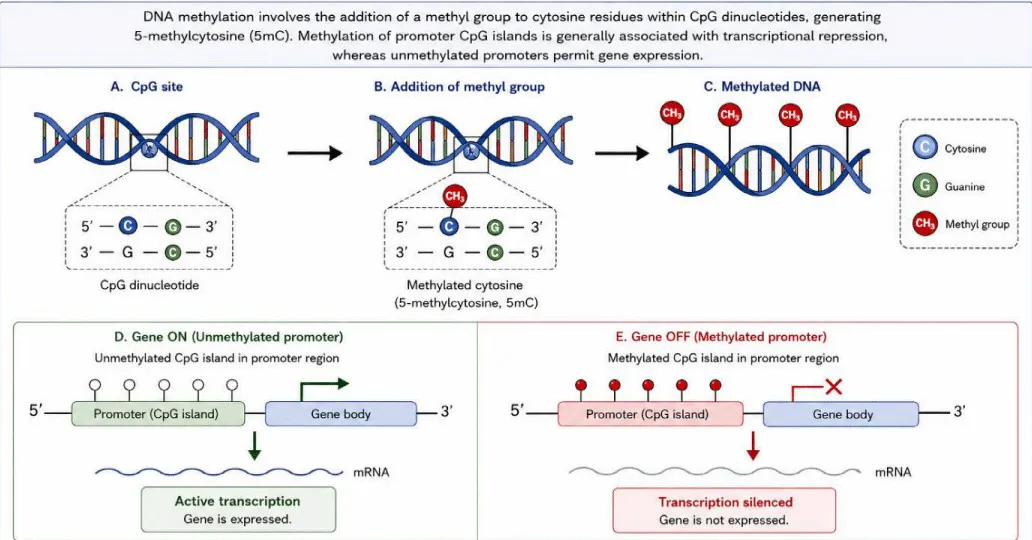
Figure 1: DNA methylation process and its role in gene regulation. The upper panel (A–C) illustrates the biochemical process of DNA methylation at CpG dinucleotides. The lower panel (D–E) shows the functional consequences of promoter methylation. Unmethylated promoters allow transcription factor binding and gene expression, whereas methylated promoters recruit repressive complexes, leading to transcriptional silencing.
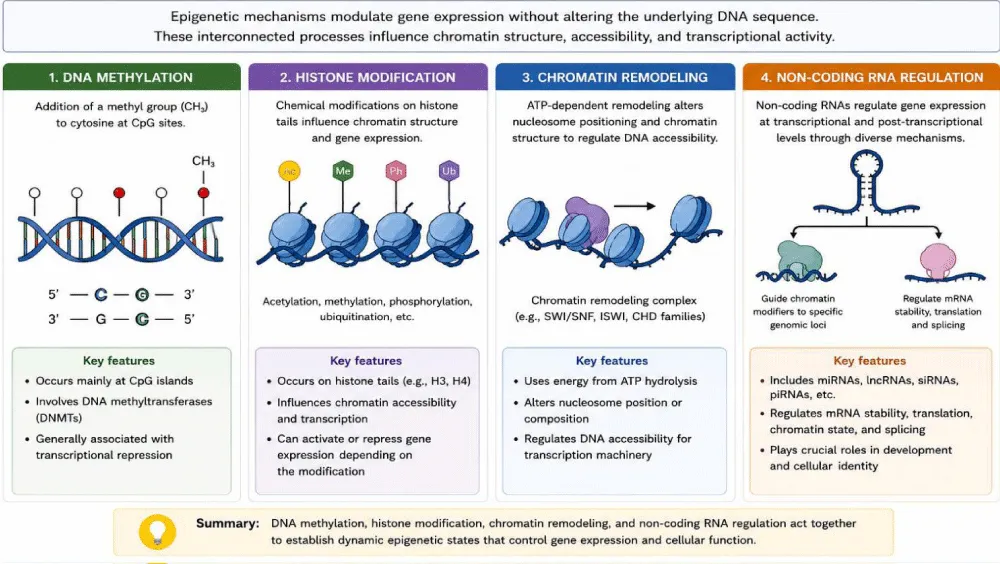
Figure 2: Overview of epigenetic mechanisms involved in gene regulation.
Molecular basis of epigenetics
Epigenetic regulation is controlled by a network of chemical changes that work together to change the structure of chromatin and make genes more or less accessible. These changes make it possible to tell if certain genes are being actively expressed or if they are being silenced by transcription. The main parts of this regulatory system are DNA methylation, histone modifications, chromatin remodelling, and non-coding RNAs. These parts work together to make sure that the identity and function of cells stay the same [2–4].
Epigenetic processes don't work by changing the nucleotide sequence; instead, they work by changing DNA and proteins that are connected to it. These changes can happen during the development process and then be kept up through cell division. This makes sure that the patterns of gene expression stay the same from one generation of cells to the next. On the other hand, they can still respond to things that happen outside of them, which lets them make adaptive changes in how they control their genes. This balance between stability and flexibility supports the idea that epigenetic markers could be useful tools in forensic research. This keeps the patterns of gene expression the same from one group of cells to the next. They can still respond to things that happen outside of them, though, which lets them change how they control their genes in a way that works for them [3,4].
DNA methylation
DNA methylation is the most researched epigenetic mechanism and constitutes the primary concentration of forensic epigenetics. This is what it is: adding a methyl group to the 5′ carbon of cytosine residues, which are usually found in CpG dinucleotides. CpG islands are groups of these sites that are often found near the start of genes. They are very important for controlling how genes are expressed [2,3].
Methylation is often linked to transcriptional repression because it can slow down the binding of transcription factors or draw in proteins that help chromatin condense. DNA methylation patterns are very specific to each type of tissue. This means that you can tell different types of cells apart by looking at their unique methylation profiles. This quality is very important for forensic work, like figuring out where bodily fluids and tissues came from [20–24].
DNA methylation is stable in many different situations, such as when it is only partially broken down, and it is also tissue-specific. This is very helpful for forensic analysis because biological materials tend to break down over time. On the other hand, methylation patterns can change over time, which makes them useful for figuring out how old someone is and other things that change [8–12].
Histone modifications
Another important way that epigenetic control works is by changing histones. In eukaryotic cells, histone proteins wrap around DNA to form nucleosomes. The DNA in a cell is made up of nucleosomes and chromatin. Changes to histone proteins, such as acetylation, methylation, phosphorylation, and ubiquitination, can change the way chromatin is built and how genes are turned on and off [4].
Histone acetylation is often linked to transcriptional activity because it makes the chromatin structure more relaxed, which makes it easier for transcriptional machinery to access it. On the other hand, some kinds of histone methylation can either raise or lower gene expression, depending on which amino acid residues are involved [4].
Changes to histones are important for controlling genes, but DNA methylation is more useful for forensic research. This is mostly because they are hard to find in forensic evidence and don't last long. They still add to the overall epigenetic environment, and they might be useful in the future as analytical tools get better.
Chromatin remodeling
Chromatin remodeling is the process of changing the way chromatin is built so that transcriptional machinery can get to DNA more easily. This process is controlled by certain protein complexes that move, remove, or rebuild nucleosomes. This changes how genes are expressed [4].
Cells can quickly respond to signals from inside and outside the cell by changing how genes work through chromatin remodeling. This process uses DNA methylation and changes to histones to create and maintain patterns of gene expression [2-4].
Chromatin remodeling is not directly utilized as a forensic marker; however, it plays a crucial role in shaping the epigenetic landscape. You need to know what epigenetic data does to understand it. This is because it changes how easy it is to find and see other epigenetic changes. As research advances, it may aid in the creation of more extensive epigenetic models in forensic analysis.
Non-coding RNAs
Non-coding RNAs (ncRNAs) are functional RNA molecules that do not code for proteins but control gene expression at different levels, such as during transcription and after transcription. These include microRNAs (miRNAs), long non-coding RNAs (lncRNAs), and other small RNA molecules [25,26].
MicroRNAs are among the most extensively researched non-coding RNAs in forensic science. They control gene expression by binding to messenger RNA and either stopping translation or speeding up degradation. MicroRNAs have shown promise as forensic biomarkers, particularly for the identification of bodily fluids, due to their small size and stability [20–26].
Long non-coding RNAs, which we don't know as much about, also help organize chromatin and control gene expression. The forensic application of ncRNAs remains under development, yet they represent a promising domain for future investigation, particularly in conjunction with other epigenetic markers [20–26].
Epigenetic Inheritance
Epigenetic inheritance refers to the transmission of epigenetic marks from one cell to another, maintaining consistent gene expression patterns across numerous generations of cells. Certain epigenetic modifications, including DNA methylation, are retained and conveyed to daughter cells during DNA replication, thereby preserving the identity of the cell [2,3].This way of passing on traits explains why epigenetic markers are relatively stable, which is important for their use in forensic science. But not all changes to epigenetics are permanent. Epigenetic profiles can differ because some people can change due to environmental and physiological factors [43,44].
The balance between stability and variability is what makes epigenetic systems what they are. In forensic science, this balance presents both opportunities and challenges. Stable markers are good for accurately identifying someone, but dynamic changes can help you guess their age or lifestyle. You need to know how these things work together to use epigenetic data correctly in forensic investigations [8–12].
Epigenetics is always changing and is affected by many biological and environmental factors. Even though both internal physiological processes and external environmental stimuli can change epigenetic patterns, genetic sequences usually stay pretty stable over a person's life. The diversity of epigenetic systems is what makes them different from each other. This is important for their use in crime scene investigation. It makes it easier to get more biological information, like age and lifestyle, but it also makes it harder to be consistent, repeatable, and understandable. Thus, to use epigenetic markers in forensic investigations reliably, it is essential to understand their origin and the extent of their variability.
Age-related changes
Age is one of the most well-known causes of epigenetic variability. DNA methylation patterns change over time steadily and reliably. This is what we mean by "epigenetic drift." This is known as "epigenetic drift." These changes happen at certain CpG sites all over the genome and are strongly linked to age. This connection has led to the creation of epigenetic clocks, which use methylation data to figure out how old a person is with a lot of accuracy [8–12].
Changes in methylation that happen as we get older are very helpful for forensic purposes when there isn't a direct match in a DNA database. This is especially true when there isn't a clear connection. By looking at the person's age, investigators may be able to get leads and narrow down the list of possible suspects. Because of their genes, the environment, and their health, the rate and pattern of epigenetic changes can be different for each person. Epigenetic age prediction models are improving in accuracy; however, they exhibit significant variability and require extensive validation across diverse populations [9–17].
Environmental factors (UV, temperature, humidity)
Environmental factors play a major role in how epigenetic patterns form. Changes in temperature, UV radiation, humidity, and chemicals can all affect DNA methylation and other epigenetic changes. These factors are very important in forensic settings because biological samples are often exposed to different environmental conditions before they are collected [43,44].
For example, being around heat or UV radiation for a long time can damage DNA and change the way methylation patterns work, which could make epigenetic analysis less accurate. Pollutants in the environment can also make it harder to find epigenetic markers. When you look at forensic results, you need to think about these things that make them different [43,44].
Environmental sensitivity might also be useful because it can show what kinds of conditions a sample has been in. This part, on the other hand, is still being studied and isn't well known enough to be used in regular forensic work yet [43,44].
Lifestyle factors (smoking, diet, stress)
Lifestyle factors such as smoking, diet, alcohol consumption, physical activity, and stress have been demonstrated to alter epigenetic patterns. For instance, smoking is linked to certain changes in DNA methylation at certain genomic loci, which can be used as exposure biomarkers. Epigenetic mechanisms can also change how genes work based on what you eat and how your body works [43-46].
In forensic science, these connections can help us learn more about a person and how they live. This could be very useful for figuring out who the suspects are or putting together pieces of someone's past. But we need to be careful when we look at this kind of data because lifestyle-related epigenetic changes are often complicated and depend on a lot of different things that work together [43–46].
It is also morally wrong to try to figure out human traits from biological data. It is crucial to carefully supervise the utilization of epigenetic data for lifestyle prediction to prevent misuse or excessive interpretation [47,48].
Disease-related changes
Changes in epigenetics are also closely linked to several diseases, including cancer, metabolic disorders, and neurological disorders. In many cases, the way that methylation patterns change in people with diseases is different from the way that they change in healthy people. Changes in disease can make epigenetic profiles less stable, which could change how forensic evidence is understood [45,46].
Some cancers, for example, cause widespread changes in DNA methylation. This could make epigenetic markers used to guess someone's age or identify tissue less reliable. Chronic diseases can also cause long-term changes in the way genes are expressed, which makes it even harder to understand the data [45,46].
There is a lot of research on how disease-related epigenetic changes affect biomedical science, but their effects on forensic science are still being studied. So, when looking at epigenetic data, it's important to think about how health status might affect it, especially when a precise interpretation is needed [45,46].
Inter-individual vs. Intra-individual variation
Epigenetic variability may occur between individuals (inter-individual variation) and within a single individual over time or across different tissues (intra-individual variation). Each individual possesses distinct epigenetic profiles resulting from inter-individual variability influenced by genetic, environmental, and lifestyle factors. This diversity might enhance the capacity of epigenetic markers to differentiate various situations; however, it may also complicate the development of universally applicable models [49,50].
Intra-individual variation refers to differences in epigenetic patterns between different tissues or changes that happen over time in the same person. For example, it is much easier to tell what kind of fluid is present because the methylation patterns in blood, saliva, and other tissues are very different from each other. Changes in epigenetic patterns, on the other hand, may make things less clear over time, especially in long-term studies [20–24,49,50].
To understand both types of variance is very important for forensic interpretation. You need strong statistical models and reliable markers to tell the difference between background noise and meaningful biological signals [49,50].
Epigenetic markers are the building blocks of forensic epigenetics because they leave behind molecular fingerprints that can be used to get biological information from forensic materials. Indicators based on DNA methylation have been the focus of the most extensive research among various epigenetic processes. This is mostly because these markers are very stable, can be used again and again, and are very specific to certain tissues. These markers are often found at certain genomic regions, especially CpG sites, where methylation levels change in a way that is both predictable and important for the body. For this reason, CpG sites are very important. Finding and confirming the right epigenetic markers is very important for making sure that forensic applications are accurate and trustworthy.
CpG sites and DNA methylation patterns
CpG sites are the most important places for DNA methylation in the human genome. These are parts of the DNA sequence where cytosine is followed by guanine. CpG islands are groups of these sites that are often found in gene promoter regions. They are very important for controlling genes. Depending on the chromosomal background, methylation at these sites may either stop or control gene expression [2,3,6].
Forensic research depends on CpG sites a lot because their methylation patterns aren't random; they change in a predictable way between people and tissues. Researchers have discovered that some CpG sites are useful for determining the age and identity of biological samples. The problem is choosing markers that are very specific and don't change much in different situations. So, a lot of validation research needs to be done to find CpG sites that are both sensitive and strong enough to use in forensic science [20–24,28,29].
Tissue-specific epigenetic markers
One of the most important things that forensic scientists do with epigenetic markers is figure out where a substance came from in the body. Different organs and body fluids have different DNA methylation patterns. This means that you can tell them apart by looking at their epigenetic markers. For example, blood, saliva, semen, and vaginal fluid all have different patterns of methylation at some genetic loci [20–24].
Forensic evidence is much more useful for figuring things out now that tissue-specific markers have been found. Instead of just finding DNA, detectives might be able to tell what kind of biological material was at the crime scene. This can help them learn a lot about the past. But how reliable these markers are depends on how unique they are and how well they can adapt to changes in their surroundings. Mixed samples and degraded DNA may make interpretation even harder, which is why it's important to choose the right marker panels [21–24].
Age-associated epigenetic markers
Age-related epigenetic markers are caused by the way DNA methylation patterns change over time. Over time, the levels of methylation at certain CpG sites change in a way that can be predicted. This lets you make models that can figure out how old someone is. These models, which people often call "epigenetic clocks," have done a great job of figuring out a person's age based on biological samples [8–17,28].
Estimating someone's age is very helpful in forensic investigations when DNA databases don't have a direct match. It helps investigators focus on a smaller group of possible suspects and find new leads in their investigations. Age prediction models can be less accurate because of things like the diversity of the population, exposure to the environment, and health. So, researchers are still working to make these markers more reliable and applicable to a wider range of situations [9–17,28].
Sex-specific epigenetic markers
Forensic applications have also looked into epigenetic differences between men and women, in addition to tissue and age-related markers. People know a lot about genetic methods for figuring out what sex someone is, like looking at the amelogenin gene. Epigenetic markers can add to this information, especially when DNA is damaged or genetic results are unclear [18,19].
Sex-specific epigenetic markers are frequently associated with distinctive methylation patterns on sex chromosomes, particularly the X chromosome. In females, X-chromosome inactivation generates unique methylation profiles that facilitate the differentiation between males and females. This area isn't as advanced as other applications, but it could help make forensic sex determination more accurate [18,19].
Degradation-resistant markers
It is very important to make epigenetic markers that won't break down so that the analysis Forensic analysis examines the state of biological materials, which may deteriorate when exposed to is always right, even when things are hard [29].
Studies indicate that certain DNA methylation markers remain constant even when the samples are partially degraded. This stability renders them valuable in forensic science. These markers are often found in genomic areas that are less likely to break down or are linked to shorter DNA fragments that are less likely to change. Epigenetic fingerprinting is more useful in real-life forensic situations where you can't control the quality of the samples because of these markers [29].
Marker selection and validation
Forensic science can only use epigenetic markers if they have been tested, standardized, and are important for the body. Finding markers means looking for parts of the genome that show the same patterns in different people and situations. You need to do a lot of testing and statistical analysis for this plan to work [29-31].
Validation is just as important, and it means testing markers in a variety of situations, such as using different types of samples, being in different environments, and using different methods to look at data. We need to make sure that all labs can use the same tools and that epigenetic analysis can be used in regular forensic work [30,31].
If you don't check epigenetic evidence carefully, it might not be accepted or believed in court. So, more research is being done to make standardized marker panels and analytical frameworks that will help forensic scientists use epigenetic methods more often [29-31].
Forensic research can only use epigenetic fingerprinting if the methods used to find changes in epigenetics are very accurate, sensitive, and reliable. Epigenetic analysis is different from regular DNA analysis because it looks at chemical changes, mostly DNA methylation, in certain parts of the genome. This makes things a lot harder because the DNA and the epigenetic markers need to be the same throughout the whole investigation. There have been many different ways to solve these problems over the years, and each has its own pros and cons. The best way to do it depends on how many and how good the samples are, how much information is needed, and the forensic setting (Figure 3).
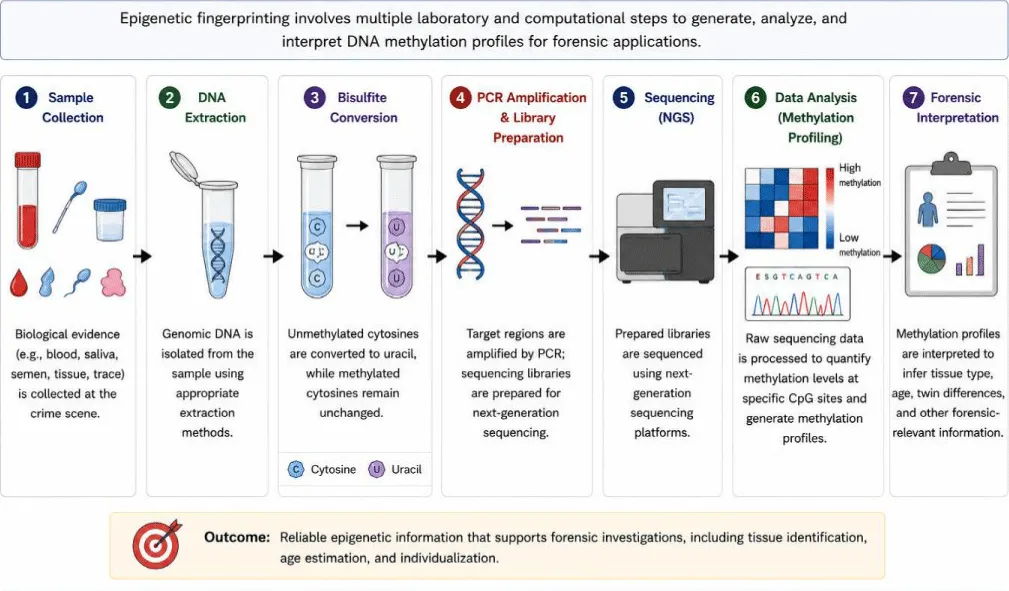
Figure 3: Workflow of forensic epigenetic fingerprinting. Abbreviations: NGS: Next-Generation Sequencing: PCR: Polymerase Chain Reaction; Cytosine-phosphate-Guanine; C: Cytosine; U: Uracil
Sample collection and preservation
The first step to making sure that epigenetic analysis is right is to get samples and keep them safe. When forensic evidence is left out in the open, DNA can break down and epigenetic markers can change. To keep both genetic and epigenetic integrity, you need to store and handle things correctly.
Using sterile collection methods, storing items correctly, and keeping them in controlled storage areas are all standard forensic methods that lower the risk of contamination and damage. Temperature, humidity, and light can all change how much DNA is methylated. Because of this, it's important to watch these things and, if you can, keep them in check. People often use drying, cooling, or freezing to keep samples stable until they can be looked at [29,43,44].
Dna extraction and quality assessment
After collection, DNA must be extracted from the biological sample using methods that keep both the sequence and the epigenetic changes intact. Organic extraction, silica-based methods, and magnetic bead-based systems are all common ways to extract things. The method you choose can change the amount and quality of DNA, which can then change the analysis that comes after [29].
The quality check is very important because DNA that is damaged or of poor quality could lead to an epigenetic profile that is wrong or missing. It is common practice to check things like the amount of DNA, its purity, and the size of certain fragments before moving on to more analysis. In forensics, where samples are often limited or contaminated, it is very important to make sure that extraction and quality assessment processes work as well as they can [29].
Bisulfite conversion
The bisulfite conversion method is the basis for most DNA methylation detection methods and is an important part of epigenetic analysis. This process uses sodium bisulfite to change unmethylated cytosine residues into uracil while leaving methylated cytosines alone. After amplification, these changes can be found and used to figure out the methylation status at certain places [6,7,29].
Bisulfite conversion works very well, but it also has some problems. The process can cause DNA to break down and be lost, especially in samples that are already weak. Also, measurements can be wrong if the conversion is not complete or if it is too much. Even with these problems, bisulfite-based methods are still the best way to look at methylation in forensic epigenetics [6,29].
Methylation-specific PCR (MSP)
Methylation-specific polymerase chain reaction, or MSP for short, is a targeted method that is used to find methylation at certain genomic loci after bisulfite conversion. This process uses primers that can tell the difference between methylated and unmethylated DNA sequences. This lets selective amplification happen without any problems [34].
MSP is very simple, inexpensive, and great for testing small amounts of DNA, which makes it perfect for use in forensic science. But it is usually qualitative or semi-quantitative and may not give specific information about methylation levels. Because of this, MSP is usually only used for first screening and not for more in-depth research [34].
Pyrosequencing
Pyrosequencing is a quantitative sequencing technique that enables accurate quantification of DNA methylation levels at designated CpG sites. After bisulfite conversion and PCR amplification, the sequence is analysed in real time by looking for the release of pyrophosphate during nucleotide incorporation [29].
This method is very accurate and can be repeated, which makes it great for things like estimating age, where you need to know exactly how much methylation there is. Pyrosequencing, on the other hand, has a low throughput and usually only looks at a small number of target regions. This may make it less useful for large-scale analyses [28,29].
Next-generation sequencing
Next-generation sequencing (NGS) is a big step forward in epigenetic analysis because it lets us see DNA methylation patterns all over the genome at once. Methods based on NGS can look at thousands of CpG sites at once, which gives a complete picture of the epigenetic landscape [32,33].
In forensic science, NGS can do multi-marker analysis, which means that you can look at tissue type, age, and other traits all at once from one sample. But right now, forensic labs don't use NGS very often because it's too hard, too expensive, and takes a lot of data analysis. These problems should get smaller as technology gets better, which will make NGS easier to use in forensic situations [32,33].
Digital PCR
Digital PCR is a new way to measure DNA methylation with a lot of accuracy and sensitivity. Digital PCR breaks a sample up into thousands of separate reactions so you can get exact counts of target sequences. You don't need standard curves because of this [35].
This method is especially useful for looking at DNA that isn't very common or samples that have been badly damaged. This makes it a good choice for forensic situations. It has a lot of promise as a tool for future epigenetic applications because it is very sensitive and accurate. However, it is still in the early stages of being used in everyday forensic work [35].
Microarray technologies
Microarray technologies enable the concurrent examination of methylation patterns across numerous genomic loci. These platforms use probes that look for methylation at certain CpG sites. This gives them a lot of data that can be used to find biomarkers [30,31].
Microarrays are useful for research, but they can't be used in forensic science because they are too expensive, too complicated, and require DNA of a certain quality. But they have been very helpful in finding possible markers for use in forensic science [30,31].
Quality control and validation
In forensic science, quality control and validation are important parts of epigenetic analysis. It is important to double-check epigenetic data because it is so complicated. This is to make sure the results are correct, can be repeated, and can be used in court [29-31,36].
This means using controls, doing the same experiment over and over, and making sure that all labs follow the same rules. Also, statistical methods are used to see how important and reliable the results are. Without proper validation, the interpretation of epigenetic evidence may be called into question, particularly in a legal context [36,37].
Epigenetic fingerprinting can teach scientists things that regular DNA profiling can't. This has started a whole new field of forensic research. To find people, scientists mostly use old-fashioned genetic testing. Epigenetic techniques can provide insights regarding the tissue's age, origin, and aspects of the individual's lifestyle or environment. These methods make it easier for people to understand biological evidence, which makes forensic investigations more complete. These methods only work if the epigenetic markers are clear, reliable, and have been tested, and if the forensic samples are collected correctly.
Body fluid identification
In forensic research, one of the most common and useful uses of epigenetic fingerprinting is to figure out what body fluids are present. Epigenetic methods use DNA methylation patterns that are only found in certain types of tissue. Unlike traditional serological methods, which often use tests that aren't very specific, like tests that look for antibodies or enzymes, this is not the case. These patterns help us tell different parts of a living thing apart, even when the sample is mixed with other things or cut up. For this method to work, you need to use very specific markers that don't react with other tissues (Figure 4) [20–24].
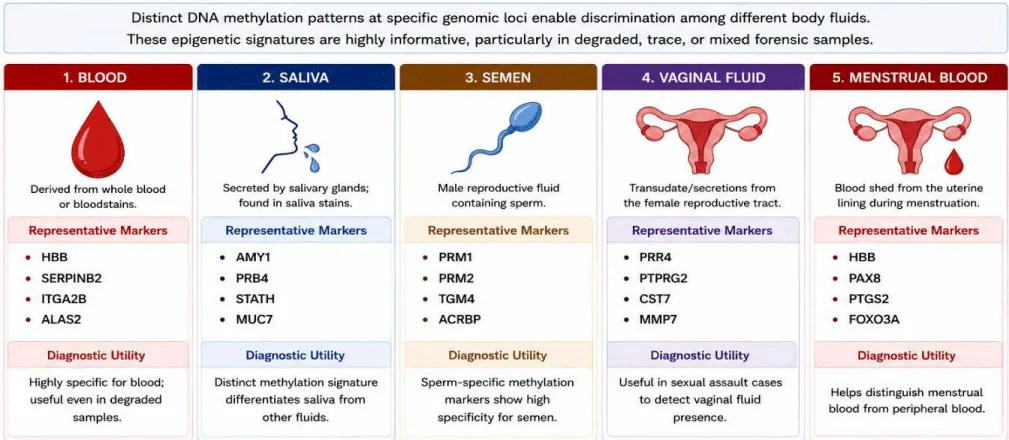
Figure 4: Tissue-specific dna methylation markers for forensic body fluid identification. Abbreviations: HBB: Hemoglobin Subunit Beta; SERPINB2: Serpin Family B Member 2, ITGA2B: Integrin Subunit Alpha 2B; ALAS2: 5‑Aminolevulinate Synthase 2; AMY1: Alpha Amylase 1; PRB4: Proline‑Rich Protein Bstni Subfamily Member 4; STATH: Statherin; MUC7: Mucin 7; PRM1/PRM2: Protamine ½; TGM4: Transglutaminase 4; ACRBP: Acrosin Binding Protein; PRR4: Proline‑Rich Protein 4; PTPRG2: Protein Tyrosine Phosphatase Receptor Type G2; CST7: Cystatin F; MMP7: Matrix Metallopeptidase 7; PAX8: Paired Box 8; PTGS2: Prostaglandin‑Endoperoxide Synthase 2; FOXO3A: Forkhead Box O3;
Blood: Blood is often used as a biological sample by forensic scientists. White blood cells are the main source of DNA methylation markers in blood. These markers have patterns that are different from those in other body fluids. Many CpG sites only show up in blood, scientists say. This means that you can still find them, even if there aren't many of them [21–24].
Finding blood can tell you a lot about what happened, like whether it was an attack or an injury. Epigenetic markers are superior to conventional tests due to their enhanced accuracy and capability to analyze compromised samples. However, disease states and environmental exposures may modify methylation patterns, requiring consideration during interpretation [20–24].
Saliva: Forensic scientists often use saliva to look at things like bite marks, cigarette butts, and drinking containers. The DNA methylation patterns in epithelial cells are not the same as those in other tissues [21–24].
The goal of epigenetic markers for saliva is to find areas where epithelial cells and other types of cells have different levels of methylation. Identifying saliva can give us a lot of information about contact and transfer events. When saliva and other samples with a lot of epithelial cells are mixed, it can be hard to tell them apart. This is why you should be careful when choosing markers and test them to make sure they are right [21–24].
Semen: Finding semen is a very important part of looking into sexual assault. It has sperm cells and seminal fluid, and each of these has its own set of epigenetic markers. DNA methylation markers that are only found in semen are often linked to genes that are turned on in male reproductive organs [21–24].
Epigenetic tests are a good way to look for semen, especially when other tests don't give clear results. You can also use these methods to tell the difference between semen and other fluids in samples that have more than one type of fluid. But it might be hard to understand the results because methylation patterns can be different for each person or because of the environment. This is why we need validated marker panels [21–24].
Vaginal fluid: Vaginal fluid is another important biological factor in forensic investigations, especially when there has been a sexual assault. It has a unique epigenetic structure that is made up of epithelial cells and parts of microbes [21–24].
DNA methylation markers for vaginal fluid are chosen because they can tell this tissue apart from other types of tissue, like skin cells or saliva. When you're planning events and trying to meet new people, it might be very helpful to know how to tell vaginal fluid apart. The vagina has a lot of hormones and bacteria that can cause changes that need to be looked at closely [21–24].
Menstrual blood: It's hard for forensic scientists to work with menstrual blood because it looks like both peripheral blood and vaginal fluid. It has a complicated epigenetic profile because it has blood cells, endometrial tissue, and other parts [20–24].
You should know that menstrual blood has different epigenetic markers from peripheral blood. We can use this difference to help us figure out what kind of biological material was at the crime scene. But because menstrual blood can be different from one person to the next, you need to use more than one marker to be sure the identification is right (Figure 5) [20–24].
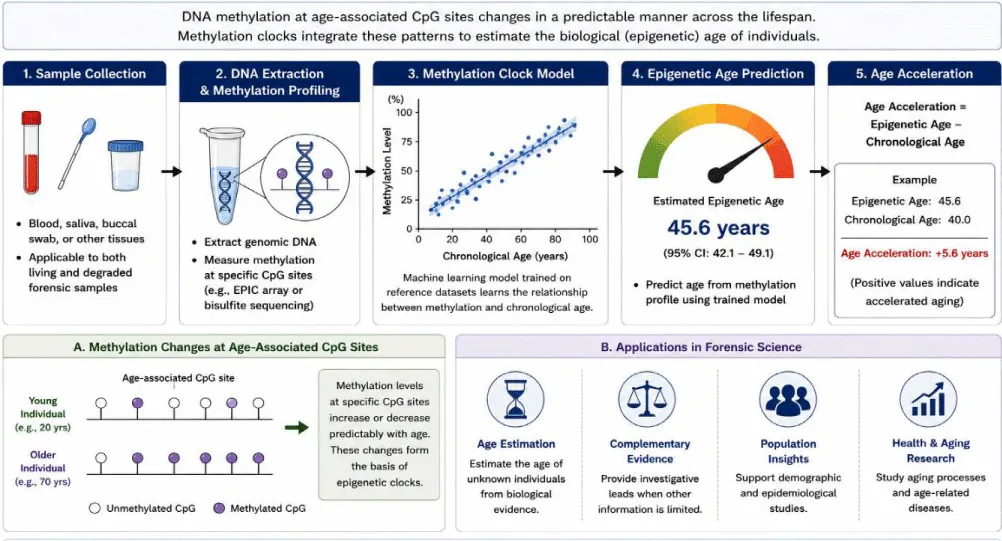
Figure 5: Epigenetic age estimation using dna methylation clocks. Abbreviations: CpG: Cytosine-phosphate-Guanine; CI: Confidence Interval; yrs: Years; EPIC: Illumina Methylation EPIC Bead Chip
Age estimation
Another important use of epigenetic fingerprinting is to figure out how old someone is. This is due to the fact that DNA methylation patterns change in a way that can be predicted over time. Scientists have discovered specific CpG sites where methylation levels are closely associated with chronological age. Epigenetic clocks are built on these sites [8–17,28].
Age estimates can be useful in forensic situations when there isn't a direct DNA match. Detectives can narrow down the age range of a person they don't know to make the list of possible suspects smaller or to find remains that are still unknown. In controlled settings, epigenetic age prediction models have been pretty accurate, with error margins of only a few years [9–17].
Even with these changes, there are still several factors that could affect the accuracy of age prediction, such as differences in demographics, exposure to the environment, and health. So, even though epigenetic age prediction is a useful tool, it should only be used if you know what it can and can't do and what might cause differences [8–17,28].
Tissue source identification
The identification of tissue origin from biological samples is closely linked to the identification of bodily fluids. Epigenetic markers can differentiate between various tissue types by their specific methylation patterns, despite similarities in the DNA sequence [20–24].
This feature is especially useful when you need trace evidence and only have a small amount of biological material to work with. For instance, knowing what kind of cells the DNA came from, like epithelial cells, blood, or other organs, could help explain how it got there [20–24].
Forensic evidence is more useful for figuring out what happened when it uses markers that are only found in certain types of tissue. This helps investigators figure things out more accurately. But how reliable this method is depends on how good the sample is and how specific the markers are [21–24,29].
Differentiation of monozygotic twins
Identical twins, or monozygotic twins, have long posed difficulties in forensic science research due to the inability of standard genetic profiling to differentiate between them. Epigenetic fingerprinting may help solve this problem by looking at how DNA methylation patterns change over time (Figure 6) [5,27].
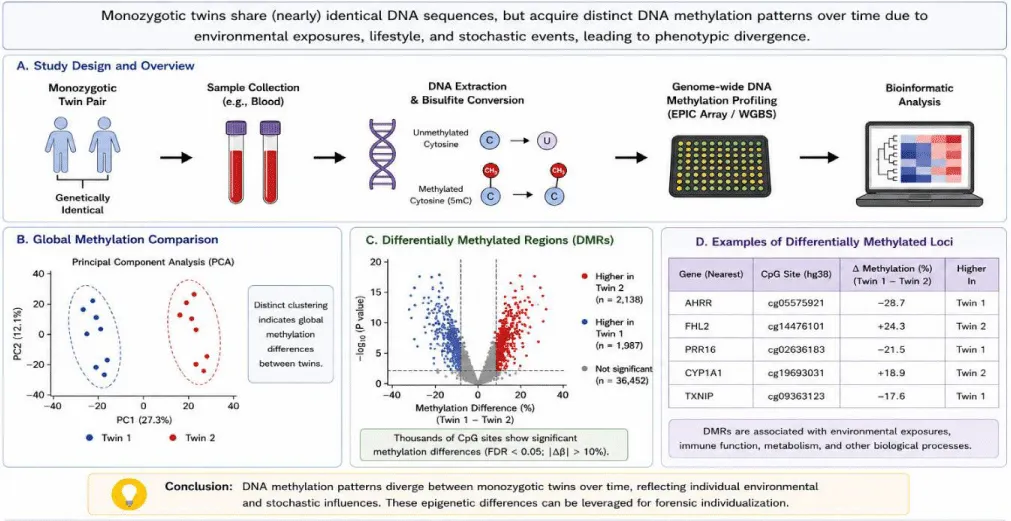
Figure 6: Epigenetic differences between monozygotic twins revealed by DNA methylation. (A) Workflow for assessing DNA methylation differences in monozygotic twins. (B) PCA plot showing separation of twin methylomes. (C) Volcano plot of differentially methylated CpG sites. (D) Examples of top differentially methylated loci. Abbreviations: 5mC: 5-methylcytosine; CpG: Cytosine-phosphate-Guanine; ∆β: Difference methylation beta value; EPIC: Illumina Methylation EPIC BeadChip; WGBS: Whole‑Genome Bisulfite Sequencing; DMR: Differentially Methylated Region; FDR: False Discovery Rate.
Random biological processes, the environment, and human activity all have an effect on things like these. This is why twins have different epigenetic profiles. Research indicates that these distinctions can be utilized to differentiate individuals, although the extent of variation may fluctuate based on the individual's age and environment [5,27].
This app is still in the works, but it is a big step forward for forensic science because it solves a big problem with regular DNA analysis. We need to do more research to see if this method works in real-life forensic cases and to come up with standard ways to do things [27].
Time since deposition (TSD)
It is important, but hard to figure out how long it has been since biological evidence was found. Scientists have looked into epigenetic strategies as a possible way to fix this problem by looking at how DNA methylation patterns change over time after they are put down [43,44,51].
Temperature, humidity, and the amount of light that biological samples get can all change how quickly epigenetic changes happen. Scientists want to make models that can figure out how long a sample has been at a crime scene by looking at these changes [43,44,51].
This area of research is still new, but it has a lot of potential to help us understand forensic evidence better. But this method is hard to use on a large scale because the samples and the environment are different [51].
Lifestyle and behavioral inference
As discussed in Section 6.3, lifestyle-associated epigenetic alterations may provide supplementary forensic intelligence regarding an individual's exposure history and behavioral patterns [43–48].
This kind of information could help forensic investigations by giving them more context, especially when the people involved are not known. For instance, finding markers that are linked to smoking could help narrow down the list of possible suspects. But it's hard to understand epigenetic data related to lifestyle, so you have to be careful when you do [43–48].
In this case, ethics are also important because using biological evidence to make assumptions about someone's personal traits raises concerns about privacy and possible abuse. So, there need to be strict rules about how epigenetic data can be used to make lifestyle inferences [47,48].
Missing person identification
Epigenetic fingerprinting could also help find missing people, especially when traditional DNA testing isn't enough. Age estimation, tissue identification, and other epigenetic markers can give more information that helps with the process of identifying someone [8–17,20–24,28].
For instance, when there are unidentified human remains, epigenetic age estimation can help figure out how old the person was when they died, which can help find matches. In the same way, tissue-specific markers can tell us about the biological nature of the sample, which can help with forensic reconstruction [8–17,20–24,28].
The combination of epigenetic data with traditional forensic methods is still new, but it could make it easier to identify people and give forensic investigations more tools to work with [24,28].
Forensic research as a whole has made a huge leap forward by adding epigenetic fingerprinting to other methods. Epigenetic analysis may be effective when combined with other methodologies such as DNA profiling, proteomics, microbiome analysis, and multi-omics frameworks. We can learn a lot about the history, age, and biological properties of tissues through epigenetic analysis, but it can't do everything it should. This combined method helps forensic investigations get more depth, accuracy, and meaning from biological evidence, which helps us understand it better as a whole (Figure 7).
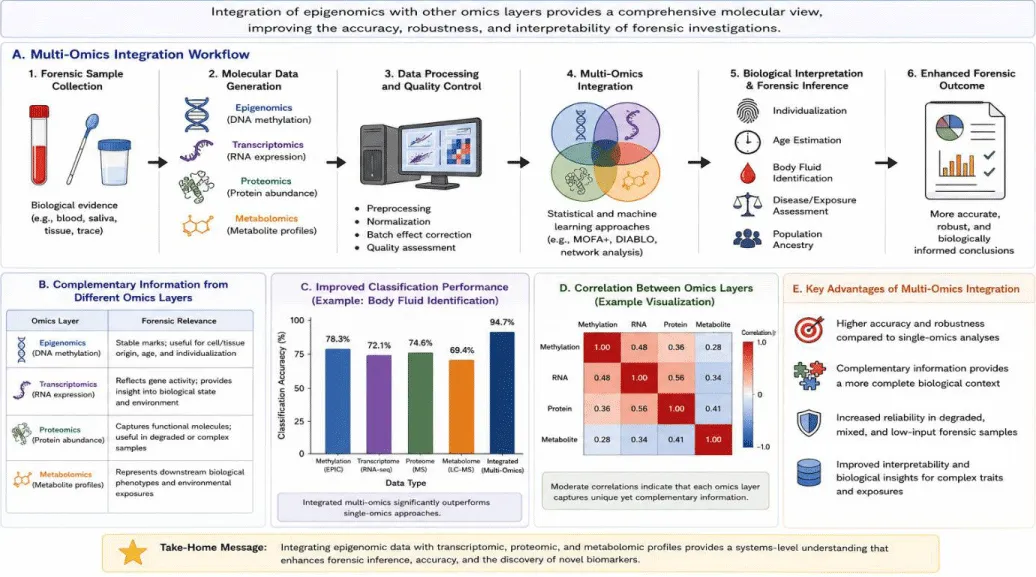
Figure 7: Integrative multi-omics approach enhances forensic epigenetic analyses. Abbreviations: EPIC: Illumina Methylation EPIC BeadChip; RNA-seq: RNA Sequencing; MS: Mass spectrometry; LC-MS: Liquid chromatography-mass spectrometry; MOFA+: Multi-Omics Factor Analysis; DIABLO: Data Integration Analysis for Biomarker discovery using Latent components;
Integration with DNA profiling (Epigenetics + DNA profiling)
DNProfiling, especially short tandem repeat (STR)-based analysis, is still the best way to identify someone because it works so well. It can only tell you who someone is, not anything about their biology. By using both epigenetic fingerprinting and DNA profiling, you can connect identity with biological information [1,2,5–7].
For example, STR analysis can match a DNA sample to a specific person, and epigenetic markers can tell you about the type of tissue, the donor's expected age, and other things all at once. This method of combining forensic materials makes it easier to use them as evidence when samples or people are mixed. Combining epigenetic data with DNA databases could help research move along faster. Using both epigenetic data and DNA databases together could also speed up investigations. But you should be careful when you do this because it could cause problems with the law and with your morals [8–17,20–24,28,52,53].
Integration with proteomics (Epigenetics + Proteomics)
Proteomics, the extensive examination of proteins, provides an additional complementary methodology for forensic analysis. Proteins are the end products of gene expression and can tell you a lot about the biological state of a sample. Proteomic techniques have been employed in forensic science for the identification of bodily fluids and the detection of specific biomarkers [54,55].
Proteomics, when used with epigenetic analysis, can give us a better picture of biological evidence. For instance, epigenetic markers show how genes are turned on and off, and proteomic data show how proteins are made. This method can help find tissues and make forensic evidence stronger. But the fact that DNA and proteins are not as stable and break down differently makes integration more difficult [54,55].
Integration with microbiome analysis (Epigenetics + Microbiome analysis)
The human microbiome, which is made up of microorganisms that live on and in the body, has become a new source of forensic information. Microbial communities are different in different parts of the body and in different people. These differences create unique microbial signatures that can be used to find and identify biological samples [56,57].
Combining microbiome analysis with epigenetic fingerprinting could be a promising way to do forensic investigations from many angles. Epigenetic markers tell us about the biology of the host, but microbiome data can tell us about things like where the host lives, how they live, and even where they are. This combination could improve the accuracy of forensic analysis, especially in cases where traditional methods don't work well enough [56,57].
Microbiome profiles, on the other hand, are very sensitive to changes in the environment and can vary a lot, which can make them hard to understand. Microbiome-based techniques in forensic science must undergo standardization and validation before routine implementation [57].
Multi-omics approach in forensics
Multi-omics is the integration of data from various biological layers, including genomics, epigenomics, transcriptomics, proteomics, and metabolomics. This technique enables the examination of biological evidence at various levels of molecular organization within forensic science [58,59].
By combining epigenetic data with other omics data, researchers can get a better and more complete picture of biological samples. For instance, putting together DNA methylation data with gene expression profiles and protein markers can help us find tissues more easily and learn more about how environmental and physiological factors affect them [58,59].
There are a lot of problems that need to be fixed before multi-omics methods can be used in forensic science. These are some of the problems: data analysis is hard, it costs a lot, and you need special computer tools. There are also problems with data interpretation, standardization, and legal admissibility that need to be fixed before these kinds of approaches can be used by everyone [58–60].
Epigenetic fingerprinting has opened new doors in forensic research, but its importance can only be fully understood when compared to other forensic methods. DNA profiling and serological techniques have historically constituted the principal methods utilized in forensic investigations. These methods work well in some cases, but they can't give you all the biological information you need. Epigenetic analysis addresses several issues, yet it presents its own challenges. A comparative analysis is essential to identify the advantages, disadvantages, and potential synthesis of various methodologies.
STR analysis vs. epigenetic profiling
DNA profiling, especially short tandem repeat (STR)-based analysis, is thought to be the best way to identify people because it is so accurate and can tell people apart. It is often used in the law and forensic science because it lets you be very sure that biological samples belong to certain people [1,2].
While STR profiling remains the gold standard for individual identification, epigenetic profiling provides complementary information regarding tissue origin, age estimation, and biologically relevant characteristics [5–7,8–17,20–24].
There are some benefits to epigenetic fingerprinting, but it isn't as standardized as it could be. Biological and environmental factors can change this, which is why it can change. DNA profiling is still the best way to tell people apart, but using epigenetic methods with it makes forensic evidence easier to understand [1,2,8–17].
Serology vs.molecular techniques
Traditional serological methods use biochemical and immunological tests to find fluids in the body. People like these methods because they are easy and cheap. But they aren't always very specific or sensitive, especially when the samples are old or small [20–24].
Epigenetic analysis and other molecular approaches make things considerably more exact and particular. DNA methylation-based indicators can determine the difference between various bodily fluids even when things are tricky. Epigenetic markers are more dependable and accurate than serological testing, which might yield false positives or findings that don't indicate anything [20–24,29].
Molecular procedures, on the other hand, are typically more sophisticated, demand specific gear, and cost more. Because of this, certain forensic settings may not be able to apply epigenetic procedures since they are more beneficial for evaluating data [29].
Sensitivity and specificity comparison
Sensitivity and specificity are particularly significant in forensic analysis because they reveal how effectively a technique can uncover and accurately identify biological evidence. DNA profiling is very accurate, which means it can find even the smallest amounts of DNA. Epigenetic methods are also very sensitive, especially when they are used with new technologies like digital PCR and next-generation sequencing [32–35].
Epigenetic markers are very helpful for being specific, especially when it comes to locating tissues and fluids in the body. Forensic analysis is more accurate when it is easier to tell the difference between biological samples that are very similar [20–24].
Epigenetic specificity may change, though, because of things like exposure to the environment and differences between individuals. Epigenetic methods can be very accurate in controlled settings, but you need to be careful when choosing and testing the markers to make sure they work [29–31].
Reliability in degraded samples
It's hard to analyze forensic samples because they are often exposed to environmental conditions that break them down. DNA profiling may not be as accurate as it could be if genetic material breaks up or is lost [29].
DNA methylation and other forms of epigenetic analysis indicate that degraded samples exhibit relative stability. This is why they are useful for forensic work with evidence that has been tampered with. Some methylation markers can still be found even when DNA is only partially broken down. This is better than a lot of other methods [29,51].
But degradation might still change epigenetic patterns. The extent of its modification is contingent upon the environment and the treatment of the sample. So, even though epigenetic methods might work better on samples that have been broken down, they can still have problems that come with degradation [43,44,51].
Practical and operational considerations
In real life, forensic procedures can only be employed if they are good analytical tools, affordable, rapid, simple to set up, and have the proper lab equipment. Standard DNA profiling and serological testing are both common and inexpensive. They use tactics that have worked before. Epigenetic analysis may not be particularly helpful in ordinary life since it generally needs complex equipment, specialist expertise, and data that is hard to grasp. But these limitations should go away as technology becomes better and standards are more uniform. This will make epigenetic processes simpler to apply and more helpful in criminal investigations [29–37].
The analysis of epigenetic data in forensic science necessitates robust statistical and computational techniques due to the intricate and quantitative nature of epigenetic modifications. Epigenetic data, such as DNA methylation levels, are continuous and influenced by numerous biological and environmental factors, in contrast to conventional genetic markers, which are typically assessed categorically. Because of this complexity, we need to use advanced analytical models and computational methods to help us make accurate predictions, group things, and understand them. The next sections talk about important statistical and computational methods that make it possible to use epigenetic fingerprinting correctly in criminal investigations.
Data interpretation models
Statistical models are used to turn statistics into useful biological information when processing epigenetic data. Standard DNA profiling gives you clear results, but epigenetic markers give you continuous data that you need to use math to understand. People often use regression-based methods to guess someone's age by looking at the levels of methylation at certain CpG sites. Classification models are used to tell the difference between tissues and bodily fluids. These models only work well if certain conditions are met, such as choosing the right markers, having a large enough dataset, and having a diverse population. This is why it is so important to improve and validate models. To make the model stronger, it also needs to deal with problems like multicollinearity and changes in methylation signals. Well-designed interpretation models make forensic predictions more accurate and reliable while also lowering analytical bias [36,37,61].
Machine learning in epigenetics
Machine learning is becoming more and more important in forensic epigenetics because it can handle large and complicated datasets. Random forests, support vector machines, and neural networks are examples of algorithms that can find small patterns in methylation data that regular statistical methods might miss. These methods are especially helpful for multi-marker analysis, which looks at a lot of CpG sites at once for things like predicting age and classifying tissues. Machine learning models can make predictions more accurate and let you combine many different factors into one system. But some problems need to be carefully handled, like overfitting, model decisions that are hard to understand, and the need for high-quality training datasets. In forensic settings, where results must be scientifically defensible, it is especially important to make sure that machine learning models are clear and can be repeated [38–42].
Predictive modeling
Predictive modeling is an important part of turning epigenetic data into useful forensic information. Models can use statistical and computational methods to guess things like chronological age or figure out where a tissue came from based on methylation profiles. To make reliable predictive models, you need to carefully choose informative markers, pick the right model, and test it on a wide range of populations and environments. In forensic work, it's important to report both the accuracy of the predictions and the confidence intervals or error margins, because these affect how useful the results are as evidence. Additionally, predictive models need to be able to work with different sample types and levels of degradation so that they can be used in real-world forensic situations. To make these models stronger and more generalizable, they need to be constantly improved [8–17,28,38–42].
Error rates and validation
Forensic epigenetic analysis is only reliable if the error rates are accurately estimated and strict validation methods are used. Experimental variability, sample degradation, inadequate bisulfite conversion, or constraints in statistical modeling may lead to errors that compromise the accuracy of findings. Validation involves methodical testing of analytical methods across diverse conditions, encompassing different sample types, environmental factors, and laboratory environments. This method makes sure that results can be repeated and are the same in different situations. Using tried-and-true methods, control samples, and studies between labs makes the results even more reliable. In forensic practice, accurately determined error rates and validated procedures are essential for establishing the scientific reliability and legal admissibility of epigenetic evidence [29–31,36,37].
Model validation strategies and performance metrics
Forensic epigenetic models must undergo rigorous validation before they can be considered suitable for operational use. Model validation ensures that predictive algorithms perform consistently across different populations, sample types, and laboratory conditions. Common validation approaches include internal validation using training datasets and external validation using independent datasets. Cross-validation techniques, particularly k-fold cross-validation, are frequently employed to assess model robustness and reduce overfitting. Performance evaluation is typically based on statistical metrics such as sensitivity, specificity, accuracy, precision, recall, and area under the receiver operating characteristic curve (AUC-ROC). High sensitivity is essential for detecting true positive cases, whereas high specificity minimizes false-positive interpretations. The use of standardized validation frameworks improves reproducibility and enhances confidence in forensic epigenetic predictions [36,37,61–65].
Confidence intervals and interpretation of uncertainty
The interpretation of forensic epigenetic evidence should always consider statistical uncertainty. Predictive outcomes such as age estimation, tissue identification, or lifestyle inference are generally reported with confidence intervals and error margins rather than absolute values. Confidence intervals provide a statistical range within which the true value is expected to occur and assist forensic experts in evaluating the reliability of model predictions. Sources of uncertainty may arise from biological variability, environmental influences, sample degradation, analytical errors, and population-specific differences. Transparent reporting of uncertainty is essential for scientific integrity and legal admissibility. In forensic casework, probabilistic interpretation provides a more realistic assessment of evidentiary value than deterministic conclusions and helps prevent over-interpretation of epigenetic findings [36,37,66,67].
Epigenetic fingerprinting has offered forensic science new tools, but there are still several challenges with deploying it in real life. Epigenetic indicators are more adaptive than standard DNA fingerprinting, which depends on relatively fixed genetic information. This implies that many factors may modify them. This makes it difficult to figure out what they signify, and in certain situations, it makes them less dependable. Some of the drawbacks with this technology right now are that it has bad consequences on the environment, samples break down, there are no standard methods, and there are questions about whether it is ethical and legal. You need to understand these challenges so you can appropriately interpret the data and give ideas for how to enhance forensic epigenetics in the future.
Environmental sensitivity
One of the biggest problems with using epigenetic markers is that they change a lot when the environment changes. The patterns of DNA methylation can change or speed up the breakdown of DNA when there is heat, sunlight (especially UV radiation), high humidity, and chemicals. These changes can make the results less reliable because forensic samples are often taken from places that can't be controlled. Some epigenetic markers stay the same, but others may change more because of things in the environment. This can make it harder to get accurate results. This means that forensic scientists need to think about how the environment changes epigenetic data when they look at it [43,44,51].
Sample degradation issues
Biological samples in real-life forensic cases are not always in perfect shape. They might have broken down because they were outside, because of time, or because of bacteria. This breakdown can make DNA harder to study and less useful. In samples that have been partially broken down, you can find epigenetic markers like DNA methylation. But the analysis process, especially bisulfite conversion, can make the DNA even more damaged. You can't trust the results you get from samples that have been broken, which makes things even harder. It's still important to find better ways to work with DNA that has been damaged in this field [29,43,44,51].
Lack of standardized protocols
Another big problem is that there are no standard protocols in forensic epigenetics. Different studies often use different markers, ways to look at data, and ways to make sense of data. This means that the results don't always match. This makes it hard to make rules that everyone agrees on or to compare results from different labs. Everyone needs to agree on which markers to use, how to analyze them, and how to make sense of the results for epigenetic fingerprinting to become a common forensic tool. If this standardization doesn't happen, people may not believe that epigenetic evidence is reliable [29–31,36,37].
Reproducibility issues
Forensic research needs to be able to be replicated, yet this may be tough to do with epigenetic analysis. The results may be modified depending on the lab settings, how the materials are handled, and how the study is done. People's natural biological differences may also make things less stable. For these reasons, it's difficult to obtain the identical results in more than one lab or study. To rectify this, we need to put in place tight quality control and standardized methods. It is vitally crucial that epigenetic evidence can be duplicated when it is offered in court [29–31,36,37].
Ethical concerns
Using epigenetic data raises important moral problems. Epigenetic analysis may tell you more about a person than DNA profiling, which is often used to find persons. It can tell you information like how old they are, what they prefer to do for leisure, and maybe even details about their health. People are apprehensive about privacy and the likelihood that personal information may be misused because of this. Because of this, it's vital to create specific criteria on how epigenetic data may be used and to make sure it is only employed for what it was meant for [18,47,48,52,53].
Legal admissibility in court
There are still several real-world concerns that need to be overcome before epigenetic evidence may be utilized in court trials. In order to be recognized in court, forensic methodologies must be consistent, scientifically sound, and generally acknowledged by the scientific community. Epigenetic fingerprinting has a lot of potential, but it doesn't have the same degree of standardization and validation that normal DNA profiling has right now. People may not trust it since the techniques and findings are different, and there aren't enough major studies to back it up. It may also be challenging to explain epigenetic data accurately in court, particularly when you have to make estimates about things like someone's age. For epigenetic evidence to be frequently recognized in court, there will need to be additional study, established techniques, and explicit standards. You also need to be able to describe the findings in a manner that is obvious and legally sound [29–31,36,37,68–70].
Regulatory and judicial considerations
Forensic epigenetic evidence must satisfy established scientific and legal standards before it can be routinely accepted in judicial proceedings. As the field continues to develop, regulatory oversight, laboratory accreditation, and methodological validation have become increasingly important. The reliability of forensic epigenetic analyses depends not only on scientific performance but also on compliance with recognized quality assurance and legal admissibility frameworks. Consequently, the integration of forensic epigenetics into routine casework requires adherence to internationally accepted standards and validation procedures that ensure consistency, reproducibility, and transparency [68–70].
Daubert criteria and scientific admissibility: In many judicial systems, particularly in the United States, scientific evidence is evaluated according to the Daubert standard. Under the Daubert criteria, forensic methods should demonstrate testability, peer review, known error rates, established standards, and general acceptance within the relevant scientific community. Although forensic epigenetics has shown considerable promise, several applications remain under active development and require further large-scale validation before widespread courtroom acceptance can be achieved. Demonstrating compliance with Daubert principles will be essential for establishing the credibility and evidentiary value of epigenetic analyses in future legal proceedings [68].
ISO standards and laboratory accreditation: Quality assurance is a fundamental requirement for all forensic laboratory procedures. International standards such as ISO/IEC 17025 provide guidelines for laboratory competence, method validation, equipment calibration, documentation, and quality management systems. The implementation of forensic epigenetic methodologies within accredited laboratories can enhance analytical reliability and improve confidence in generated results. Compliance with recognized accreditation standards also facilitates inter-laboratory consistency and strengthens the scientific defensibility of forensic evidence presented in court [69].
Validation requirements and reproducibility: Before forensic epigenetic methods can be routinely applied in operational casework, comprehensive validation studies must be conducted. Validation should assess analytical sensitivity, specificity, accuracy, reproducibility, robustness, and performance across diverse populations and sample conditions. Inter-laboratory comparison studies are particularly important for evaluating consistency between independent forensic facilities. The establishment of standardized validation frameworks will support methodological transparency, improve reproducibility, and facilitate broader acceptance of forensic epigenetic evidence within both scientific and judicial communities [29–31,36,37,70].
Forensic epigenetics has received substantial endorsement in recent years from an increasing array of research studies examining the efficacy of these methods in practical contexts. A lot of the research has been on figuring out what body fluids are, and scientists have shown that DNA methylation patterns can reliably tell the difference between blood, saliva, semen, and vaginal fluid. These methods are usually more specific than traditional serological tests and can work even when samples are not fully intact. But things get more complicated when samples are mixed or put in different environmental conditions. This can change how accurate the results are and make it harder to understand what they mean [21–24].
Epigenetic research has advanced significantly in determining an individual's age. Studies have consistently shown that certain DNA methylation patterns change with age, which has allowed scientists to make models that can guess how old a person is based on biological samples. When the conditions are right, these models can be very accurate, and they usually only make a small mistake. Researchers have also noted that things like lifestyle, exposure to the environment, and health problems can affect these patterns. This means that predictions are not always right and should be taken with a grain of salt [9–17,28].
Researchers have also looked into one of forensic science's long-standing problems: how to tell identical twins apart. Traditional ways can't tell monozygotic twins apart because they have the same DNA. Epigenetic research has demonstrated that variations in DNA methylation can arise over time as a result of environmental and lifestyle influences, thereby enabling differentiation in certain instances. But these differences are often small, and to find them reliably, you need very sensitive methods, so this application is still being worked on [5,27].
Some studies have recently begun to look into new ideas, like figuring out how long a biological sample has been at a scene or trying to guess certain habits, like smoking. These methods are interesting and have promise, but they are still in the early stages and can be very different, especially in real life. As a result, they are not yet ready for regular use in forensic science [43–48,51].
Overall, the research that is already out there makes it clear that epigenetic fingerprinting has a lot of potential, but it also shows that there are still problems that need to be solved. A lot of research is done in controlled lab settings, which don't always show how complicated real forensic cases can be. The results can be affected by things like the environment, the quality of the sample, and the differences between groups. Also, it's hard to compare results directly or set standard protocols because different studies use different methods and markers. For epigenetic methods to become widely used in forensic science, there will need to be more large-scale studies and better standardization [17,29–31].
Practical forensic applications
Several forensic investigations have demonstrated the practical value of epigenetic analysis in situations where conventional DNA profiling provides limited contextual information. DNA methylation markers have been successfully applied for body fluid identification in sexual assault investigations, enabling differentiation between blood, saliva, semen, and vaginal secretions when conventional serological methods produced inconclusive results. Age prediction models have also assisted investigations involving unidentified human remains by providing biological age estimates that help narrow potential victim profiles. Furthermore, epigenetic differences have shown promise for distinguishing monozygotic twins in circumstances where traditional STR profiling cannot differentiate individuals with identical genetic sequences. Although these applications continue to require extensive validation and standardization, they illustrate the growing operational relevance of forensic epigenetics in contemporary forensic investigations [21–24, 9–17, 27].
Illustrative forensic case applications
Forensic epigenetic methodologies have demonstrated potential utility in several investigative scenarios where conventional DNA profiling provides limited contextual information. In sexual assault investigations, tissue-specific DNA methylation markers have been used to differentiate biological fluids such as semen, saliva, vaginal secretions, and menstrual blood, thereby assisting in the reconstruction of events and interpretation of mixed biological evidence. Such applications are particularly valuable when traditional serological tests yield inconclusive results [21–24].
In cases involving unidentified human remains, forensic age prediction models based on DNA methylation patterns can provide estimates of chronological age, narrowing the pool of potential matches and supporting victim identification efforts. These approaches have proven especially useful when skeletal remains are incomplete or when conventional anthropological assessments are limited [9–17,28].
Another emerging application involves the differentiation of monozygotic twins. Because identical twins possess nearly indistinguishable DNA profiles, conventional STR analysis cannot reliably separate them. Epigenetic differences accumulated throughout life, however, may generate distinguishable methylation signatures that can provide additional discriminatory power in forensic investigations [5,27].
Furthermore, forensic epigenetic analyses have been explored in investigations involving environmental exposure assessment, lifestyle-associated biomarker profiling, and postmortem interval estimation. Although many of these applications remain under active validation, published research demonstrates their considerable promise as complementary tools within modern forensic science (Table 1) [43–51].
| Table 1: Examples of forensic applications of epigenetic fingerprinting and their investigative significance. | ||
| Forensic scenario | Epigenetic application | Investigative benefit |
| Sexual Assault Cases | Body Fluid Identification | Distinguishes semen, saliva, vaginal fluid, and menstrual blood |
| Unidentified Remains | Age Estimation | Narrows victim search |
| Identical Twin Cases | Differential Methylation Analysis | Distinguishes monozygotic twins |
| Mixed DNA Samples | Tissue-Specific Methylation Markers | Assists source attribution |
| Postmortem Investigation | Epigenetic Biomarkers | Supports PMI estimation |
| Exposure Assessment | Environment-Responsive Methylation Markers | Provides investigative intelligence |
Technological innovation has played a central role in the evolution of forensic epigenetics, significantly improving the accuracy, sensitivity, and applicability of epigenetic analyses. Recent developments in sequencing platforms, computational methodologies, automation systems, and high-throughput analytical technologies have expanded the scope of forensic investigations beyond conventional DNA profiling. These advances have facilitated the analysis of increasingly complex biological evidence while supporting the transition of forensic epigenetics from an experimental research discipline toward practical forensic implementation [61].
A lot has changed in sequencing technologies, especially next-generation sequencing (NGS). This method lets scientists look at a lot of epigenetic markers all at once. This helps them learn more about how DNA methylation works. It is very helpful when working with small or broken samples, which are common in forensic cases. NGS is better than older methods in some ways, but it also has its own problems. It can be expensive, the data can be hard to understand, and people who know how to do the analysis are needed. This is why it isn't used very often in regular forensic work [61].
Researchers are also looking into ways to make epigenetic analysis move faster and be easier to move around. People are working on small biosensors and lab-on-a-chip systems so that they can do some analysis right at the crime scene one day. This is still a new area, but it shows how the field is moving toward workflows that are faster and more efficient. Being able to get useful biological information on-site could speed up investigations and make central labs less important [61].
Another big change is that more and more things are being done automatically. Automated systems for taking samples, getting DNA, and processing data are helping to cut down on human errors and make results more reliable. This is very important in forensic science, where being accurate and reliable is very important. Automation also makes it easier to work with more than one sample at a time, which can be helpful in cases that are big or hard to figure out [38–42].
In addition to these technical improvements, finding better ways to analyze data has also been very important. Computers today can handle large and complex datasets, which makes it easier to understand epigenetic data. Researchers are using machine learning and AI more and more to find patterns and make better guesses about the future. These tools are very useful when you have a lot of markers or want to put together different kinds of forensic data.
There are still some practical problems that need to be ignored, even with all of these changes. Many of these technologies are costly and need special training, which could make it hard for all forensic labs to use them. Also, they need to be tested and standardized very well before they can be used by a lot of people to make sure that the results are always the same and correct. How well these new strategies will work in court is another question. The main goal from now on will be to make technologies that are not only cutting-edge, but also cheap, easy to use, and useful in real-life forensic situations [29–31,61].
Advanced DNA methylation panels
Recent advances in forensic epigenetics have focused on the development of highly optimized DNA methylation panels capable of simultaneously analyzing multiple forensic parameters. Modern multiplex methylation panels incorporate age-associated, tissue-specific, and phenotype-related CpG markers within a single assay, thereby increasing analytical efficiency and reducing sample consumption. Recent studies have demonstrated improved prediction accuracy through the integration of carefully validated marker combinations, making these panels increasingly suitable for routine forensic applications. The continued refinement of marker selection strategies is expected to enhance robustness, reproducibility, and population-wide applicability [54,55].
Nanopore sequencing technologies
Nanopore sequencing has emerged as a promising technology for forensic epigenetic analysis due to its ability to directly detect DNA methylation without requiring bisulfite conversion. Unlike conventional approaches, nanopore platforms enable real-time sequencing and methylation profiling from a single workflow, reducing DNA degradation associated with chemical treatment. Recent investigations suggest that nanopore-based methods may facilitate rapid field-deployable forensic analysis, particularly when working with limited or degraded biological samples. Although further validation is required, nanopore sequencing represents a significant advancement in forensic epigenomics [62–67].
Artificial intelligence and machine learning-based prediction
Artificial intelligence and advanced machine learning algorithms are increasingly being applied to forensic epigenetic datasets. Contemporary predictive models utilize random forests, gradient boosting algorithms, support vector machines, and deep learning architectures to improve age estimation, tissue classification, and individual characterization. These computational approaches can identify complex methylation patterns that may not be detected through conventional statistical methods. Recent studies have reported improved predictive performance when AI-driven models are combined with large-scale methylation datasets, highlighting their potential for future forensic applications [38–42].
Validation studies and courtroom readiness
Recent forensic research has increasingly emphasized the validation and legal admissibility of epigenetic evidence. Multi-center validation studies have examined reproducibility across laboratories, analytical platforms, and population groups to establish scientific reliability. Researchers have also focused on defining performance standards, reporting uncertainty, and developing standardized protocols that support courtroom acceptance. Although forensic epigenetics has not yet achieved the level of standardization associated with conventional STR profiling, ongoing validation efforts are strengthening its potential for future judicial implementation [29–31,68–70].
The future of forensic epigenetics looks bright, but it also depends on how current problems are solved. The field has already shown that it can do more than just traditional DNA profiling. For example, it can help figure out a person's age, where their tissue came from, and even give clues about their lifestyle. But making these tools standard in forensic science will take more than just promising results. It will also take constant testing, better technology, and real-world use. The future of this field will be contingent on how well it can move from research labs to real-life crime scenes [17,29–31].
The search for more reliable and broadly applicable epigenetic markers is a key factor that will shape future progress. Current markers are useful, but they can be less accurate because of things like the environment or how different people are. Future research needs to focus on finding markers that are both stable and specific in different situations. It will be very important to do big studies on a lot of different people, since this will help make sure that these markers work the same way in all forensic situations [49,50].
Enhancing prediction models is a significant domain for future research. There is a good chance that the models used to guess someone's age, figure out what tissue they are in, and make other forensic predictions will get better as more epigenetic data becomes available. People think that machine learning and AI will be important here because they can better deal with big, complicated datasets. In forensic situations, when results need to be carefully explained and defended in court, it's also important that these models are clear and easy to understand [38–42].
The future of forensic epigenetics will also be affected by technology. We need tools that are not only cutting-edge but also useful and easy to use every day. Faster analytical methods, portable devices, and automated systems are some new technologies that could make epigenetic analysis easier to use and more widely available. The difference between research done in a lab and real-world forensic use will likely get smaller as these technologies get better. We must not forget how important it is to make everything the same at the same time. There needs to be clear and consistent rules for how to handle samples, choose markers, and understand the data if epigenetic methods are going to be used by a lot of people. If you don't have this, it's hard to compare results from different studies or be sure that forensic work is accurate. Establishing standardized regulations will enhance consistency and facilitate the acceptance of epigenetic evidence within legal systems, which is crucial for ensuring reliability and reproducibility [61–67].
Ethics will also continue to be a big part of how this field changes in the future. As epigenetic analysis gets better, it might be able to do more than just identify people, which raises concerns about privacy and the possible misuse of sensitive information. So, it's important to set clear limits on what kinds of information can be used and how it should be understood. This way, scientific progress won't come at the cost of moral responsibility [29–31,69,70].
The future of forensic epigenetics will hinge on the effective management of these scientific, practical, and ethical challenges. The field has already shown a lot of promise, but it will take more research, collaboration, and careful implementation to make it a regular part of forensic practice. If these efforts are successful, epigenetic fingerprinting could be a useful new tool for modern forensic science [17,29–31,52,53].
Forensic epigenetics is a new and exciting branch of forensic science that can give us more biological information than just DNA-based identification. This review shows that epigenetic markers, especially DNA methylation, could be very useful for figuring out where tissue came from, how old it is, and how to tell people apart. These new features fix some of the problems with traditional DNA profiling and show how epigenetic methods are becoming more important in modern forensic investigations [17].
It is also important to remember that this field is still changing. Many studies have shown promising results, but there are still a few problems that need to be fixed before epigenetic methods can be used on a regular basis. Accuracy can be affected by things like environmental factors, sample degradation, and differences in results. Also, the lack of standard methods and the need for clear guidelines for how to interpret results make it hard to use these techniques consistently in real forensic cases [21–24,9–17,27].
As technology and data analysis continue to get better, epigenetic methods are likely to become more useful and reliable. This field will get stronger with better tools, more accurate predictive models, and the ability to work with other forensic methods. At the same time, it will be important to think carefully about ethics and how these methods are accepted in court [43,44,51,29–31].
In general, forensic epigenetics could be a useful new tool for modern forensic science. It may not take the place of traditional DNA profiling, but it can work with it to give a fuller picture of biological evidence. Epigenetic fingerprinting could be very useful in future criminal investigations if more research, testing, and careful use are done [38–42,52,53,68–70].
- Waddington CH. The epigenotype. Endeavour. 1942;1:18-20.
- Bird A. DNA methylation patterns and epigenetic memory. Genes Dev. 2002;16(1):6-21. Available from: https://doi.org/10.1101/gad.947102
- Jones PA, Takai D. The role of DNA methylation in mammalian epigenetics. Science. 2001;293(5532):1068-1070. Available from: https://doi.org/10.1126/science.1063852
- Feinberg AP. Phenotypic plasticity and the epigenetics of human disease. Nature. 2007;447(7143):433-440. Available from: https://doi.org/10.1038/nature05919
- Fraga MF, Ballestar E, Paz MF, Ropero S, Setién F, Ballestar ML, et al. Epigenetic differences arise during the lifetime of monozygotic twins. Proc Natl Acad Sci U S A. 2005;102(30):10604-10609. Available from: https://doi.org/10.1073/pnas.0500398102
- Laird PW. Principles and challenges of genome-wide DNA methylation analysis. Nat Rev Genet. 2010;11(3):191-203. Available from: https://doi.org/10.1038/nrg2732
- Tost J, editor. DNA methylation: Methods and protocols. Totowa (NJ): Humana Press; 2008.
- Rakyan VK, Down TA, Maslau S, Andrew T, Yang TP, Beyan H, et al. Human aging-associated DNA hypermethylation occurs preferentially at bivalent chromatin domains. Genome Res. 2010;20(4):434-439. Available from: https://doi.org/10.1101/gr.103101.109
- Horvath S. DNA methylation age of human tissues and cell types. Genome Biol. 2013;14(10):R115. Available from: https://doi.org/10.1186/gb-2013-14-10-r115
- Hannum G, Guinney J, Zhao L, Zhang L, Hughes G, Sadda SR, et al. Genome-wide methylation profiles reveal quantitative views of human aging rates. Mol Cell. 2013;49(2):359-367. Available from: https://doi.org/10.1016/j.molcel.2012.10.016
- Koch CM, Wagner W. Epigenetic aging signatures. Aging Cell. 2011;10(6):1002-1008.
- Weidner CI, Lin Q, Koch CM, Eisele L, Beier F, Ziegler P, et al. Aging of blood can be tracked by DNA methylation changes at just three CpG sites. Genome Biol. 2014;15(2):R24. Available from: https://doi.org/10.1186/gb-2014-15-2-r24
- Zbieć-Piekarska R, Spólnicka M, Kupiec T, Parys-Proszek A, Makowska Ż, Pałeczka A, et al. Development of a forensically useful age prediction method based on DNA methylation analysis. Forensic Sci Int Genet. 2015;17:173-179. Available from: https://doi.org/10.1016/j.fsigen.2015.05.001
- Bocklandt S, Lin W, Sehl ME, Sánchez FJ, Sinsheimer JS, Horvath S,et al. Epigenetic predictor of age. PLoS One. 2011;6(6):e14821. Available from: https://doi.org/10.1371/journal.pone.0014821
- Lee HY. Epigenetic age signatures in blood for forensic age estimation. Forensic Sci Int Genet. 2012;6(2):132-139.
- Eipel M. Epigenetic age predictions based on buccal swabs. Forensic Sci Int Genet. 2016;22:115-122.
- Vidaki A, Kayser M. Recent progress in forensic epigenetics. Forensic Sci Int Genet. 2018;37:180-195. Available from: https://doi.org/10.1016/j.fsigen.2018.08.008
- Kayser M. Forensic DNA phenotyping. Trends Genet. 2015;31(12):716-727.
- Walsh S, et al. IrisPlex system for eye color prediction. Forensic Sci Int Genet. 2013;7(1):98-115.
- Hanson EK, Ballantyne J. RNA profiling for body fluid identification. Forensic Sci Int Genet. 2010;4(2):83-91. Available from: https://www.semanticscholar.org/paper/RNA-Profiling-for-the-Identification-of-the-Tissue-Hanson-Ballantyne/f88bc0add7c9c4043dc82c65b293d796f7ba3fe6
- Park JL, Kwon OH, Kim JH, Yoo HS, Lee HC, Woo KM, et al. Identification of body fluid-specific DNA methylation markers. Forensic Sci Int Genet. 2014;10:1-7. Available from: https://doi.org/10.1016/j.fsigen.2014.07.011
- Lee HY. DNA methylation profiling for body fluid identification. Int J Legal Med. 2016;130(3):571-582. Available from: http://forensic.yonsei.ac.kr/presentation/88.pdf
- Forat S, et al. DNA methylation markers for body fluid identification. Forensic Sci Int Genet. 2016;21:1-8.
- Lindenbergh A. Tissue identification based on DNA methylation. Forensic Sci Int Genet. 2012;6(2):248-251. Available from:
- Schmittgen TD. Real-time PCR analysis of microRNA expression. Nat Protoc. 2008;3(6):1101-1108. Available from:
- Courts C, Madea B. Specific microRNA signatures for body fluid identification. Forensic Sci Int Genet. 2010;4(5):277-281. Available from: https://doi.org/10.1111/j.1556-4029.2011.01894.x
- Weber-Lehmann J. Finding the needle in the haystack: differentiating identical twins. Int J Legal Med. 2014;128(1):41-46. Available from: https://www.semanticscholar.org/paper/Finding-the-needle-in-the-haystack%3A-differentiating-Weber-Lehmann-Schilling/d466b6e34c4c6ed41771c2e5f77112d00b76ad50
- Vidaki A. DNA methylation-based forensic age prediction. Aging (Albany NY). 2017;9(4):1024-1038.
- Nardone S. DNA methylation analysis in forensic science. Forensic Sci Int. 2017;275:92-99.
- Koch A. Methylation arrays for genome-wide analysis. Methods. 2013;52(4):255-263.
- Bibikova M, Barnes B, Tsan C, Ho V, Klotzle B, Le JM, et al. High-density DNA methylation arrays. Genomics. 2011;98(4):288-295. Available from: https://doi.org/10.1016/j.ygeno.2011.07.007
- Metzker ML. Sequencing technologies—the next generation. Nat Rev Genet. 2010;11(1):31-46. Available from: https://doi.org/10.1038/nrg2626
- Loman NJ. High-throughput sequencing technologies. Nat Biotechnol. 2012;30(5):434-439.
- Taylor SC. The ultimate qPCR experiment. Methods. 2017;50(4):S1-S3.
- Hindson BJ, Ness KD, Masquelier DA, Belgrader P, Heredia NJ, Makarewicz AJ, et al. High-throughput droplet digital PCR. Anal Chem. 2011;83(22):8604-8610. Available from: https://pubs.acs.org/doi/10.1021/ac202028g
- Van der Auwera GA, Carneiro MO, Hartl C, Poplin R, del Angel G, Levy-Moonshine A, et al. From FastQ data to high-confidence variant calls. Curr Protoc Bioinformatics. 2013;43:11.10.1-11.10.33. Available from: https://doi.org/10.1002/0471250953.bi1110s43
- Leek JT, Scharpf RB, Corrada Bravo H, Simcha D, Langmead B, Johnson WE, et al. Tackling the widespread problem of batch effects. Nat Rev Genet. 2010;11(10):733-739. Available from: https://doi.org/10.1038/nrg2825
- Libbrecht MW, Noble WS. Machine learning applications in genetics. Nat Rev Genet. 2015;16(6):321-332. Available from: https://doi.org/10.1038/nrg3920
- Breiman L. Random forests. Mach Learn. 2001;45(1):5-32. Available from: http://dx.doi.org/10.1023/A:1010933404324
- Cortes C, Vapnik V. Support-vector networks. Mach Learn. 1995;20(3):273-297. Available from: https://link.springer.com/content/pdf/10.1007/BF00994018.pdf
- Goodfellow I, Bengio Y, Courville A.Deep learning. Cambridge (MA): MIT Press; 2016. Available from: https://www.deeplearningbook.org/
- Bishop CM. Pattern recognition and machine learning. New York: Springer; 2006.
- Jukic AM, et al. DNA methylation in environmental exposure. Environ Health Perspect. 2016;124(8):1173-1180.
- Feil R, Fraga MF. Epigenetics and the environment. Nat Rev Genet. 2012;13(2):97-109. Available from: https://doi.org/10.1038/nrg3142
- Ladd-Acosta C. Epigenetic signatures in disease. Genome Biol. 2015;16(1):37.
- Portela A, Esteller M. Epigenetic modifications and human disease. Nat Biotechnol. 2010;28(10):1057-1068. Available from: https://doi.org/10.1038/nbt.1685
- Pidsley R. Critical evaluation of methylation arrays. Genome Biol. 2013;14(1):R10.
- Rakyan VK, Down TA, Balding DJ, Beck S. Epigenome-wide association studies. Nat Rev Genet. 2011;12(8):529-541. Available from: https://doi.org/10.1038/nrg3000
- Houseman EA. DNA methylation arrays for epigenetic studies. BMC Bioinformatics. 2012;13:86.
- Jirtle RL, Skinner MK. Environmental epigenomics. Nat Rev Genet. 2007;8(4):253-262. Available from: https://doi.org/10.1038/nrg2045
- Weinhold B. Epigenetics: the science of change. Environ Health Perspect. 2006;114(3):A160-A167. Available from: https://doi.org/10.1289/ehp.114-a160
- Moore LD, Le T, Fan G. DNA methylation and gene expression. Neuropsychopharmacology. 2013;38(1):23-38. Available from: https://www.nature.com/articles/npp2012112
- Kelsey G. Epigenetic regulation of gene expression. Science. 2017;356(6335):eaam7194.
- Lister R, Pelizzola M, Dowen RH, Hawkins RD, Hon G, Tonti-Filippini J , et al. Human DNA methylomes at base resolution. Nature. 2009;462(7271):315-322. Available from: https://doi.org/10.1038/nature08514
- Roadmap Epigenomics Consortium.Kundaje A, Meuleman W, Ernst J, Bilenky M, Yen A, Heravi-Moussavi A, et al. Integrative analysis of human epigenomes. Nature. 2015;518(7539):317-330. Available from: https://www.nature.com/articles/nature14248
- Bernstein BE, Stamatoyannopoulos JA, Costello JF, Ren B, Milosavljevic A, Meissner A, et al. The NIH roadmap epigenomics mapping consortium. Nat Biotechnol. 2010;28(10):1045-1048. Available from: https://doi.org/10.1038/nbt1010-1045
- Greally JM. Epigenomics: roadmap for regulation. Nat Rev Genet. 2018;19(3):125-126.
- Bell JT. Epigenome-wide scans identify differential methylation. Nat Commun. 2011;3:1-9.
- Slatkin M. Epigenetic inheritance and evolution. Evolution. 2009;63(1):1-7.
- Heard E, Martienssen RA. Transgenerational epigenetic inheritance. Cell. 2014;157(1):95-109. Available from: https://doi.org/10.1016/j.cell.2014.02.045
- Atam H, Joshi K, Mangrolia U, Waghoo S, Zaidi G, Rawool S, Thakare K. Next generation sequencing technology: current trends and advancements. Biology. 2023;12(7):997. Available from: https://doi.org/10.3390/biology12070997
- Yuen ZWS. Profiling age and body fluid DNA methylation markers using nanopore adaptive sampling for forensic applications. Forensic Sci Int Genet. 2024;72:103032.
- El Hakim A, Cahyani I, Arief MZ, Akbariani G, Ridwanuloh AM, Iryanto SB, et al. Detection of DNA methylation from buccal swabs using nanopore adaptive sampling. Epigenetics. 2024;19(1). Available from: https://doi.org/10.1080/15592294.2024.2418717
- Sapan V, Simsek SZ, Filoglu G, Bulbul O. Forensic DNA phenotyping using Oxford Nanopore sequencing technology. J Forensic Sci. 2024. Available from: https://doi.org/10.1002/elps.202300252
- de Bruin DDSH, Haagmans MA, van der Gaag KJ, Hoogenboom J, Weiler NEC, Tesi N, et al. Exploring nanopore direct sequencing performance of forensic STRs, SNPs, InDels, and DNA methylation markers in a single assay. Forensic Sci Int Genet. 2024;74:103154. Available from: https://doi.org/10.1016/j.fsigen.2024.103154
- Doshi R, Kinnear E, Chatterjee S, Guha P, Liu Q. Reliable investigation of DNA methylation using Oxford Nanopore Technologies across sequencing chemistries. Sci Rep. 2025;15. Available from: https://doi.org/10.1038/s41598-025-99882-0
- Ferreira MR, Carratto TMT, Frontanilla TS, Bonadio RS, Jain M, de Oliveira SF, et al. Advances in forensic genetics: exploring the potential of long-read sequencing technologies. Forensic Sci Int Genet. 2025. Available from: https://doi.org/10.1016/j.fsigen.2024.103156
- Schmelzer L, Hoogenboom J, Naue J. Linking STRs/SNPs and DNA methylation using massively parallel sequencing in forensic applications. Int J Legal Med. 2025. Available from: https://link.springer.com/article/10.1007/s00414-025-03602-2
- Tiras F, Cole C, Gray A, Age-associated DNA methylation loci at lncRNA genomic regions for forensic age estimation using Oxford Nanopore sequencing. Forensic Sci Int Genet. 2026. Available from: https://discovery.dundee.ac.uk/en/publications/age-associated-dna-methylation-loci-at-lncrna-genomic-regions-rev/
- Yuen Z. Targeted nanopore sequencing for forensic SNP genotyping and DNA methylation profiling. Canberra (AU): Australian National University Research Repository; 2023. Available from: https://openresearch-repository.anu.edu.au/server/api/core/bitstreams/01f68d32-edfd-4ffe-ab62-6eaba699735e/content