
More Information
Submitted: April 15, 2026 | Accepted: April 22, 2026 | Published: April 23, 2026
Citation: Sharma J, Tripathi S, Vohra P. AI-Based Dental Age Estimation through Application on a Mobile Phone. J Forensic Sci Res. 2026; 10(1): 029-033. Available from:
https://dx.doi.org/10.29328/journal.jfsr.1001113
DOI: 10.29328/journal.jfsr.1001113
Copyright license: © 2026 Sharma J, et al. This is an open access article distributed under the Creative Commons Attribution License, which permits unrestricted use, distribution, and reproduction in any medium, provided the original work is properly cited.
Keywords: Age estimation; Artifcial intelligence; Radiology; Forensic medicine

AI-Based Dental Age Estimation through Application on a Mobile Phone
Jyoti Sharma1*, Sukriti Tripathi2 and Puneeta Vohra3
1Assistant Professor, SGT University, Chandu Budhera 110075, Delhi, Gurugram, Haryana, India
2Reader, SGT University, Chandu Budhera 110075, Delhi, Gurugram, Haryana, India
3Head of Department, Oral Medicine and Radiology, SGT University, Chandu Budhera 110075, Delhi, Gurugram, Haryana, India
*Corresponding author: Jyoti Sharma, Assistant Professor, Oral Medicine and Radiology Department, SGT University, Chandu Budhera 110075, Delhi, Gurugram, Haryana, India; Email: [email protected]
Age estimation is a legally significant issue, particularly in underdeveloped and developing countries, due to factors such as inadequate civil registration systems and irregular migration. While various techniques are employed for age estimation using traditional methods, it is known that factors including age, gender, chronic illness, race, and geographical region can result in discrepancies between skeletal age and chronological age.
It complicates the process of achieving an accurate age estimation. This review aims to discuss recent research on artificial intelligence applications in light of current literature. Artificial intelligence and Machine Learning (ML) have enabled machines to acquire human-like capabilities in thinking, learning, problem solving, and decision making, leading to significant progress in achieving faster and accurate results. Artificial neural networks have been employed to classify data and conduct studies on age estimation. Artificial intelligence applications alongside traditional methods in age estimation will yield more meaningful outcomes.
Methods in forensic dentistry, archaeology, and forensic medicine: Various methods are being researched to determine the age of skeletal remains or unidentified bodies with minimal margin of error. Advances in forensic odontology have contributed to the increase in dental examinations and the acquisition of more accurate results. Teeth are often used for age estimation in identification. Due to their hard structure and low metabolic rate, it is suggested that the data obtained from dental development teeth provides more accurate results than other structures in the organism.
Important results: Use of artificial intelligence in forensic age estimation increases the accuracy of the methods used and enables rapid results. The time-consuming and costly nature of traditional methods makes the application of AI in this field more appealing. To further develop AI applications, it is essential to diversify datasets, continuously update algorithms, and collect diverse data that includes different ethnicities, genders, and age groups. It would help eliminate biases in AI systems and adopt a more universal approach. Additionally, attention to the privacy of health data and ethical considerations will enhance the reliability of AI applications.
Conclusion:
- Digital applications have made age estimation faster, more accessible, and widely applicable in real-world scenarios.
- It plays a significant role in fields like healthcare, forensic science, and security for identification and verification purposes.
- Despite advancements, challenges such as accuracy limitations, data bias, and ethical concerns remain important considerations.
- Continuous research and technological improvements are expected to make age estimation more precise, reliable, and fair in the future.
Age estimation is a fundamental aspect in diverse domains such as forensic science, clinical dentistry, legal medicine, and biometric security systems. Accurate determination of an individual’s age is essential for identification, treatment planning, and legal decision-making. Conventional age estimation methods, including skeletal and dental assessments, often rely on expert interpretation and may be subject to variability, time constraints, and limited scalability.
With the emergence of Artificial Intelligence (AI), age estimation has undergone a significant transformation. AI-driven approaches, particularly those based on machine learning and deep learning, enable automated analysis of biological and visual data such as facial images, dental radiographs, and skeletal structures. These techniques offer improved accuracy, consistency, and efficiency compared to traditional methods.
Recent advancements in multimodal AI models, such as Gemini, developed by Google, have further enhanced the capabilities of age estimation systems. Gemini integrates and processes multiple data modalities, including text, images, and contextual information, allowing for more comprehensive analysis and robust predictions. This multimodal capability is particularly beneficial in age estimation, where combining different biological indicators can significantly improve reliability.
AI-based age estimation systems provide several advantages, including non-invasive analysis, scalability for large datasets, and real-time processing. These systems are increasingly being applied in forensic investigations, clinical diagnostics, and identity verification processes. However, despite these advancements, challenges such as algorithmic bias, data privacy concerns, and ethical implications remain critical considerations in the deployment of AI technologies.
Therefore, the integration of AI, particularly advanced models like Gemini, represents a promising direction for improving the accuracy and applicability of age estimation, while emphasizing the need for responsible and ethical implementation.
Study design and data collection
This study adopts a retrospective and analytical design for age estimation using dental radiographs and artificial intelligence techniques. A dataset of Orthopantomograms (OPGs) is collected from individuals within a defined age group. The sample includes both male and female subjects with clearly visible mandibular teeth.
Age estimation using the Demirjian method
The Demirjian method is applied as the conventional standard for dental age estimation. This method evaluates the developmental stages of seven left mandibular permanent teeth (excluding the third molar).
Each tooth is assigned a developmental stage ranging from A to H, based on crown and root formation. These stages are converted into numerical scores using standard tables, and the total maturity score is calculated. The dental age is then derived by comparing the maturity score with established reference charts.
Steps involved:
- Selection of the seven mandibular teeth from the OPG.
- Assignment of developmental stages (A–H) for each tooth.
- Conversion of stages into maturity scores.
- Summation of scores to obtain a total maturity score.
Patient selection criteria
Inclusion criteria
- Patients of Indian nationality.
- Patients aged 8–14 years and, preferably selected from the outpatient department requiring orthodontic consultation, to avoid unnecessary radiation exposure.
- Availability of digital lateral cephalometric and panoramic radiographs with high clarity and good contrast, taken on the same day.
Exclusion criteria
- Individuals below 8 years or 14 years of age.
- Individuals with syndromes or known systemic diseases that could affect general development, such as hormonal disorders, metabolic diseases, or bone disorders.
- Individuals with a history of prior orthodontic treatment.
- Presence of missing teeth or dental anomalies (e.g., trauma, injury, impaction, or transposition in dentition). Third molars were excluded from this study.
- Individuals with a history of trauma or surgery in the neck or dentofacial region.
Integration of Demirjian method and AI
To improve reliability, a hybrid approach is implemented by combining the Demirjian method with AI-based predictions.
- The Demirjian method provides ground truth labels for training the AI model.
- AI predictions are compared with Demirjian-derived dental age.
- Statistical methods such as mean absolute error (MAE) and correlation analysis are used to evaluate accuracy.
- The combined model aims to reduce observer variability and increase consistency (Figures 1,2).
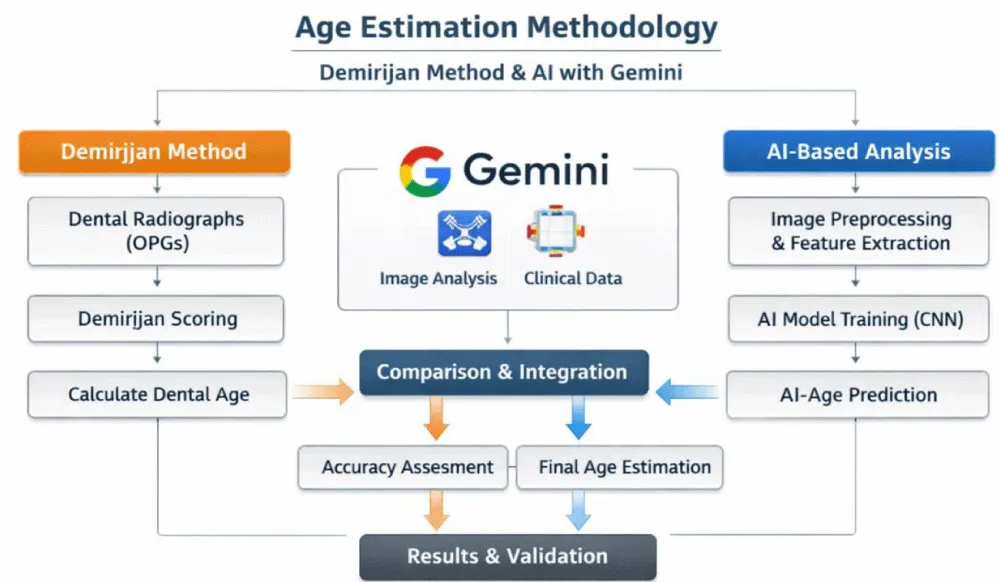
Figure 1: Different stages of foetal development..
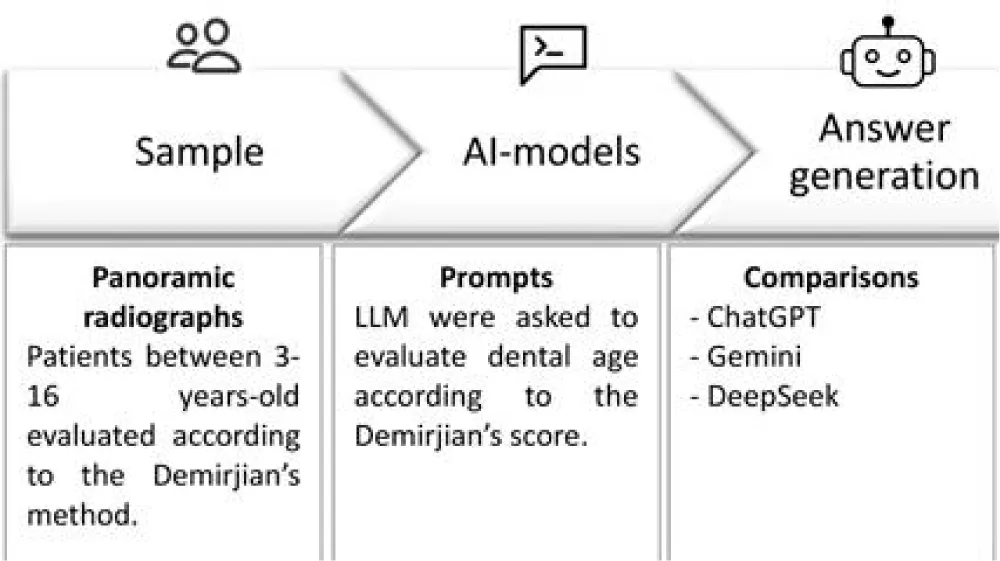
Figure 2:
Prompt design and LLM
The ChatGPT model GPT-4-turbo (OpenAI), Gemini 2.0 Flash (Google Inc.), and DeepSeek-V3 (High-Flyer), all of which were offered free, were used in this study. The following question was applied using the dental maturity scores of Demirjian’s method (A–H) and the gender of each patient: “Provide the estimated dental age based on the Demirjian’s method according to the data below (with one decimal place): Sex: male, Central incisor: D, Lateral incisor: D, Canine: E, First premolar: F, Second premolar: E, First molar: G, Second molar: F.” The tests were conducted on March 31, April 3, and April 5, 2025. To ensure methodological consistency and reproducibility, all prompts submitted to the LLM were standardized across experiments. Each model received identical input phrasing and structure, minimizing variability due to prompt design and allowing for a fair comparison of performance. By controlling this variable, we aimed to isolate model-specific behavior and ensure that differences in responses were attributable to the models themselves rather than inconsistencies in the experimental setup.
The concept of age estimation is one of the most important sub-disciplines of forensic science and is of paramount importance in medico-legal issues. The expanding scope of dentistry has positioned dental professionals as expert witnesses in court proceedings and forensic investigations. However, forensic odontology has long remained a relatively underexplored area of dentistry.
Age estimation is an essential requirement in various judicial proceedings. It is particularly important in cases involving asylum seekers of unknown age, juveniles accused of criminal activities, and individuals claiming to be under 18 years of age prior to sentencing. It is also valuable for human identification and determining the legal age of criminal responsibility. These applications are governed by local legal frameworks and apply to both living individuals and human remains.
Despite its importance, age estimation remains a challenging task. Dental surgeons play a crucial role in this process. The primary objective is to establish a standardized method for medico-legal age estimation that is reproducible, simple, reliable, and applicable to both living and deceased individuals.
Human growth is characterized by considerable variation in the rate at which individuals progress toward physiological maturity. The biological aspects of facial growth are particularly important for identifying growth disorders such as constitutional growth delay, growth hormone deficiency, and endocrine disorders including hyperthyroidism, congenital adrenal hyperplasia, and precocious puberty.
Physiological (developmental) age reflects the maturity status of an individual, whereas chronological age provides only an approximate measure due to variability in development among individuals of the same age. Physiological age is defined as the progress toward complete development or maturity. It is assessed based on the maturation of various systems, including skeletal age, morphological age, secondary sexual characteristics, dental age, and physical parameters such as height and weight. These indicators can be used individually or collectively to determine overall maturity.
In 1837, Dr. Edwin Saunders established tooth eruption patterns as a more reliable indicator of age than height. Since then, dental examination has become an important method for age estimation. Dental age is particularly significant in managing malocclusions and assessing maxillofacial growth. It can be determined based on tooth eruption and calcification stages.
In addition to dental development, skeletal maturity is an important tool for age estimation. The adult human skeleton consists of 206 bones, and the growth and degenerative changes in these bones occur in a predictable sequence. These changes are age-related and occur within defined time frames, making them useful indicators for age estimation. Hand-wrist radiographs are commonly used to assess skeletal maturity, as they provide multiple developmental centers that change at different rates and are closely associated with pubertal growth.
The relationship between dental and skeletal age has been widely studied to improve diagnostic accuracy and treatment planning. Although many methods show high reliability, ethnic and population differences significantly affect accuracy. Most studies have been conducted on Western populations, and there is a relative lack of population-specific data for Indian children.
Assessment of growth and development is important from both medical and dental perspectives. Although multiple methods for age estimation exist, a universally applicable system has not been established due to variations across populations. Dental development is considered a reliable indicator of age during childhood, as it is less affected by external factors such as disease or malnutrition compared to skeletal age or physical growth parameters.
The Demirjian method is one of the most widely used techniques for dental age estimation due to its simplicity and clear radiographic criteria. However, this application is based on a study conducted in the Department of Oral Medicine and Radiology, Subharti Dental College, Meerut, involving 101 patients aged 8–14 years.
In the age groups of 8–9, 10–11, 11–12, and 12–13 years, the Demirjian method overestimated dental age by 0.48, 0.63, 0.20, and 0.77 years, respectively. A significant difference was observed in the 9–10 years age group (overestimation of 0.66 years, p < 0.03) and in the 13–14 years age group (overestimation of 1.49 years, p < 0.001).
The study included 59 males and 42 females, and it was found that the Demirjian method was not fully applicable to the Western Uttar Pradesh population, as it consistently overestimated dental age in both genders. Overall, the estimated dental age did not correspond accurately with chronological age.
These findings are consistent with previous studies. Serene, et al. [1] reported overestimations of 3.04 and 2.82 years in males and females, respectively. Nur B, et al. [2] found that the Demirjian method overestimated age, while the Nolla method was more accurate. Similarly, Prabhakar, et al. [3] reported overestimations in Indian children and concluded that the method was not suitable for that population.
However, these findings differ from those of Hegde, et al. (2002), who reported that the Demirjian method was accurate in children from Belgaum. These variations may be attributed to environmental, nutritional, and socioeconomic differences among populations.
In cases where chronological age is unknown, such as undocumented individuals, the Demirjian method remains a quick and practical approach for age estimation, particularly in growing children. In forensic dentistry and archaeology, it is also valuable for identifying deceased individuals when birth records are unavailable.
Correlation analysis using Spearman’s and Pearson’s coefficients demonstrated a strong relationship between chronological age, dental age, and skeletal age. As chronological age increased, both dental and skeletal ages also increased.
A highly significant correlation was observed between chronological and dental age in both males (r = 0.885) and females (r = 0.926, p = 0.001). Similar findings have been reported by Shukla et al. (2010) and Shilpa et al. [4], confirming the strong association between these parameters.
Technologies show promise, they should be used cautiously and not replace validated clinical methods until they undergo supervised training and rigorous validation.
Uncontrolled use of such tools may lead to inaccurate interpretations with significant clinical and legal consequences. Future research should focus on fine-tuning these models and evaluating their performance across diverse populations before considering widespread implementation.
Recent studies have demonstrated that AI-powered mobile applications can effectively analyze dental radiographs, particularly Orthopantomograms (OPGs), to estimate age with reasonable accuracy. These applications utilize machine learning algorithms and Convolutional Neural Networks (CNNs) trained on large datasets to identify patterns in tooth development and maturation. The ability to perform such analysis on a handheld device significantly expands the usability of age estimation tools, especially in remote or resource-limited settings.
One of the major advantages of mobile-based age estimation systems is their non-invasive nature and ease of deployment. Unlike traditional methods that require specialized infrastructure, mobile applications can be used in field conditions, forensic camps, disaster victim identification, and border control scenarios. Additionally, they support rapid decision-making, which is crucial in legal and humanitarian contexts such as age verification of undocumented individuals.
However, despite these advantages, several challenges remain. The accuracy of mobile applications is highly dependent on the quality and diversity of training datasets. Many existing AI models are trained on population-specific data, which limits their generalizability across different ethnic and geographic groups. This can lead to systematic bias and inaccurate age estimation when applied to diverse populations.
Furthermore, variations in image quality, differences in radiographic techniques, and inconsistencies in data input can affect the reliability of mobile-based predictions. Ethical concerns, including data privacy, consent, and the potential misuse of AI-driven decisions in legal contexts, also require careful consideration.
Comparative studies indicate that while mobile AI applications show promising results, they do not yet consistently outperform traditional methods when evaluated against expert human examiners. Instead, they are best utilized as supportive tools that enhance clinical judgment rather than replace it.
In the context of the present study, the development of a mobile application integrating AI with the Demirjian method provides a hybrid approach that combines the reliability of established techniques with the efficiency of modern technology. This approach has the potential to reduce observer variability, improve reproducibility, and facilitate large-scale screening.
Future research should focus on improving model training through diverse and representative datasets, optimizing algorithms for better accuracy, and conducting multi-center validation studies. Additionally, incorporating multimodal data - such as combining dental, skeletal, and facial analysis—may further enhance the precision of mobile-based age estimation systems.
Although LLM such as ChatGPT, Gemini, and DeepSeek are capable of providing dental age estimates based on Demirjian’s method classifications, their performance still falls short of that of the traditional approach conducted by human examiners. Among the LLM tested, DeepSeek-V3 showed the lowest mean errors and the most excellent stability over time, whereas Gemini exhibited higher variability and a decline in performance. ChatGPT presented intermediate results with relative stability but lower accuracy. These findings highlight that LLM not trained explicitly for this task exhibit notable limitations, including a tendency toward overestimation and inconsistent performance. While promising, these models should be used with caution and should not replace validated methods until they undergo supervised training and robust clinical validation. The indiscriminate use of such tools may lead to incorrect interpretations with potential clinical and legal implications. Future studies should explore fine-tuning these models and evaluate their performance across different population contexts before considering practical implementation.
SGT University contributed to the paper section and mobile application. Financial support, including foundations, institutions, and device manufacturers, is provided by SGT Engineering College itself.
Key messages
1. AI enhances accuracy and efficiency
AI-powered models like Gemini enable faster and more consistent age estimation compared to traditional manual methods.
2. Multimodal capability improves predictions
Gemini can analyze images, text, and patterns together, leading to more reliable age estimation in medical, forensic, and biometric applications.
3. Non-invasive and scalable solution
AI-based age estimation eliminates the need for invasive procedures, making it suitable for large-scale screening and digital applications.
4. Useful across multiple domains
Applications include:
- Forensic science (age profiling)
- Dentistry (dental age estimation)
- Security and identity verification
- Healthcare diagnostics
- Serene K, Shobha T. Dental age assessment: the applicability of Demirjian's method in South Indian children. Forensic Sci Int. 1998;94:73-85. Available from: https://doi.org/10.1016/s0379-0738(98)00034-6
- Nur B, Kusgoz A, Bayram M, Celikoglu M, Nur M, Kayipmaz S, et al. Validity of Demirjian and Nolla methods for dental age estimation for northeastern Turkish children aged 5-16years old. Med Oral Path Oral Cir Bucal. 2012;17(5):e871-7. Available from: https://doi.org/10.4317/medoral.18034
- Prabhakar RR, Saravanan R, Karthikeyan MK, Vishnuchandran C, Sudeepthi R. Prevalence of malocclusion and need for early orthodontic treatment in children. J Clin Diagn Res. 2014;8(5):ZC60-ZC61. Available from: https://doi.org/10.7860/jcdr/2014/8604.4394
- Shilpa PH, Sunil RS, Sapna K, Kumar NC. Estimation and comparison of dental, skeletal and chronologic age in Bangalore south school going children. J Indian Soc Pedod Prev Dent. 2013;31:63-68. Available from: https://doi.org/10.4103/0970-4388.115696