
More Information
Submitted: May 13, 2026 | Accepted: June 17, 2026 | Published: June 18, 2026
Citation: Eze SM, Abdulfatahi KM, Ibrahim SO, Abdulrauf A, Olowolayemo KO, Adebiyi AO, et al. Bloodstain Pattern Analysis: Role and Application in Forensic Science. J Forensic Sci Res. 2026; 10(1): 46-52. Available from:
https://dx.doi.org/10.29328/journal.jfsr.1001116
DOI: 10.29328/journal.jfsr.1001116
Copyright license: © 2026 Eze SM, et al. This is an open access article distributed under the Creative Commons Attribution License, which permits unrestricted use, distribution, and reproduction in any medium, provided the original work is properly cited.
Keywords: Pattern; Analysis; Forensic; Investigation; Accident

Bloodstain Pattern Analysis: Role and Application in Forensic Science
Eze SM1* , Abdulfatahi KM1, Ibrahim SO1, Abdulrauf A1, Olowolayemo KO1, Adebiyi AO1 and Babatunde Joseph Dare2
1Department of Human Anatomy, Faculty of Basic Medical Sciences, College of Health Sciences, Al-Hikmah University, Ilorin, Kwara State, Nigeria
2Department of Human Anatomy, Faculty of Basic Medical Sciences, College of Health Sciences, Osun State University, Oshogbo, Nigeria
*Corresponding author: Eze SM, Department of Human Anatomy, Faculty of Basic Medical Sciences, College of Health Sciences, Al-Hikmah University, Ilorin, Kwara State, Nigeria, Email: [email protected]
Background: Bloodstain pattern is a crucial tool in forensic science that aids in analyzing a crime scene by examining the shapes, sizes, and distributions of bloodstains. It provides valuable insights into the events that occurred during violent crimes, particularly homicides and assaults.
Aim: This study aims to explore the role and practical application of Bloodstain Pattern Analysis in forensic investigations. It seeks to highlight how BPA contributes to crime scene reconstruction, the identification of weapon types, movements of individuals, and the validation or contradiction of witness statements.
Methodology: Forensic case studies, recent forensic research literature from reputable journals, and investigative reports involving the analysis of the types of bloodstain patterns and their interpretations. Relevant information using the keywords was used to search for articles on Google Scholar, ResearchGate, and other sites.
Results: BPA plays a critical role in understanding the sequence of events at crime scenes. The interpretation of bloodstains provided insights into the position and movement of the victim and perpetrator, the nature of the assault, and the type of weapon used. In several cases, BPA findings were pivotal in either supporting or disproving statements made by suspects and witnesses. However, the reliability of the analysis heavily depended on the expertise of the analyst and the preservation of the crime scene.
Conclusion: Bloodstain pattern analysis remains an invaluable tool in forensic investigations. Its ability to provide reconstructive insights makes it a vital component of crime scene analysis, complementing other forensic disciplines such as DNA analysis, toxicology, and ballistics. When used correctly, BPA can help uncover the truth behind violent crimes, exonerate the innocent, and ensure justice is served.
Reconstruction of bloodstain patterns is a crucial tool in forensic science that aids in crime scene analysis by examining the shapes, sizes, and distributions of bloodstains [1]. It provides valuable insights into the events that occurred during violent crimes, particularly homicides and assaults. By understanding how blood behaves when subjected to various forces. Experts can determine key aspects such as the point of origin, the mechanism of bloodshed, the number of blows or shots, and the relative positions of the victim, suspect, and objects at the scene [2]. Blood stain Pattern Analysis (BPA) is vital to criminal investigations, bridging the gap between scientific principles and investigative reasoning. The study of bloodstain patterns has evolved significantly over time [3].
While early forensic experts recognized the importance of blood evidence, it was not until the mid-20th century that BPA developed as a systematic discipline. Today, it is a well-established field that integrates principles from physics, biology, and mathematics. Analysts use their expertise to interpret blood patterns, often working alongside forensic pathologists, crime scene investigators, and law enforcement officers. Their findings can support or refute witness testimonies, confirm or challenge suspect statements, and even help identify whether an injury was self-inflicted or caused by another person. Blood behaves in predictable ways due to its viscosity, surface tension, and response to external forces such as gravity and air resistance. When a violent event occurs, the blood released from the body interacts with surrounding surfaces in distinct patterns [4]. These patterns can reveal whether the blood originated from a gunshot wound, blunt force trauma, stabbing, or arterial bleeding. The analysis also helps distinguish between active bloodshed (caused by forceful ejection of blood) and passive bloodstains (formed by simple gravity, such as drops from a bleeding wound).
One of the key aspects of BPA is categorizing bloodstains into different types based on their formation. The primary classifications include passive stains, transfer stains, and impact stains. Passive stains result from the natural flow of blood due to gravity, such as drips or pools. Transfer stains occur when a bloodied object comes into contact with another surface, leaving an imprint or smear. Impact stains are produced when an external force, such as a gunshot or blunt force, disperses blood in various directions, creating characteristic spatter patterns. Spatter patterns, in particular, are of great forensic significance [5,6]. Analysts examine the size, shape, and distribution of blood droplets to determine the direction and velocity of impact. For example, high-velocity spatter, often associated with gunshots, consists of tiny blood droplets that disperse widely. Medium-velocity spatter, linked to beatings or stabbings, produces larger droplets. Low-velocity spatter, often seen in blunt force trauma, results in relatively large stains that remain closer to the source. The angles at which blood droplets strike surfaces help reconstruct the victim's position and movement during the incident. Another fundamental concept in BPA is the determination of the point of origin, or the location from which the blood was projected. Analysts use trigonometric calculations to trace blood droplets backward to their source, helping reconstruct the position of the victim at the time of injury [4].
Stringing techniques, where strings are physically attached to bloodstains to visualize their trajectories, and modern computer-based software enhance the accuracy of such reconstructions. BPA is not without controversy. While it is widely accepted in forensic science, some critics argue that it lacks standardized methodologies and can be subject to bias. The interpretation of bloodstain patterns often relies on an analyst’s experience and expertise, making it susceptible to human error. In response, efforts are being made to improve the scientific rigor of BPA through research, training, and the development of more objective analysis tools. Courts increasingly scrutinize BPA findings, requiring experts to justify their conclusions with empirical data and peer-reviewed studies.
Study design
This study employed a systematic literature review approach to critically evaluate the role and applications of Bloodstain Pattern Analysis (BPA) in forensic science. The review was conducted following the Preferred Reporting Items for Systematic Reviews and Meta-Analyses (PRISMA) guidelines to ensure transparency, reproducibility, and methodological rigor. The review sought to synthesize available evidence on the principles, forensic applications, reliability, limitations, and recent advancements in BPA.
Search strategy
A comprehensive literature search was conducted using multiple electronic databases, including:
Scopus, Web of Science, PubMed/MEDLINE, Google Scholar, ScienceDirect, SpringerLink, Wiley Online Library, and Taylor & Francis Online
Additional relevant articles were identified through manual searches of reference lists of selected publications. Recent systematic reviews and forensic science reports were also examined to identify additional eligible studies. Similar database strategies have been used in recent BPA systematic reviews.
Search terms
The search was performed using combinations of keywords and Boolean operators such as:
("Bloodstain Pattern Analysis" OR "Blood Spatter Analysis" OR "Blood Pattern Analysis")
And
("Forensic Science" OR "Crime Scene Investigation" OR "Crime Scene Reconstruction")
And
("Application" OR "Role" OR "Forensic Evidence" OR "Violent Crime Investigation")
And
("Reliability" OR "Validation" OR "Interpretation" OR "Reconstruction")
The search was limited to articles published between January 2000 and December 2026 to capture contemporary developments in BPA.
Eligibility criteria
Inclusion criteria
Studies were included if they:
- Were published in peer-reviewed journals.
- Were written in English.
- Focused on bloodstain pattern analysis in forensic investigations.
- Examined the role, application, interpretation, reconstruction, validation, or reliability of BPA.
- Included experimental studies, case studies, observational studies, retrospective analyses, computational modeling studies, and forensic reconstructions.
- Provided sufficient methodological details and results relevant to forensic science.
Exclusion criteria
Studies were excluded if they:
- Were conference abstracts, editorials, commentaries, letters, book reviews, or opinion papers.
- Were duplicate publications.
- Focused solely on blood chemistry, blood identification, DNA profiling, or blood aging without direct relevance to BPA.
- Lacked full-text availability.
- Were not published in English.
- Did not provide original data or substantial forensic relevance.
- Focused exclusively on fluid dynamics without explicit forensic application.
Study selection
All identified records were exported into a reference management software package (Mendeley, Zotero, or EndNote). Duplicate records were removed. Titles and abstracts were screened independently for relevance. Potentially eligible articles underwent full-text review. Studies meeting all inclusion criteria were included in the final synthesis.
Data extraction
Data extracted from eligible studies included: Author(s) and year of publication, Country of study, Study design, Objectives of the study, Type of bloodstain pattern investigated, BPA techniques employed, Forensic applications described, Major findings, reported limitations, and Recommendations for future research.
Quality assessment
The methodological quality of included studies was assessed using appropriate critical appraisal tools, such as the Joanna Briggs Institute (JBI) Critical Appraisal Checklists or the Critical Appraisal Skills Programme (CASP) tools, depending on study design. Studies were evaluated for methodological rigor, validity, reproducibility, and potential sources of bias.
Data synthesis
Extracted data were analyzed using a narrative thematic synthesis approach. Findings were grouped into the following themes:
- Principles and classification of bloodstain patterns.
- Crime scene reconstruction and event interpretation.
- Determination of blood source and area of origin.
- Digital and computational approaches in BPA.
- Reliability, accuracy, and limitations of BPA.
- Courtroom admissibility and forensic significance.
- Emerging technologies and future directions.
Ethical considerations
As this study utilized previously published literature and did not involve human participants or animal experimentation, ethical approval was not required.
The science behind bloodstain pattern analysis
BPA is grounded in the principles of physics and biology; blood behaves predictably when subjected to force, gravity, and air resistance [7]. The analysis is based on the recognition of bloodstains and progresses to categorizing them into types, with each category providing distinct clues [8]. For instance, passive stains such as drops or pools may indicate the location of an injury. Projected stains can show the direction and force of the impact, while transfer patterns—like smudges or smears—might reveal movements or contacts between individuals and surfaces. High-velocity impact spatter, often associated with gunshots, consists of very fine droplets that travel at high speeds and can provide insight into the use of firearms at a scene [7].
Fundamental principles of BPA
The mechanism of BPA is grounded in physics, biology, and mathematics. Blood behaves as a fluid that responds predictably to forces such as gravity, momentum, and external impact [7]. A good knowledge of these factors allows analysts to interpret the patterns formed and reconstruct the events leading to their creation. The shape, size, and distribution of bloodstains are influenced by:
- Surface texture
- Angle of impact
- Force applied
- Height from which blood falls
- Volume of blood
- Type of injury
Key components of the BPA mechanism
A. Blood properties
Blood is a non-Newtonian fluid, meaning its viscosity changes under force. When it exits the body due to injury, it behaves predictably under various physical conditions. Factors such as coagulation, clotting, and dilution (e.g., with water or other fluids) can also affect its behavior and, thus, the resulting stains [9].
B. Surface interaction
The nature of the surface (smooth, rough, porous, or non-porous) where the blood lands affects the final appearance of the bloodstain. Smooth surfaces like glass produce uniform stains, while rough surfaces like wood or fabric cause irregular or distorted patterns [10].
C. Gravity and force dynamics
- Low-velocity impact typically results in large, circular stains (e.g., dripping blood).
- Medium-velocity impact creates smaller, more dispersed stains, often associated with blunt force trauma.
- High-velocity impact, such as from gunshots, results in a fine mist of tiny droplets, indicating rapid force application [1].
Analytical techniques in BPA
To derive meaningful conclusions from bloodstains, several scientific methods and tools are applied:
Angle of impact calculation
By measuring the width and length of a blood droplet, the angle of impact can be calculated. This helps determine the trajectory of blood droplets.
Impact angle determination
The angle of impact (θ) of a bloodstain is commonly calculated using:
θ=sin−1(WL)\theta = \sin^{-1}\left(\frac{W}{L}\right)θ=sin−1(LW)
where:
- θ = angle of impact (degrees)
- W = width of the bloodstain (minor axis)
- L = length of the bloodstain (major axis), excluding the tail
The calculation assumes that the blood droplet forms an elliptical stain upon striking a smooth surface. However, measurement uncertainty may arise from irregular stain morphology, surface roughness, clotting effects, satellite stains, inaccurate measurement of the major and minor axes, and post-impact distortion. Therefore, multiple stain measurements are recommended when reconstructing the area of origin [11] (Figure 1).
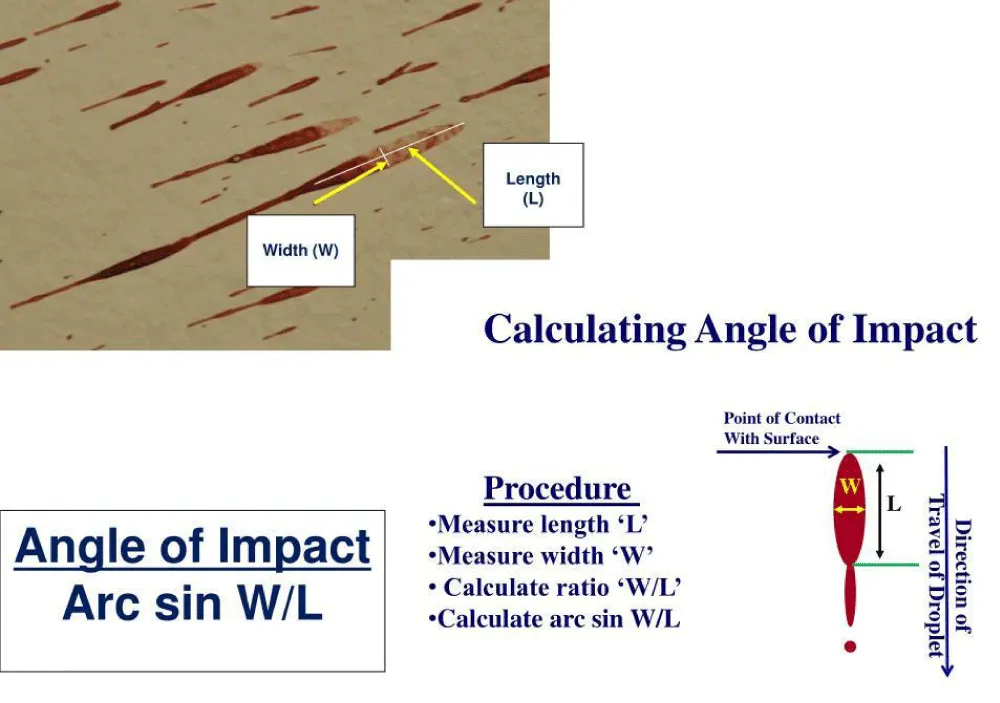
Figure 1: Angle of Impact Calculation [24]. Source: scientistwhodraws.com.
Types of bloodstain patterns
1. Passive bloodstain patterns [12]
These stains are formed solely due to gravity, without any external force acting on the blood.
- Drip stains: Single blood drops falling vertically due to gravity, often from a bleeding wound.
- Drip trails: A series of drops indicating movement of a bleeding person or object.
- Pools: Accumulations of blood on a surface when bleeding is profuse, and the body remains stationary.
- Flows: Blood that moves along a surface due to the pull of gravity (e.g., down walls or furniture).
- Saturation Stains: Occur when absorbent material (e.g., fabric) becomes soaked with blood.
2. Transfer bloodstain patterns [12]
These occur when a bloodied surface or object comes into contact with another surface, leaving an impression or smear [4].
- Contact/impression stains: Created when a bloody object touches a clean surface and leaves a recognizable imprint (e.g., handprint, footprint).
- Swipes: Formed when a bloodstained object moves across a surface, transferring blood in the direction of movement.
- Wipes: Created when an object moves through an existing bloodstain, often smearing or disturbing it.
- Pattern transfer: May reveal the texture or shape of the object involved, such as a shoe tread or fabric pattern.
3. Projected bloodstain patterns [12]
These result from blood being subjected to force and expelled through the air. They are often the most informative in violent crimes.
A. Impact spatter
Formed when an external force strikes liquid blood.
- Low-velocity impact spatter: Caused by minimal force (e.g., dripping), resulting in large, round stains (typically 4–8 mm in diameter).
- Medium-velocity impact spatter: Typically from blunt force trauma or stabbing, producing smaller droplets (1–4 mm).
- High-velocity impact spatter: Caused by gunshots or explosions; droplets are very fine (<1 mm), often appearing as a mist.
Classification of blood stain patterns
B. Cast-off patterns
Produced when blood is flung from a bloodied object (e.g., a weapon swung back and forth), creating arced patterns of droplets. They can indicate the number of swings or blows [12].
C. Arterial spurting or gush patterns
Formed when blood is ejected under pressure from a breached artery. These patterns are often wave-like or pulsing, corresponding to the heartbeat [13].
D. Expirated bloodstains
Result from blood forced out through the mouth, nose, or lungs due to internal injuries or coughing. These often contain air bubbles and may mix with saliva or mucus [14].
E. Back spatter (Blowback)
Occurs when blood is directed back toward the source of force, such as a firearm discharge [15] (Figure 2).
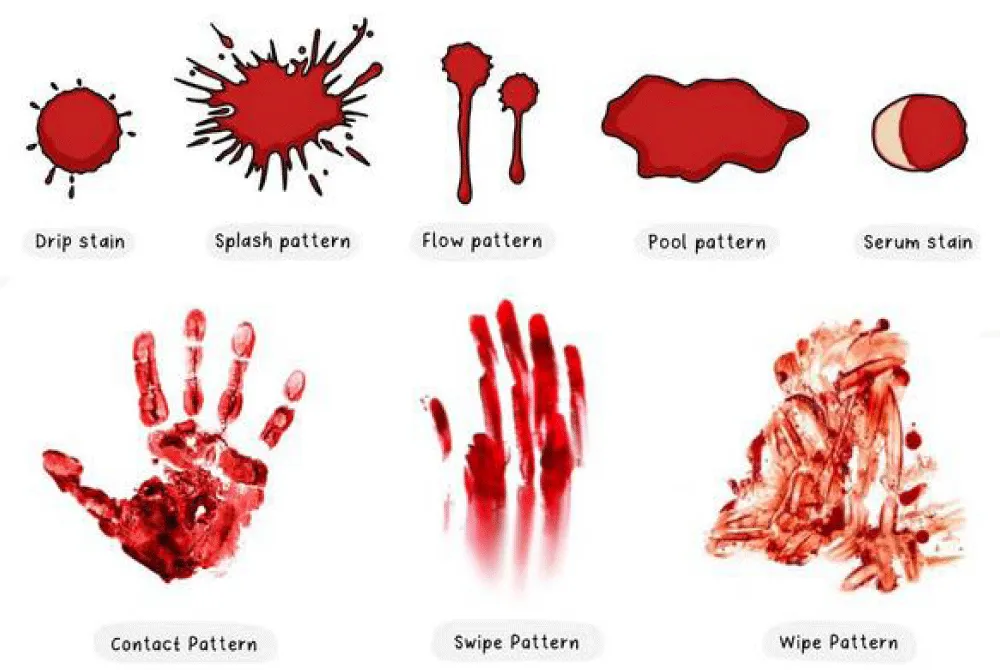
Figure 2: Types of blood stain patterns [23] Source: scientistwhodraws.com.
F. Splash patterns
Formed when blood falls onto a surface with force, creating a central pool with surrounding satellite spatters.
4. Miscellaneous patterns [12]
These don't fit neatly into the three primary categories but are relevant in certain situations:
- Void patterns: Empty spaces or "shadows" within a bloodstain pattern where an object or person blocked the blood. They indicate the presence and position of objects during the incident.
- Skeletonized stains: Form when the edges of a bloodstain dry before the center is disturbed or wiped away. This helps in determining timing.
- Insect stains (Fly spots): Small dots or streaks caused by insects feeding on blood and excreting or regurgitating it elsewhere—can be mistaken for spatter (Figure 3).
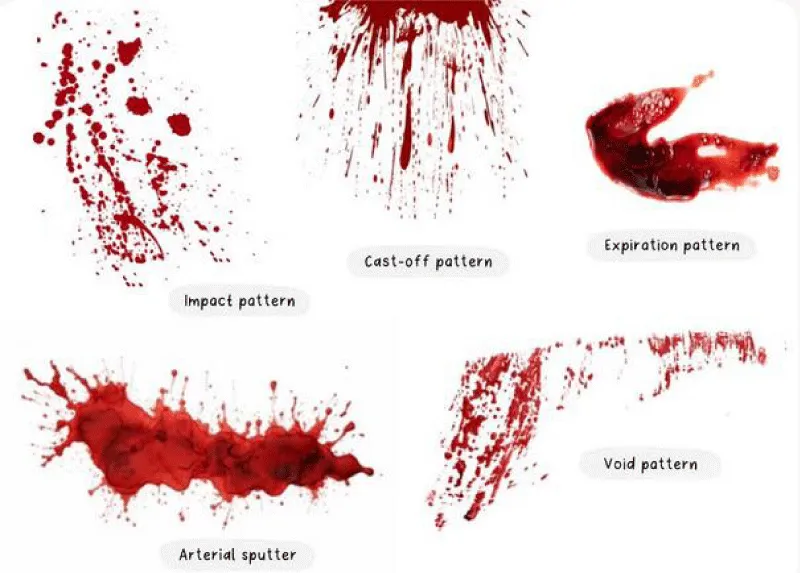
Figure 3: Types of blood stain patterns [24] Source: scientistwhodraws.com
Applications of blood stain pattern analysis
- Crime scene analysis: Detailed examination of bloodstain patterns aids in reconstructing the events at a crime scene.
- Weapon or object identification: The shape and distribution of bloodstains can reveal the type of weapon or object involved.
- Source determination: Studying bloodstains helps pinpoint the origin of the blood.
- Bleeding assessment: Blood patterns can be used to gauge how severe the bleeding was.
- Movement and behavior tracking: Bloodstain analysis can provide insights into the movements and actions of people involved.
Forensic science applications
- Bloodstain pattern analysis can assist in extracting and interpreting DNA evidence.
- Pattern modeling: Computer simulations are used to recreate and study bloodstain patterns.
- Enhanced visualization: High-tech imaging methods improve the documentation and analysis of blood evidence.
- Expert witness support: Findings from bloodstain analysis provide crucial input for expert testimony in court.
- Investigator training: Advanced analysis techniques are used to train forensic professionals and investigators. [16]
Legal applications
Both bloodstain pattern analysis and criminal profiling must adhere to strict ethical standards to ensure the accuracy and fairness of assessments. This includes avoiding potential biases, ensuring the qualifications and expertise of analysts and profilers, and maintaining the integrity of the investigation.
Judicial use:
Evidence examination: It supports the interpretation and validation of forensic evidence.
Scene reconstruction: Blood pattern analysis helps recreate the sequence of events at a crime scene.
Suspect identification: It can aid in identifying suspects involved in a crime.
Legal outcomes: The analysis plays a role in determining guilt and influencing sentencing decisions [17].
Advancements in bloodstain pattern analysis (BPA)
1. Integration of Artificial Intelligence (AI): Researchers are leveraging AI algorithms to improve the accuracy and efficiency of bloodstain analysis. A study demonstrated that AI-assisted methods could estimate the angle of impact from simulated crime scene samples with 78.64% accuracy. Additionally, AI-based segmentation techniques, such as the Segment Anything Model (SAM), have shown promise in effectively segmenting bloodstain images, facilitating more precise analysis[1].
2. Enhanced fluid dynamics modeling: Advancements in modeling the behavior of blood droplets have provided deeper insights into secondary atomization effects. Researchers have found that smaller droplets are more susceptible to being influenced by firearm gases, which can alter their trajectory and distribution. Understanding these dynamics aids in reconstructing crime scenes with greater accuracy [18].
3. Application in microgravity environments: Studies have explored bloodstain patterns in microgravity, such as those experienced in space. Findings indicate that in the absence of gravity, blood droplets exhibit unique behaviors, adhering more strongly to surfaces and displaying altered shapes and sizes. These insights are crucial for adapting forensic analysis techniques to extraterrestrial settings [19].
4. Development of quantitative analytical approaches: Researchers are working towards incorporating likelihood ratio methods in BPA, aiming to evaluate the causal mechanisms of bloodstain patterns more rigorously. By treating bloodstain patterns as collections of ellipses characterized by location, size, and orientation, these approaches offer a more quantitative framework for analysis [16].
5. Comprehensive reviews and standardization efforts: Recent reviews have highlighted the continuous evolution of BPA, emphasizing the importance of standardized practices and training. These reviews underscore BPA's critical role in modern forensic science and advocate for ongoing research and development to enhance its effectiveness [20].
Limitations and challenges of bloodstain pattern analysis
Despite its widespread application in forensic investigations, bloodstain pattern analysis (BPA) remains subject to several limitations and ongoing scientific debates. One of the principal concerns is the degree of subjectivity involved in pattern interpretation. Although standardized guidelines exist, conclusions may vary among analysts depending on training, experience, and case circumstances. Such variability can contribute to inter-examiner disagreement and may affect the reproducibility of findings [18].
Another important concern is the potential influence of cognitive bias. Knowledge of investigative details or expectations regarding a suspect may unintentionally influence pattern interpretation. Consequently, blind or sequential unmasking approaches have been recommended to minimize contextual bias during forensic examinations [21].
The admissibility of BPA evidence has also been challenged in legal settings. Courts increasingly require forensic methods to demonstrate scientific validity, known error rates, and reproducibility. Under standards such as Daubert, BPA testimony may be scrutinized regarding the reliability of underlying methodologies and the qualifications of the analyst [16].
Environmental conditions, surface characteristics, blood properties, and post-depositional alterations may further complicate interpretation. Consequently, BPA findings should be considered alongside other forensic evidence, including DNA analysis, pathology findings, scene documentation, and witness testimony. Continued validation studies, standardized training programs, and advances in digital reconstruction technologies are essential for strengthening the scientific foundation and reliability of BPA [22].
Despite these challenges, bloodstain pattern analysis remains an invaluable tool in forensic investigations. Its ability to provide reconstructive insights makes it a vital component of crime scene analysis, complementing other forensic disciplines such as DNA analysis, toxicology, and ballistics. When used correctly, BPA can help uncover the truth behind violent crimes, exonerate the innocent, and ensure justice is served.
- Moza B, Mukherjee D, Verma P. Blood stain pattern analysis: A comprehensive review of methods, reliability of computerized analysis, and future advancements. J Agric Biotechnol Appl Sci. 2023;1(1):5‑10. Available from: https://doi.org/10.63143/jabaas8213481
- Murillas GGM. Crime scene reconstruction. In: Manual of Crime Scene Investigation. CRC Press; 2022. p. 15‑48.
- Hernandez MY, Harris S. Bloodstain pattern analysis in homicide investigations: A comparative study of expert interpretations in Santiago, Chile. Sriwijaya J Forensic Medicolegal. 2025;3(1):1‑13. Available from: https://doi.org/10.59345/sjfm.v1i1.36
- Brodbeck S. Introduction to bloodstain pattern analysis. SIAK J Police Sci Pract. 2012;2:51‑57. Available from: https://doi.org/10.7396/IE_2012_E
- Brodbeck SMC. The role of the shoulder joint in the examination of cast‑off patterns. IABPA Newsl. 2009 Dec.
- Brodbeck SMC. The role of the shoulder joint in the examination of cast‑off patterns – Goodbye to left and right‑handedness. IABPA Newsl. 2010 Jun.
- Zielińska M, Wojnowska‑Baryła I, Cydzik‑Kwiatkowska A. Sources and properties of BPA. In: Bisphenol A removal from water and wastewater. 2019. p. 3‑28.
- Comiskey PM. Fluid mechanics of blood motion resulting from common bloodletting events [dissertation]. Chicago: Univ Illinois at Chicago; 2019.
- Alavani VS, Nidasoshi V, Krishna S. An experimental analysis of blood in forensic science: Blood stain pattern. Afr J Biol Sci. 2022;4(4):396‑425. Available from: https://doi.org/10.48047/AFJBS.4.4.2022.396-425
- Larkin BAJ. Bloodstain pattern analysis: scratching the surface [dissertation]. Manchester: Manchester Metropolitan Univ; 2015.
- Joris P, Develter W, Jenar E, Suetens P, Vandermeulen D, Van de Voorde W, et al. Calculation of bloodstain impact angles using an active bloodstain shape model. J Forensic Radiol Imaging. 2014;2(4):188‑198. Available from: https://doi.org/10.1016/j.jofri.2014.09.004
- James SH, Kish P, Sutton P. Principles of bloodstain pattern analysis: Theory and practice. CRC Press; 2005. Available from: https://doi.org/10.1201/9781420039467
- Taylor MC, Laber TL, Kish PE, Owens G, Osborne NK. The reliability of pattern classification in bloodstain pattern analysis, part 1: bloodstain patterns on rigid non‑absorbent surfaces. J Forensic Sci. 2016;61(4):922‑927. Available from: https://doi.org/10.1111/1556-4029.13091
- Bettison A, Krosch MN, Chaseling J, Wright K. Bloodstain pattern analysis: Does experience equate to expertise? J Forensic Sci. 2021;66(3):866‑878. Available from: https://doi.org/10.1111/1556-4029.14661
- Karger B, Rand S, Fracasso T, Pfeiffer H. Bloodstain pattern analysis—casework experience. Forensic Sci Int. 2008;181(1‑3):15‑20. Available from: https://doi.org/10.1016/j.forsciint.2008.07.010
- Yusof MJM, Chandran T, Adnan MRAR, Amin ESR, Sarifudin SAA, Abu Bakar NA. Bloodstain pattern analysis in crime scene investigation: A systematic literature review. Forensic Sci. 2026;6(2):38. Available from: https://doi.org/10.3390/forensicsci6020038
- Kaur A, Kaur G. Current trends in bloodstain pattern analysis and its forensic significance. Int Res J Eng Technol. 2023;10(12):748‑755.
- Balbudhe MS, Shetty BSK, Render R, Kumar NA. Advancements and challenges in bloodstain pattern analysis: Addressing limitations for enhanced forensic reliability. Int J Legal Med. 2026;1‑5.Available from: https://doi.org/10.1007/s00414-026-03817-x
- Sacco MA, Gualtieri S, Princi A, Raffaele R, Aquila I. Application of bloodstain pattern analysis (BPA) to reconstruct a staged crime scene in a complex forensic case. Forensic Sci Int Synergy. 2025;11:100624. Available from: https://doi.org/10.1016/j.fsisyn.2025.100624
- James SH. Historical evolution of bloodstain pattern analysis. In: Handbook of Bloodstain Pattern Analysis. CRC Press; 2024. p. 1‑32.
- Deb M, Kumar A. Bloodstain pattern documentation: Types, merits, and limitations. Int J. 2025;7(2):179‑182. Available from: https://doi.org/10.22271/multi.2025.v7.i2c.614
- Vitiello A, Di Nunzio C, Garofano L, Saliva M, Ricci P, Acampora G. Bloodstain pattern analysis as an optimisation problem. Forensic Sci Int. 2016;266:e79‑e85. Available from: https://doi.org/10.1016/j.forsciint.2016.06.022
- Shravani NG. Advances in forensic bloodstain pattern analysis: A review of current methods and future directions. 2024.
- Connolly C, Illes M, Fraser J. Effect of impact angle variations on area of origin determination in bloodstain pattern analysis. Forensic Sci Int. 2012;223(1‑3):233‑240. Available from: https://doi.org/10.1016/j.forsciint.2012.09.009