
More Information
Submitted: April 10, 2026 | Accepted: April 21, 2026 | Published: April 22, 2026
Citation: Kumari A, Kumar N, Seerat, Sharma P, Verma D. Role of Sugar as a Preservative for DNA Profiling from Foetal Tissues. J Forensic Sci Res. 2026; 10(1): 026-028. Available from:
https://dx.doi.org/10.29328/journal.jfsr.1001112
DOI: 10.29328/journal.jfsr.1001112
Copyright license: © 2026 Kumari A, et al. This is an open access article distributed under the Creative Commons Attribution License, which permits unrestricted use, distribution, and reproduction in any medium, provided the original work is properly cited.
Keywords: Tissue; Formalin; Improper preservation; Sugar; Degradation

Role of Sugar as a Preservative for DNA Profiling from Foetal Tissues
Anuj Kumari*, Naresh Kumar, Seerat, Poonam Sharma and Deepa Verma
Forensic Science Laboratory, Home Department, GNCT of Delhi, Rohini, Delhi, India
*Corresponding author: Anuj Kumari, Forensic Science Laboratory, Home Department, GNCT of Delhi, Rohini, Delhi, India; Email: [email protected]
In forensic casework, the preservation of tissue is a major challenge. The products of Conception or foetuses are being sent to the forensic laboratory for the determination of paternity and maternity in sexual assault cases or POCSO cases. In most of the cases, a forensic expert is not able to extract DNA from such samples as formalin is used as a preservative. Most of the samples failed to detect foetal DNA from the tissues due to improper preservation. This study investigates the impact of sugar as a preservative on foetal tissue integrity and genomic DNA quality. The sugar inhibits microbial proliferation and autolytic degradation; in this study, we have taken the 50 samples of foetal tissues and preserved them in sugar solution at -20 0C for 4 months. DNA was extracted using magnetic-based Maxwell Automate extraction methods, followed by quantification, purity assessment, and STR amplification. It was observed that DNA remains intact in sugar and can yield a high amount of DNA with complete DNA profiling from such samples.
Body organs or tissue material are collected from human disasters, fire incidents, and riot cases to prove the identity of individuals by DNA. The tissue material from the foetus is also taken for DNA analysis and plays a crucial role in the determination of paternity in sexual assault cases. Removal of the foetus is the first step in such cases where the victim becomes pregnant. The foetus is removed after a due legal procedure. From the history of the cases, it is observed that the cases are being reported to the police after symptoms of pregnancy developed. Minor victims conceal the pregnancy from their parents due to hesitation, lack of sexual education, or unawareness. At the time of termination of pregnancy, the entire POC/ foetus is taken with intrauterine material by surgical procedure. If the procedure is done at the early stage of pregnancy, it is very difficult to identify the foetus part or POC with the naked eye.
The umbilical cord can also be used for the determination of paternity if no fetus is available. Foetal samples or tissues are preserved in an available preservative. Preservation of the foetus is a major issue, and medical officers generally preserve the foetus in formalin or normal saline for paternity or maternity of the sample. Study suggests that formalin is not the appropriate preservative for DNA profiling as formaldehyde combined with adenine, guanine, and cytosine [1]. As per the studies, there are several other better preservatives for human tissues and other soft materials like the brain, kidney, liver, and other body parts for DNA examination.
The cell of the fertilized egg divides and then goes through the Fallopian tube, and after three days, attaches to the uterine wall. The attachment site provides nutrients to the growing fetus and becomes the placenta. After 4 weeks of conception, the foetus takes shape into separate areas that will form the upper part (head), limbs, and other organs. The initial stage of pregnancy is called POC (Product Of Conception). After 2 months, it is called a foetus. This amniotic sac works as a cushion to help protect the baby. The role of the placenta is to transfer nutrients from the mother to the baby.
Facial features of a baby start to develop after the second month. The initial buds convert into limbs. But after the termination of pregnancy, it is not recognizable as it is cut into pieces. Arms, hands, fingers, feet, and toes are fully developed after 3 months of pregnancy. In case of MTP, the entire foetus is sent for DNA profiling to ascertain the paternity and maternity in different preservatives. Different studies have been done on this topic. These studies authenticate the role of sugar as a preservative for accurate DNA profiling of such samples (Figures 1-3).
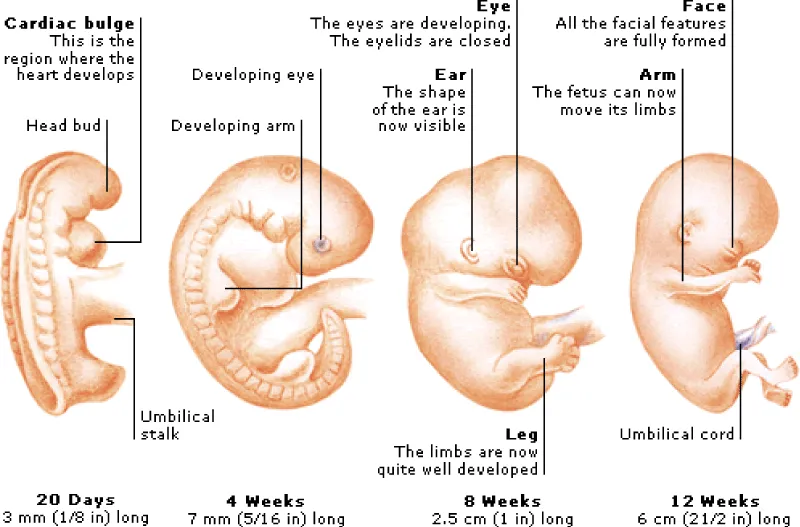
Figure 1: Different stages of foetal development.
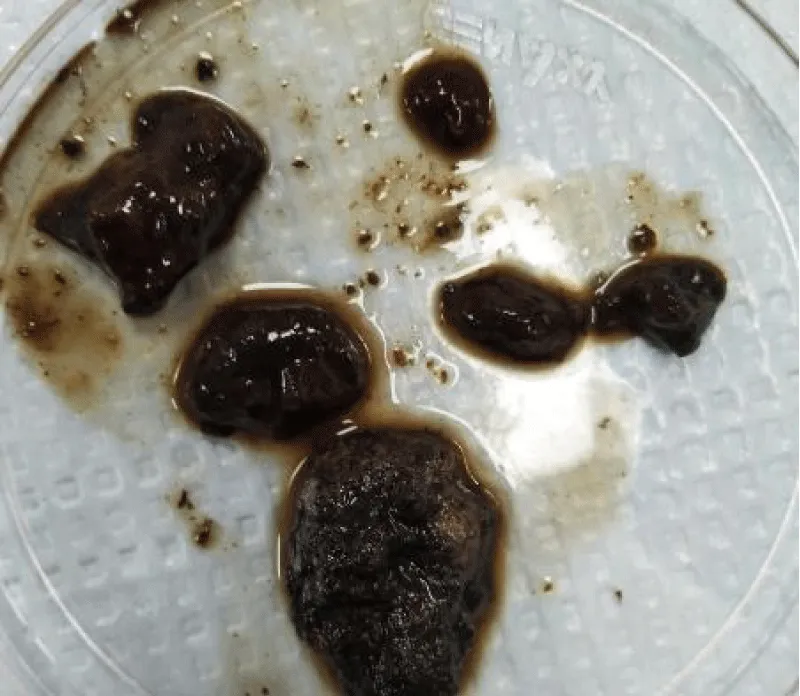
Figure 2: Pieces of POC after 6 weeks.
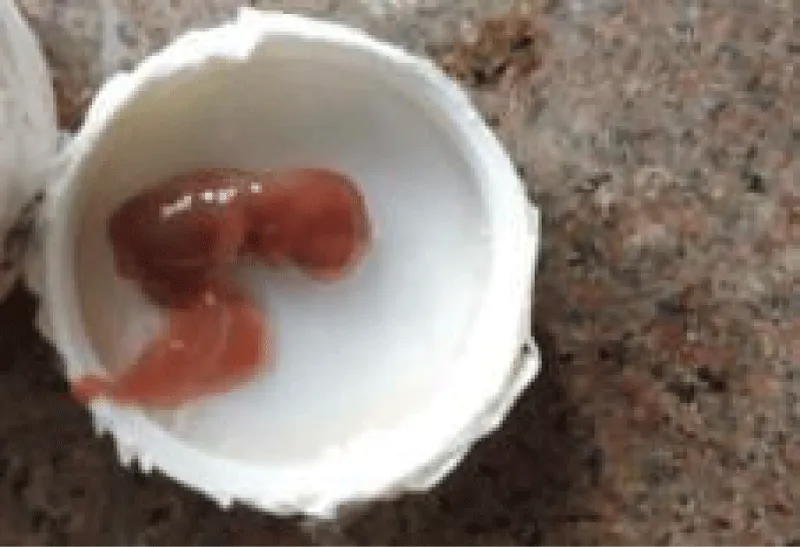
Figure 3: Foetus of 2 months.
Sample preparation
The preservation and DNA profiling of the tissue samples are issues for the forensic expert. The technology of real-time PCR has given information about the quantity, quality of DNA, and profiling thereof. Formalin is an inhibitor and affecting theamplification of DNA. The composition of formalin results in cross-linking of protein and DNA, resulting to making fragments of DNA. Fixation and keeping the sample at 4ºC or -20ºC reduced the degradation [2]. Nuclease-free water and ethyl alcohol are used to detach the formalin. The shifting of formalin may increase the quantity of DNA, and it will reflect in Real Time PCR. The samples, preserved in formalin, affect the process of PCR process. The appropriate concentration of DNA will help to get the DNA profiling with full peaks, failing which, it will give the inappropriate peaks in DNA profiling [3]. Inhibitors directly stick to DNA or are combined with the enzyme DNA polymerases (eg, Tag polymerase). Due to the delicate nature of the enzyme, amplification is destroyed [4]. Inhibition in amplifications can be avoided by removing all such inhibitors. Samples with formalin may affect the conventional process of PCR, failing to get the full DNA profile [5]. The DNA profiling technology is a convincing tool in the existing technology for the judicial system [6]. There are 4 to 5 nucleotide repeats in microsatellites of human DNA profiling. The preservation affects the quality of extracted DNA and the success rate of full and complete DNA profiling. The deficient amount of DNA leads to an inappropriate size of heterozygous peaks and dropping of allelicin markers of large size. The unsuccessful in detachment of inhibitors is resulting incomplete DNA profiling or partial profiling of the samples.
Body tissues of the brain and liver are preserved during post-mortem in a deformed dead body, an unknown dead body, or by an investigation officer, depending on the case. All tissues were immediately transferred to the solution of sugar mixed with a minimum amount of water. The gynaecologist kept the foetus/tissue or part of the foetus in the preservative in sugar and formalin. All the samples were stored at -20 degrees Celsius to minimize their deterioration. The best parts of a sugar solution are that a more than 50% sugar solution inhibits the growth of bacteria by creating osmotic pressure. It is drawing out the moisture of bacterial cells. The tissue material of equal quantity dipped in sugar solution around 200mg was taken from each sample for washing with nuclease-free water to avoid any contamination. After three to four washing 30 minutes on the shaker, and then taken to isolation by adding the forensic buffer with Proteinase K provided with the Kit of Maxwell, but in case formalin mixed tissue, two more days are given for washing to remove formalin. The samples were transferred to 1.5 ml tubes and 500 µl Forensic buffer, 40 µl SDS 20%,20 µl PK, and 25 µl ditheothretol was added in each of the kept overnight at 56⁰C for shaking and incubation or as per the Maxwell protocol. The sample preserved in formalin showed inhibition and was not able to generate an appropriate quantity for DNA profiling. Then transfer the lysate into the spin column around 400µl and add 200µl lysis buffer. Now the sample is ready to be transferred into the cartridge of the Maxwell instrument.
DNA quantity of samples was assessed by Quantifiler®trio Quantification kit on Quant Studio. The quantity of DNA is measured using the Real-Time PCR instrument protocols. The real-time PCR helps the expert to determine the quantity of DNA in the samples, along with the level of degradation. In the cases of the deletion of the Y allele on amelogenin and false depiction of a female profile in place of a male DNA profile can be eliminated [7]. The DNA sequence is amplified and monitored for the amplification progress by the fluorescent technique. The quantity of DNA is determined by the signal of fluorescent reaches the threshold. The known standards are used for the purpose of quantification. The trio kit contains large autosomal DNA, small autosomal DNA, and the Sex-determining Region Y (SRY) gene for human male-specific and an Internal Positive Control (IPC).
Amplification of DNA
Effective measures should be taken in cases of samples preserved in formalin to control the effects of PCR inhibitors. The autosomal STRs were amplified using Promega PowerPlex 21® TM PCR kit according to the prescribed protocol [8]. Amplicons were run in ABI 3500 XL with Hi-Di formamide and Liz 500 or 600. Some of the samples were amplified on the Global filer kit as per their protocol. Gene Mapper IDX 1.7 software was used for analysis, and STR profiles have been generated. The advantage of Powerplex 21 is that it is able to amplify the DNA up to 100 picograms, but the cycle of PCR is adopted 29 instead of 28, where quantity is in picograms.
The study comprises different types of samples, taken from foetus, tissues from brain, liver from an adult dead body, preserved in formalin and sugar solution. It was observed that the DNA quantity is far better in the sample preserved in sugar solution than in formalin. Very poor performance was given by the samples preserved in formalin. The maximum DNA quantity was 1.02ƞg/µl in a sample fixed in formalin. Most of the samples failed to get an appropriate amount of DNA from the formalin-fixed samples. The quantity of human DNA was not sufficient in the sample of foetus, tissue, liver, and brain preserved in formalin, while each sample of the foetus, tissue, liver, and brain preserved in sugar gave a better quantity of DNA. The maximum sample gave a sufficient amount of DNA to get an accurate DNA profile. The brain preserved in sugar solution was able to detect the maximum amount of DNA 32.36ƞg/µl from one of the samples (Figure 4).
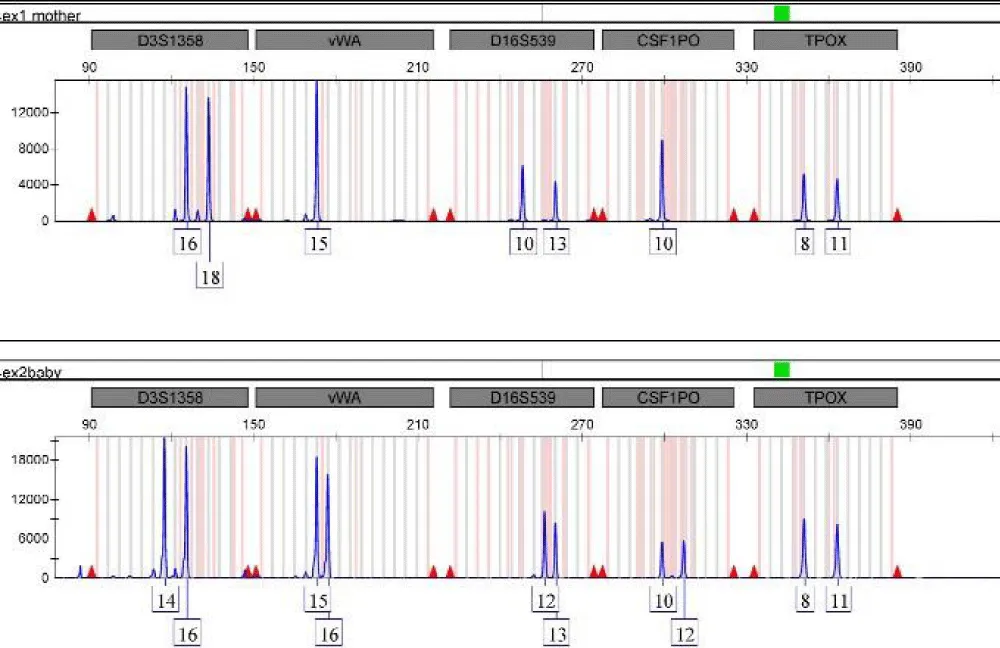
Figure 4: Electropherogram from the tissue preserved in sugar.
From the above study, it is clear that tissue samples preserved in formalin inhibit the amplification of DNA and cross-linking of DNA and protein. The samples of foetus, brain, and liver are the best samples for a good yield of DNA and complete DNA profiling from such samples. These samples, if preserved in a semi-solid sugar solution, can be preserved for a longer period of time, which may help in the preservation of the DNA of the samples. Further, Sugar absorbs the moisture content present in bacteria and does not allow the bacteria to grow in the cellular material, and avoid degradation of cells. The samples preserved for a longer period, even up to 5 years, at -20 degree may get the DNA profiling from such samples.
- Fraenkel-Conrat H. Reaction of nucleic acid with formaldehyde. Biochim Biophys Act. 1954;15(2):307-309. Available from: https://doi.org/10.1016/0006-3002(54)90083-9
- Crisan D, Mattson JC. Retrospective DNA analysis using fixed tissue specimens. DNA Cell Biol. 1993;12(5):455-464. Available from: https://doi.org/10.1089/dna.1993.12.455
- Butler JM. Forensic DNA typing, biology, technology, and genetics of STR markers. 2nd Edition. Elsevier Academic Press. 2005. Available from: https://www.scirp.org/reference/referencespapers?referenceid=2296930
- Del Rio SA, Marino MA , Belgrader P. PCR-based human leukocyte antigen (HLA) DQA1 typing of blood-stained light and dark blue denim fabric. J Forensic Sci. 1996;41(3):490-492. Available from: https://scite.ai/reports/pcr-based-human-leukocyte-antigen-hla-9QpLRr
- Kumar N, Maitray A, Gupta R, Shukla SK. Effects of preservatives on foetal tissues and DNA profiling in Forensic cases. 2018;3(4):167-169. Available from: https://medcraveonline.com/IJMBOA/effects-of-preservative-on-foetus-tissues-and-dna-profiling-in-forensic-cases.html
- Inman K, Rudin N. The origin of evidence. Forensic Sci Int. 2002; 126(1):11-16. Available from: https://doi.org/10.1016/s0379-0738(02)00031-2
- Jha DK. Nepalese Null AMELY males and their Y Haplotype. 2010;8(8):97-101. Available from: https://www.nepjol.info/index.php/SW/article/view/3858/3303
- Ensenberger MG, Hill CR, McLaren RS, Sprecher CJ, Storts DR. Development and validation of the Powerplex 21 System. Forensic Sci Int. 2014;169-178. Available from: https://doi.org/10.1016/j.fsigen.2013.12.005