
More Information
Submitted: November 11, 2025 | Approved: November 24, 2025 | Published: November 25, 2025
How to cite this article: Panapitiya PHP, Peramune PADL, Wijayawickrama JPTR, Wimalasena GGM, Premathilaka UWS, Kodithuwakku KADC. Development and Validation of Gas Chromatography-Flame Ionization Detection Method for the Quantification of Alprazolam Drug in Seized Narcotic Samples: Applications of Benzodiazepines in Forensic Drug Chemistry. J Forensic Sci Res. 2025; 9(2): 221-229. Available from:
https://dx.doi.org/10.29328/journal.jfsr.1001107
DOI: 10.29328/journal.jfsr.1001107
Copyright license: © 2025 Panapitiya PHP, et al. This is an open access article distributed under the Creative Commons Attribution License, which permits unrestricted use, distribution, and reproduction in any medium, provided the original work is properly cited.
Keywords: Gas Chromatography Flame Ionization Detection (GC-FID); Gas Chromatography Mass Spectrometry (GC-MS); Alprazolam; Forensic drugs; Method development and validation

Development and Validation of Gas Chromatography-Flame Ionization Detection Method for the Quantification of Alprazolam Drug in Seized Narcotic Samples: Applications of Benzodiazepines in Forensic Drug Chemistry
PHP Panapitiya*, PADL Peramune, JPTR Wijayawickrama, GGM Wimalasena, UWS Premathilaka and KADC Kodithuwakku
Narcotic Drugs and Psychotropic Substance Laboratory, Government Analyst’s Department, Pelawatte, Battaramulla, Sri Lanka
*Address for Correspondence: PHP Panapitiya, Narcotic drugs and Psychotropic substance laboratory, Government Analyst’s Department, Pelawatte, Battaramulla, Sri Lanka, Email: [email protected]
Alprazolam is a frequently misused psychotropic substance with counterfeit formulations posing major challenges for forensic laboratories. The present study reports the development and validation of a simple, rapid, and cost-effective gas chromatography–flame ionization detection (GC-FID) method for the quantification of alprazolam in seized narcotic samples. The method was optimized using a 5% phenyl methylpolysiloxane (5MS) capillary column using methanol as the extraction solvent. The method exhibited excellent selectivity, with no matrix interference. Linearity was demonstrated over the concentration range of 50–500 µg mL-¹, yielding a coefficient of determination (R²) ≥ 0.995. The limit of detection (LOD) and limit of quantification (LOQ), determined using the signal-to-noise approach, were 13.78 ppm and 14.62 ppm, respectively, confirming sufficient sensitivity for routine forensic applications. Recovery studies showed mean recoveries of 100.66%, 100.14%, and 99.88% for low (65 ppm), mid (220 ppm), and high (428 ppm) concentrations, all within the 80–120% acceptance criteria. Intra-day precision studies yielded percentage relative standard deviation (%RSD) values of 0.59%, 0.46%, and 0.57% across the same concentration levels, demonstrating high repeatability and robustness of the GC-FID system. Methanol proved to be the most effective extraction solvent compared to chloroform and acetonitrile, offering high recovery with minimal background interference. The developed GC-FID method provides a legally defensible, reliable, and accessible analytical approach for the quantification of alprazolam in seized drug samples by making it a practical alternative to mass spectrometry-based methods, particularly for laboratories with limited analytical resources.
Benzodiazepines (BZD) are a class of psychoactive compounds consisting of a core structure containing a benzene ring fused to a seven-membered diazepine ring. Derivatives of this core structure act as positive allosteric modulators at the Gamma-Amino Butyric Acid (GABA) receptors in the central nervous system (CNS) [1]. Thereby enhanced the GABA-mediated neuronal activity in the central nervous system, contributing to a calming effect and regulating various bodily functions. BZD exert a wide range of therapeutic effects, including anxiolysis, sedation, muscle relaxation, anticonvulsant action, and amnesia. Clinical uses of BZD have been recognized due to their minimal serious adverse side effects and low possibility of addiction. Due to BZDs being used on the CNS for their therapeutic applications to contribute to a sense of calm and relaxation, BZDs are often abused by drug addicts. As a consequence, these types of drugs are regularly involved in both medical applications and forensic cases [2].
These BZD types of drugs are divided further into subclasses based on their chemical structure, the alprazolam, a benzodiazepine which is included in the subclass triazolobenzodiazepines (TBZD). The TBZD is derived from other benzodiazepines by having an additional triazole ring fused to the diazepine seven-membered ring. The triazole and diazepine rings share a common nitrogen atom. Structurally, alprazolam (Figure 1) is defined by the presence of a phenyl group at position 6, a chlorine atom at position 8, and a methyl substituent at position 1, built upon the benzodiazepine core, and constitutes a 1-methyl-triazolobenzodiazepine [3,4].

Figure 1: The basic structures of alprazolam, a triazolobenzodiazepine derived from the benzodiazepine basic structure.
This multi-step synthesis of alprazolam [5] highlights the structural modification of the benzodiazepine nucleus to incorporate the triazole moiety, a critical feature contributing to alprazolam’s pharmacological profile. Therefore, it is a high-potency and rapid-onset drug most commonly prescribed for anxiety disorders and panic disorders.
And also, sleepiness, suppressed emotions, depression, decreased alertness, decreased heart rate, and suppression of the CNS are the most common side effects associated with the intake of alprazolam. Long-term use causes adaptive changes in the receptors, and it will lead to benzodiazepine withdrawal symptoms if suddenly decreased the consumption [6].
Due to this specific pharmacological profile of alprazolam, it has high abuse potential; therefore, alprazolam is a Schedule IV controlled substance under the United Nations Convention on Psychotropic Substances of 1971 [7]. Alprazolam is frequently misused recreationally, and it is the most prescribed psychotropic drug worldwide and has a well-documented high misuse liability. Illicit versions of alprazolam often come as counterfeit tablets (often mimicking legitimate Xanax® pills) or powders that significantly deviate from legitimate pharmaceutical standards. These falsified alprazolam tablets contained only about 2%- 4% of alprazolam content or less than that (little or no alprazolam), while many contained various adulterants, including non-benzodiazepine opioids and potential toxic substances, due to manufacturing errors. These counterfeit products are typically manufactured without pharmaceutical-grade controls, leading to unpredictable potency and contamination risks [8,9].
While the growing recreational use of alprazolam, especially in illicitly manufactured forms, has intensified concerns over its abuse potential, it has also created significant hurdles for forensic and analytical laboratories. Variations in tablet composition, the presence of cutting agents, and the absence of manufacturing quality control introduce complexities in obtaining representative samples and achieving accurate quantification. These challenges necessitate robust, validated analytical methods capable of addressing the unpredictability and heterogeneity of seized material.
Routine forensic screening often uses portable spectroscopic methods (thin-layer chromatography/ Raman spectroscopy / Fourier Transformed Infrared spectroscopy-FTIR) or presumptive color tests because they are fast and non-destructive, but these can give false negatives for low-dose or heavily adulterated tablets and cannot reliably quantify alprazolam in complex mixtures. Recent forensic and pharmaceutical studies have extensively investigated the detection and quantification of alprazolam in both legitimate and illicit formulations using a range of analytical platforms, including high-performance liquid chromatography (HPLC) with Diode Array Detection-DAD or fluorescence detection, gas chromatography–mass spectrometry (GC-MS), gas chromatography with flame ionization detection (GC-FID), and liquid chromatography–tandem mass spectrometry (LC-MS/MS) [9]. HPLC and LC-MS/MS offer high sensitivity and selectivity for alprazolam and its metabolites and have become the predominant choice in clinical toxicology and multi-analyte forensic panels; however, these techniques often require high-cost instrumentation, extensive sample clean-up to minimize matrix effects, and may be less accessible in resource-limited laboratories. GC-MS is a powerful confirmatory tool for seized drug analysis, but alprazolam’s moderate thermal lability and the need for derivatization under some conditions can limit its routine throughput [2,10].
GC-FID, although less common in recent literature compared to Liquid Chromatography Mass Spectrometry (LC-MS), remains an attractive alternative in forensic settings because it is widely available, cost-effective, robust, and capable of delivering high-precision quantitative results and wide linear dynamic range, excellent reproducibility for small-molecule drugs, and can be effectively applied after a straightforward organic solvent extraction such as methanol or acetonitrile, which recent seizure analyses have shown to yield adequate recoveries for alprazolam [9].
The method presented in this study addresses these gaps by employing a selective non-polar 5% phenyl methylpolysiloxane (5MS) capillary column, optimized oven programming, and validated extraction protocols tailored for seized tablet matrices to enhance chromatographic resolution, improve specificity, and achieve accurate quantification within a legally defensible forensic validation framework. The objective of this work is therefore to develop and validate a simple, rapid, and cost-efficient GC-FID method for the quantitative determination of alprazolam in seized illicit samples, in accordance with the United Nations Office on Drugs and Crime (UNODC) forensic guidelines, providing a practical and reliable tool for drug control laboratories that may not have access to advanced mass spectrometry-based systems.
Chemicals and Reagents
Alprazolam reference standard (Cayman chemicals, USA), Methanol, Acetonitrile, and Chloroform (Research lab, India).
Instrumentation
Gas chromatographic analyses were carried out on a PerkinElmer GC-2400 Plus system equipped with an FID and autosampler. Separation was performed using a 5MS capillary column (30 m × 0.25 mm i.d., 0.25 μm film thickness; PerkinElmer-COL-ELITE 5). Data were acquired using Simplicity-GC software. Gas chromatography mass spectrometric analyses were carried out on a Shimadzu GC-MS-QP2020 NX system equipped with an AOC-20i autosampler. Separation was performed using a 5MS capillary column (30 m × 0.25 mm i.d., 0.25 μm film thickness; SHIMADZU-SH-Rxi-5Sil MS). Data were acquired using LabSolutions- GC software.
Sample collection and description
Seized alprazolam samples were organized into visually homogeneous groups based on appearance (e.g., imprint, color, packaging). Sampling followed UNODC guidelines, using random selection for homogeneous populations and representative portions for powders or heterogeneous items. For tablets, selected units were individually documented, weighed, and homogenized to prepare a composite for analysis, and the powders were mixed thoroughly before subsampling. All samples were collected using clean tools, packaged in polythene bags, sealed with sellotape, and labeled with unique identifiers. Chain-of-custody was maintained from collection to laboratory receipt, and samples were stored under cool, dry, and light-protected conditions until GC-FID analysis.
Sample preparation
Homogeneously selected tablets were crushed into fine powder using a mortar and pestle. The powder-type sample was homogenized well before weighing. Homogenized tablet composites or bulk powders were subjected to methanolic extraction before GC-FID analysis. A weight of 50.0 mg of the homogenized material was accurately weighed into a clean, dry 10.00 mL volumetric flask. About 7 mL of Methanol was added, and the flask was immediately capped and shaken for 30–60 seconds to ensure initial dispersion. The mixture was then sonicated for 10–15 minutes at room temperature to enhance dissolution. After cooling to ambient conditions if necessary, the extract was brought to volume with methanol, the flask was capped, and the solution was inverted ten times to achieve uniformity. An aliquot of the resulting solution was passed through a 0.45 µm Nylon syringe filter directly into an amber glass autosampler vial, yielding the primary stock extract. Appropriate dilutions of this stock solution were prepared with methanol to obtain sample solutions within the established calibration range for GC-FID. Above same procedure was repeated for chloroform and acetonitrile solvents, and extracts were stored in amber vials at 2–8 °C and analyzed within 48 hours to ensure analyte stability.
Standards stock solution preparation
A concentration of 1.0 mg/ml of alprazolam standard stock solution (2 ml) was prepared by dissolving 0.00200 g of alprazolam standard in methanol in a 2 ml volumetric flask.
Method development for GC-FID
Method development focused on achieving baseline resolution, short run time, and stable FID response for alprazolam extracted from seized tablets. A PerkinElmer-COL-ELITE 5MS column was selected. Injection (1µl) was optimized using splitless techniques, providing symmetrical peaks without overloading. Inlet temperature was set to 280 °C to promote rapid volatilization without the onset of tailing. Nitrogen was used as carrier gas with a 3 mL min⁻¹ purge flow. Nitrogen at 1.0 mL min⁻¹ delivered the best efficiency and reproducibility. Several oven programs were screened, and the final program (initial 120 °C, 25 °C min⁻¹ to 290 °C, hold 15 min; total run time = 21.48 min) produced sharp, well-resolved alprazolam peaks away from common sample excipients. FID conditions (hydrogen and dry air makeup per instrument specification) were kept standard, and detector temperature was fixed at 300 °C to minimize condensation. Sample preparation compared with methanol, acetonitrile (ACN), and chloroform (CHCl3) for extraction and methanol gave the highest and most consistent recovery with minimal matrix background.
Method validation
This method validation follows the international forensic and pharmaceutical guidance to demonstrate fitness-for-purpose in seized-drug casework. The validated characteristics will include the selectivity, linearity, range (50–500 µg mL⁻¹, 6 calibration levels), limit of detection (LOD), and limit of quantification (LOQ) by signal-to-noise ratio, accuracy (recovery), and precision. This framework provides traceable evidence that the GC-FID method yields reliable, reproducible quantification of alprazolam in seized matrices suitable for routine forensic reporting.
Selectivity: Selectivity was evaluated using a solvent blank and an extraction blank. Both the solvent blank and the extraction blank were first analyzed to check for background or preparation-related peaks. A placebo extract was then prepared using a typical sample that did not contain alprazolam following the same extraction procedure, and placebo extracts were spiked with alprazolam reference standard at low, medium, and high levels within the calibration range, then. Both preparations were analyzed in parallel with neat alprazolam standards. Chromatograms were compared. Representative seized tablet extracts were also prepared, analyzed, and subsequently post-spiked with alprazolam at a mid-level concentration and reviewed at the alprazolam to document the selectivity of the method.
Linearity & Range: Linearity of the GC–FID method was evaluated across the working range of 50–500 ppm. A six-point calibration series was prepared by serial dilution of the alprazolam stock solution (1000 ppm) in methanol to obtain concentrations of 50 ppm, 100 ppm, 200 ppm, 300 ppm, 400 ppm, and 500 ppm. The peak area of alprazolam was plotted against the nominal concentration to generate the calibration curve. Linear regression analysis was performed to obtain the calibration equation and, coefficient of determination (R²). As the acceptance criteria, the correlation coefficient (R²) of ≥ 0.995 over the specified range covering expected sample levels after dilution while maintaining a linear, non-saturating FID response.
Accuracy (Recovery studies): Accuracy was determined using the matrix spike approach. A representative placebo sample matrix was prepared and homogenized. Portions of the placebo matrix were weighed and spiked prior to extraction with the alprazolam reference standard to yield nominal concentrations at low, mid, and high after completion of all dilution steps. Each spike level was prepared in seven replicates. Spiked samples were processed through the full sample-preparation workflow. Recovery (for relatively high concentration ranges, it should be within 80%-120%) and relative standard deviation of recoveries (typically should be less than or equal to 5%) were computed relative to the nominal spiked concentration. All weights, spike volumes, dilution factors, and injection identifiers were recorded to ensure traceability of recovery data.
Precision (repeatability; Intra-day): Fresh quality-control (QC) solutions at low, mid, and high range in the calibration curve were prepared in a placebo matrix and analyzed within a single analytical session using the finalized GC–FID program. For each concentration level, ten replicate injections were carried out on the same day, by the same analyst, using the same instrument and materials. The mean, Standard deviation, and %RSD of calculated concentrations were computed at each level.
Limit of Detection (LOD) and Limit of Quantification (LOQ): The limits of detection (LOD) and limit of quantification (LOQ) were determined using matrix-spiked samples at low concentration levels. Placebo sample matrix spiked with alprazolam reference standard to yield final concentrations of 25 ppm, 50 ppm, and 100 ppm. Each level was prepared alongside solvent and extraction blanks to verify baseline cleanliness. For each injection, the alprazolam peak height was taken as the signal (S), and the baseline noise (N) was measured in an adjacent flat region of the chromatogram equivalent to at least ten times the peak width. Signal-to-noise ratios (S/N) were calculated for each replicate, and the calibration of S/N versus concentration was then constructed from the three S/N values. Linear regression was performed, and the concentrations corresponding to S/N = 3 and S/N = 10 were derived as the LOD and LOQ, respectively. The provisional LOQ was further verified by preparing matrix-spiked QC samples at the calculated LOQ level and confirming consistent integration and quantifiable response under identical chromatographic conditions.
Sample analysis
About twenty (20) seized samples were weighed (40.0 mg from each) and transferred into a 10.0 mL volumetric flask. Methanol was added and sonicated for 5 minutes to dissolve the sample. After filtration through a 0.45 μm nylon syringe filter, the extract was transferred into a clean vial for analysis. Then it was injected into GC-FID.
The developed GC-FID method demonstrated reliable performance for the quantification of alprazolam in seized narcotic samples, showing compliance with international forensic validation guidelines [11,12]. Chromatographic optimization using the 5% phenyl methylpolysiloxane (5MS) capillary column and methanolic extraction provided sharp, well-resolved peaks with minimal matrix interference, ensuring method specificity in complex seized-drug matrices. Validation data confirmed that the method achieved excellent linearity (R² ≥ 0.995) across the working range, low limits of detection and quantification limits suitable for forensic case samples, and high recovery with acceptable precision. These results indicate that the method is fit-for-purpose, offering a cost-effective and accessible alternative to more resource-intensive mass spectrometry-based techniques, particularly for routine casework in laboratories where GC-FID is the primary analytical tool.
Illicit alprazolam tablets and powders are often counterfeit or intentionally adulterated. Therefore, the active ingredient may be absent, present at highly variable concentrations, or co-formulated with other benzodiazepines, designer benzodiazepines, or potent opioids. This heterogeneity means a seized batch can contain widely different drug contents, so a single-pill analysis may not represent the lot and routine forensic practice. Therefore, one must use statistically defensible sampling and thorough homogenization of multiple tablets or representative sub-sampling of powders before extraction. Several surveillance studies and public-health reports document frequent falsified alprazolam findings and evolving contents, which directly complicate interpretation and increase the risk of both false negatives and unexpected toxicological findings [8,13].
Tablet excipients (fillers, binders, coatings, pigments) and cutting agents in powders can interact with extraction solvents, bind analytes, or co-extract into the analytical system, producing matrix effects that alter instrument response and reduce accuracy. Effective quantification, therefore, depends on an extraction protocol that liberates alprazolam reproducibly from the matrix, removes interfering co-extractives (clean-up), and demonstrates acceptable recovery and precision. Among the approaches used for extracting alprazolam from different types of matrices, such as simple organic solvent extraction (methanol, acetonitrile), Solid Phase Extraction (SPE) [14], liquid–liquid extraction [15], and QuEChERS-style partitioning [16] are common. Therefore, extraction solvent optimization was carried out using chloroform, acetonitrile, and methanol. According to that, the methanol consistently produced the highest recovery, stable peak response, and minimal co-extracted interference, and was therefore selected as the optimal solvent for this method. This choice is consistent with reported solubility characteristics of alprazolam and ensures reproducible extraction from seized sample matrices, whereas chloroform showed relatively lower recovery, and acetonitrile extracts presented higher background interference.
In the present validation, only selectivity was evaluated. GC-MS analysis of seized case samples under investigation confirmed that to contained only alprazolam (no excipients or matrix components interfered with the alprazolam peak) as the active benzodiazepine component. Therefore, assessment of potential interferences from sample excipients and extraction-related background (selectivity) was considered sufficient to establish the method's suitability for routine forensic analysis.
Method selectivity was assessed through analysis of solvent blanks, extraction blanks, placebo matrix extracts, and seized sample extracts (Figure 2). No interfering peaks were observed at the retention time of alprazolam in either blanks or placebo preparations, confirming the absence of background interferences (Figure 3). Placebo sample spiked with alprazolam at low, mid, and high calibration levels produced consistent retention times and well-resolved peaks, further validating selectivity. Additionally, confirmatory GC-MS analysis of the seized samples indicated alprazolam as the sole benzodiazepine component, ruling out potential co-elution of structurally related analogues. These results demonstrate that the method is highly specific and suitable for routine forensic applications.
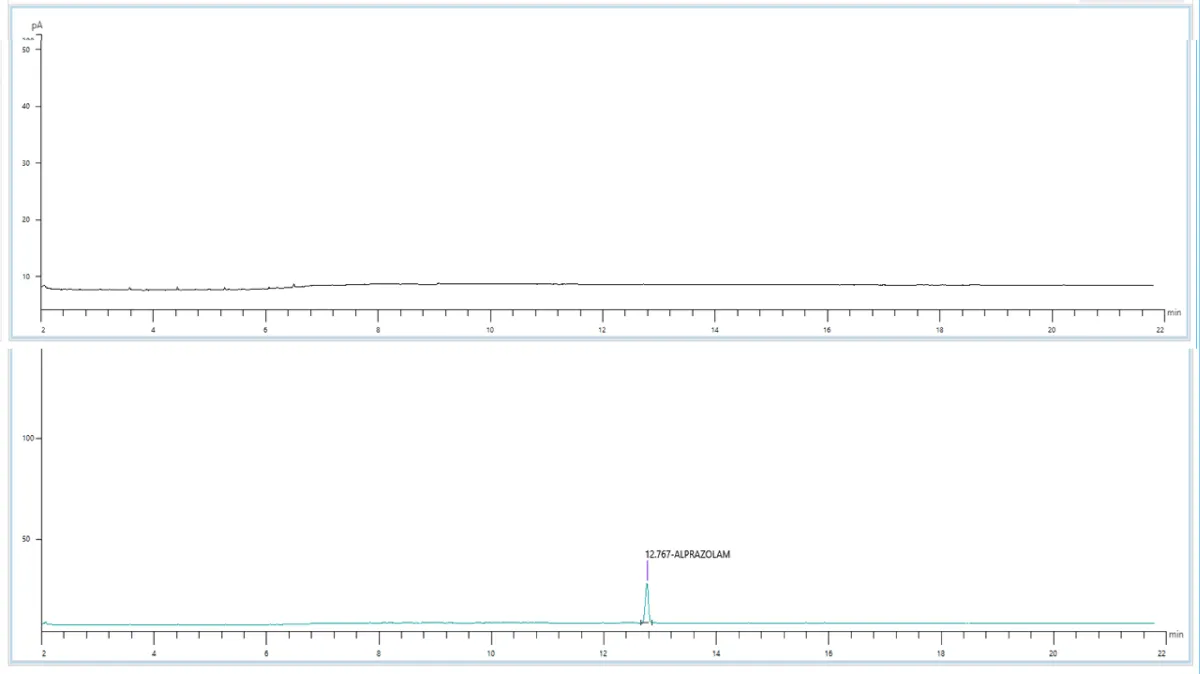
Figure 2: The GC-FID spectrum for the extraction blank (upper) and the low-concentration standard (lower).
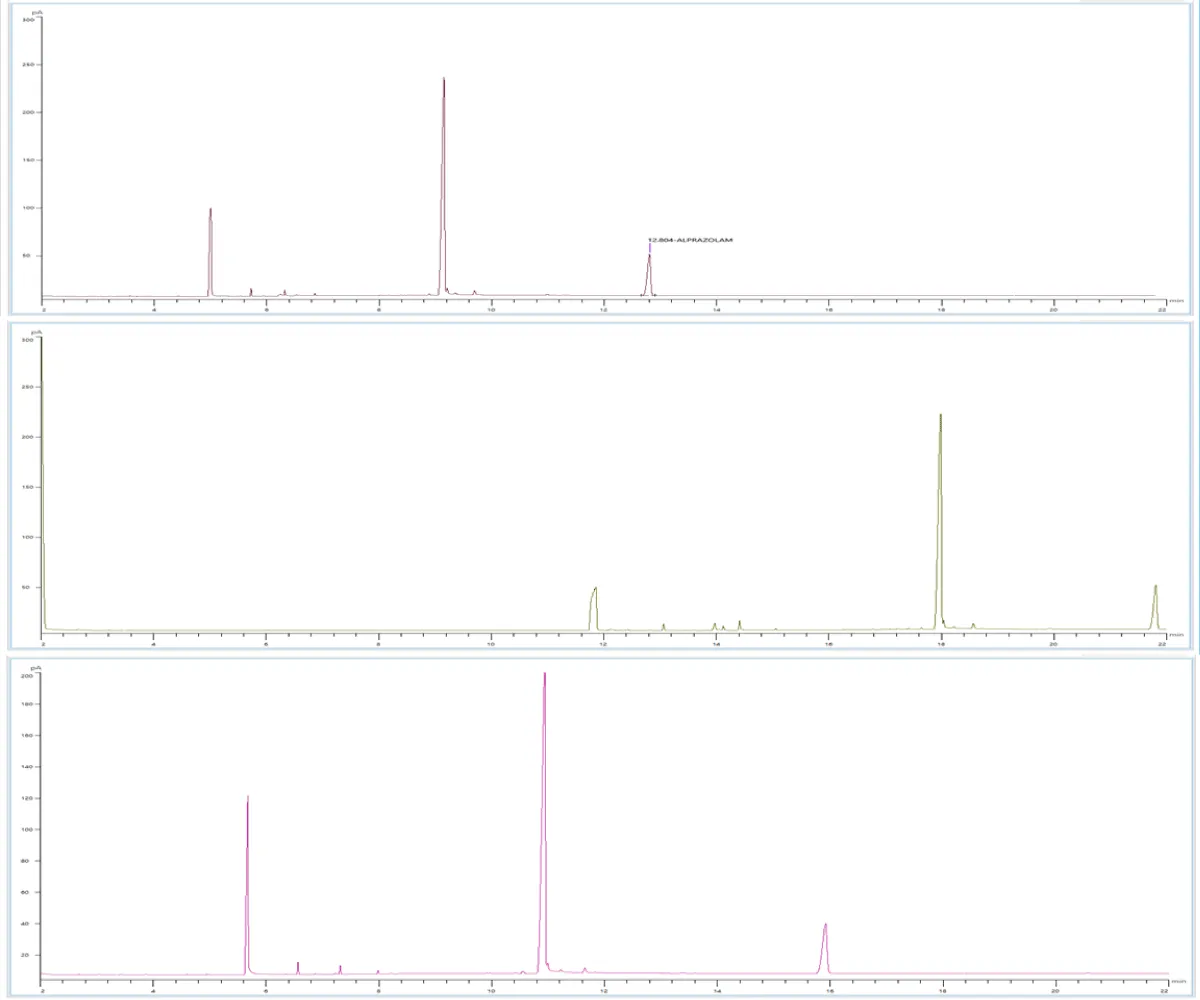
Figure 3: The GC-FID spectrum for spiked placebo extract (top) and GC-FID spectra of two placebo samples (middle and bottom).
The calibration curve constructed across the range of 50–500 µg/mL showed excellent linearity (Figure 4), with a correlation coefficient exceeding the acceptance criterion (R² ≥ 0.995). The regression equation demonstrated a consistent detector response without evidence of signal saturation, and calibration residuals were evenly distributed across the range. This wide linear working range ensures that the method can reliably quantify alprazolam across concentrations typically found in seized samples, which often show variability in drug content. The strong linearity obtained in this work is comparable to or exceeds that reported in previous GC-FID and HPLC studies [10,17]. on alprazolam quantification, highlighting the suitability of the developed method for forensic casework.
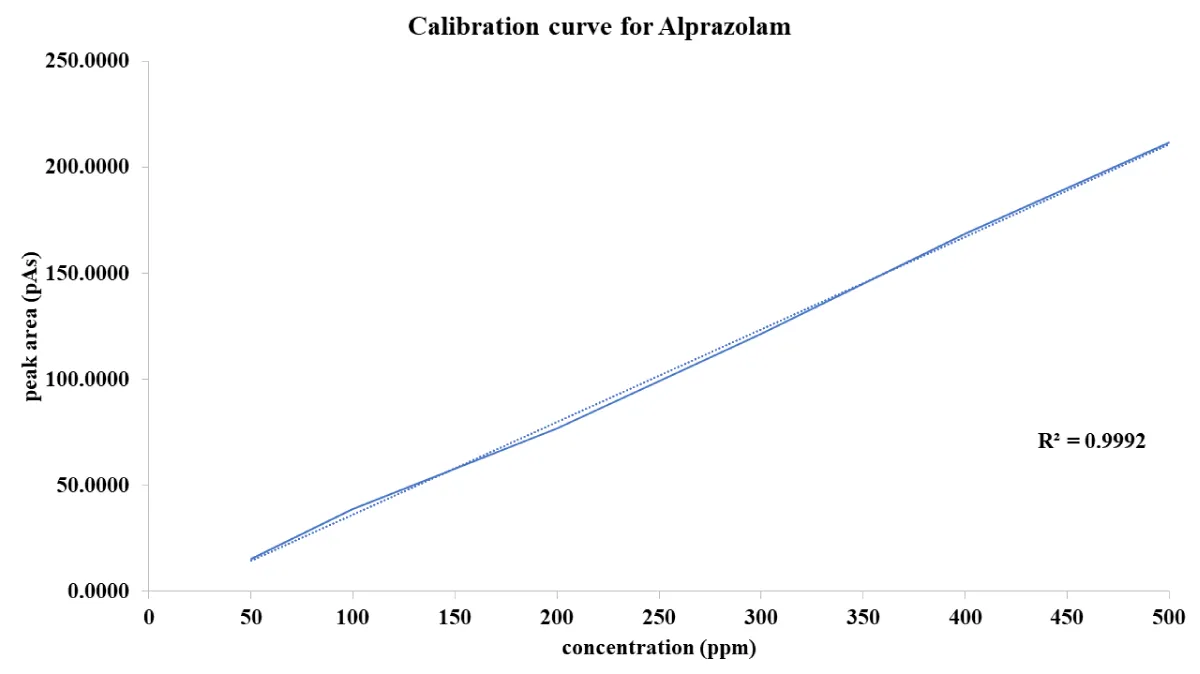
Figure 4: The standard series graph of alprazolam in methanol medium.
The limits of detection (LOD) and limits of quantification (LOQ), calculated using the signal-to-noise approach from matrix-spiked low concentration samples, were consistent with the sensitivity required for forensic analysis. Alprazolam was detectable at concentrations well below those reported in seized samples. The calculated LOD corresponded to a signal-to-noise ratio of 3:1was 13.78 ppm, while the LOQ derived from a ratio of 10:1 was 14.616 ppm, and both were verified by replicate injections of spiked quality-control samples at the LOQ level. These findings confirm that the method is sufficiently sensitive for casework applications, enabling the detection of alprazolam in poorly formulated or adulterated samples.
Accuracy was assessed using matrix-spiked placebo samples at three concentration levels and processed through the full extraction and analysis procedure. The lower, mid, and high concentrations used were 65 ppm, 220 ppm, and 428 ppm matrix-spiked placebo samples. The recovery results fell within the acceptable range recommended by international forensic guidelines, with mean recoveries for low concentration 100.66%, mid concentration 100.14%, and high concentration 99.88% respectively.
The percentage of relative standard deviation for the three concentrations was 0.31%, 1.27%, and 1.92% across the three tested levels (Table 1). These findings confirm that the methanol-based extraction is effective for quantitative recovery of alprazolam from seized sample matrices, minimizing matrix effects and ensuring reproducibility. Comparative tests with acetonitrile and chloroform extractions showed that methanol yielded the highest recovery with the least interference, supporting its selection as the solvent of choice in this method.
| Table 1: The measured recovery, standard deviation, and relative standard deviation values for seven replicates at low, mid, and high concentration levels. | ||||||
| Replicates | spiked-low concentration (65 ppm) | spiked-low concentration recovery | spiked mid-concentration (220 ppm) | spiked mid-concentration recovery | spiked-high concentration (428 ppm) | spiked-high concentration recovery |
| 1 | 64.8926 | 99.834769 | 217.9801 | 99.0818636 | 424.0414 | 99.07509 |
| 2 | 65.6477 | 100.99646 | 220.9632 | 100.437818 | 427.6585 | 99.92021 |
| 3 | 65.262 | 100.40308 | 221.7201 | 100.781864 | 427.7987 | 99.95297 |
| 4 | 65.7001 | 101.07708 | 221.1546 | 100.524818 | 427.6332 | 99.9143 |
| 5 | 65.8133 | 101.25123 | 219.6978 | 99.8626364 | 429.8751 | 100.4381 |
| 6 | 65.3506 | 100.53938 | 220.9472 | 100.430545 | 429.1064 | 100.2585 |
| 7 | 65.3503 | 100.53892 | 219.6642 | 99.8473636 | 426.1687 | 99.57213 |
| mean recovery | 100.66299 | 100.13813 | 99.8759 | |||
| standard deviation (SD) | 0.4852617 | 0.57956607 | 0.448221 | |||
| relative standard deviation (%RSD) | 0.4820657 | 0.57876662 | 0.448778 | |||
The method demonstrated excellent precision, with intra-day repeatability falling within the recommended acceptance limits. The results fell within the acceptable range recommended by international forensic guidelines, with the standard deviations for low concentration 0.40, mid concentration 1.01, and high concentration 2.44, respectively. The percentage of relative standard deviation for the three concentrations was 0.59%, 0.46%, and 0.57% across the three tested levels (Table 2). Relative standard deviation (%RSD) values for replicate injections at 65 ppm, 220 ppm, and 428 ppm were consistently low, confirming stability of detector response and robustness of the extraction procedure. The precision achieved in this study is comparable to previously published GC and LC-based methods [2], demonstrating that GC-FID can achieve forensic-grade reproducibility suitable for evidentiary reporting.
| Table 2: The measured mean, standard deviation, and relative standard deviation values for ten replicates at low, mid, and high concentration levels for precision calculations. | |||
| Replicates | spiked-low concentration (65 ppm) | spiked mid-concentration (220 ppm) | spiked-high concentration (428 ppm) |
| 1 | 66.932 | 217.401 | 422.701 |
| 2 | 66.9588 | 218.558 | 427.225 |
| 3 | 66.4608 | 219.541 | 425.226 |
| 4 | 66.7445 | 219.579 | 428.71 |
| 5 | 66.9782 | 218.984 | 423.502 |
| 6 | 65.9036 | 217.935 | 425.566 |
| 7 | 66.562 | 220.083 | 424.916 |
| 8 | 66.4448 | 220.681 | 429.979 |
| 9 | 65.9007 | 218.716 | 428.797 |
| 10 | 66.4547 | 219.929 | 424.421 |
| mean | 66.534 | 219.14 | 426.104 |
| standard deviation (SD) | 0.39431 | 1.01431 | 2.44881 |
| relative standard deviation (%RSD) | 0.59265 | 0.46286 | 0.5747 |
The validated method was successfully applied to twenty seized alprazolam samples consisting of both tablets and powders. Quantitative analysis revealed substantial variability in alprazolam content across different samples, with some tablets containing amounts close to the expected 2 mg per unit. Such findings align with international reports of counterfeit alprazolam tablets, which often contain inconsistent or sub-therapeutic drug concentrations. The ability of the developed method to detect and quantify alprazolam in these heterogeneous samples highlights its forensic utility.
Compared with LC-MS/MS and HPLC methods reported in recent literature [10], the developed GC-FID method offers a cost-effective, accessible, and robust alternative for forensic drug laboratories, particularly in resource-limited settings. While LC-MS/MS provides superior sensitivity and structural identification, it is not always feasible due to high costs and maintenance requirements. GC-FID, on the other hand, is widely available, requires less maintenance, and can deliver high-precision quantification of alprazolam with simple sample preparation. This positions the method as a practical choice for routine forensic casework and legal proceedings where reliable quantification is required.
The validated GC-FID method provides a defensible and reliable approach for the quantification of alprazolam in seized narcotic samples. Its compliance with UNODC forensic validation standards ensures that the results are suitable for evidentiary purposes. By offering a simple yet robust quantification protocol, this method strengthens the capacity of forensic laboratories to address the increasing prevalence of counterfeit benzodiazepines in the illicit drug market. The forensic application of this method supports law enforcement, judicial processes, and public health protection.
The authors gratefully acknowledge the support of the Government Analyst’s Department, Sri Lanka, for providing seized drug samples and laboratory facilities for this research. The authors also acknowledge the guidance received from academic supervisors and colleagues whose constructive inputs strengthened the development of this work.
All experimental procedures involving seized narcotic materials were carried out in accordance with institutional ethical requirements, national forensic regulations, and the internal protocols of the Government Analyst’s Department. Samples were handled strictly for analytical and research purposes under approved authorization, ensuring full compliance with legal and ethical standards.
- Griffin CE, Kaye AM, Rivera Bueno F, Kaye AD. Benzodiazepine pharmacology and central nervous system-mediated effects. Ochsner J. 2013;13(2):214–23.Available from: https://pubmed.ncbi.nlm.nih.gov/23789008/
- Papoutsis II, Athanaselis SA, Nikolaou PD, Pistos CM, Spiliopoulou CA, Maravelias CP. Development and validation of an EI-GC-MS method for the determination of benzodiazepine drugs and their metabolites in blood: Applications in clinical and forensic toxicology. J Pharm Biomed Anal. 2010;52(4):609–14. Available from: http://dx.doi.org/10.1016/j.jpba.2010.01.027
- Vardanyan RS, Hruby VJ. Anxiolytics (Tranquilizers). In: Synthesis of Essential Drugs. 2nd ed. Amsterdam: Elsevier Academic Press; 2006. p. 69–82.
- Sternbach LH. The Benzodiazepine Story. J Med Chem. 1979;22(1):1–7. Available from: https://doi.org/10.1021/jm00187a001
- Walser A, Zenchoff G. Quinazolines and 1,4-benzodiazepines. 81. s-Triazolo[4,3-a][1,4]benzodiazepines by oxidative cyclization of hydrazones. J Med Chem. 1977;20(12):1694-1697.Available from: https://doi.org/10.1021/jm00222a035
- Moylan S, Giorlando F, Nordfjærn T, Berk M. The role of alprazolam for the treatment of panic disorder in Australia. Aust N Z J Psychiatry. 2012;46(3):212–24. Available from: https://doi.org/10.1177/0004867411432074
- United Nations Office on Drugs and Crime (UNODC). The International Drug Control Conventions: Single Convention on Narcotic Drugs of 1961 as amended by the 1972 Protocol, Convention on Psychotropic Substances of 1971. New York: United Nations; 2013 [cited on 15/09/2025]. Available from: https://www.unodc.org/documents/commissions/CND/Int_Drug_Control_Conventions/Ebook/The_International_Drug_Control_Conventions_E.pdf
- Smith JL, Jiranantakan T, Cullinan U, Ewers C, Roberts DM, Brown JA. Contents and Time-Course of Falsified Alprazolam Detections in New South Wales, Australia. Drug Alcohol Rev. 2025;44(5):1449–58. Available from: https://doi.org/10.1111/dar.14068
- Ait-Daoud N, Hamby AS, Sharma S, Blevins D. A Review of Alprazolam Use, Misuse, and Withdrawal. J Addict Med. 2018;12(1):4–10. Available from: https://doi.org/10.1097/ADM.0000000000000350
- Whitehead HD, Hayes KL, Swartz JA, Lieberman M. Development and validation of a liquid chromatography tandem mass spectrometry method for the analysis of 53 benzodiazepines in illicit drug samples. Forensic Chem. 2023;35:1–24. Available from: https://doi.org/10.1016/j.forc.2023.100512
- International Council for Harmonisation of Technical Requirements for Pharmaceuticals for Human Use (ICH). Validation of analytical procedures: Q2(R2). Geneva: ICH; 2023 [cited 07/08/2025 ]. Available from: https://database.ich.org/sites/default/files/ICH_Q2(R2)_Guideline_2023_1130.pdf
- United Nations Office on Drugs and Crime (UNODC). Guidance for the validation of analytical methodology and calibration of equipment used for testing of illicit drugs in seized materials and biological specimens. New York: United Nations; 2009 [cited on 0708/2025]. Available from: https://www.unodc.org/unodc/en/scientists/guidance-for-the-validation-of-analytical-methodology-and-calibration-of-equipment.html
- Blakey K, Thompson A, Matheson A, Griffiths A. What’s in fake ‘Xanax’?: A dosage survey of designer benzodiazepines in counterfeit pharmaceutical tablets. Drug Test Anal. 2022;14(3):525–30. Available from: https://doi.org/10.1002/dta.3119
- Parsayi Arvand M, Moghimi A, Abniki M. Extraction of alprazolam in biological samples using the dispersive solid-phase method with nanographene oxide grafted with α-pyridylamine. IET Nanobiotechnology. 2023;17(2):69–79. Available from: https://doi.org/10.1049/nbt2.12105
- Qriouet Z, Qmichou Z, Bouchoutrouch N, Mahi H, Cherrah Y, Sefrioui H. Analytical Methods Used for the Detection and Quantification of Benzodiazepines. J Anal Methods Chem. 2019;2019. Available from: https://doi.org/10.1155/2019/2035492
- UCT. A QuEChERS-Based Approach for Extracting Prescription and Designer Benzodiazepines from Blood and Urine [Application Note]. [cited Nov 4, 2025]. Available from: https://www.unitedchem.com/technical-docs/?page=17
- Uddin MN, Samanidou VF, Papadoyannis IN. Development and validation of an HPLC method for the determination of benzodiazepines and tricyclic antidepressants in biological fluids after sequential SPE. J Sep Sci. 2008;31(13):2358–70. Available from: https://doi.org/10.1002/jssc.200800079